
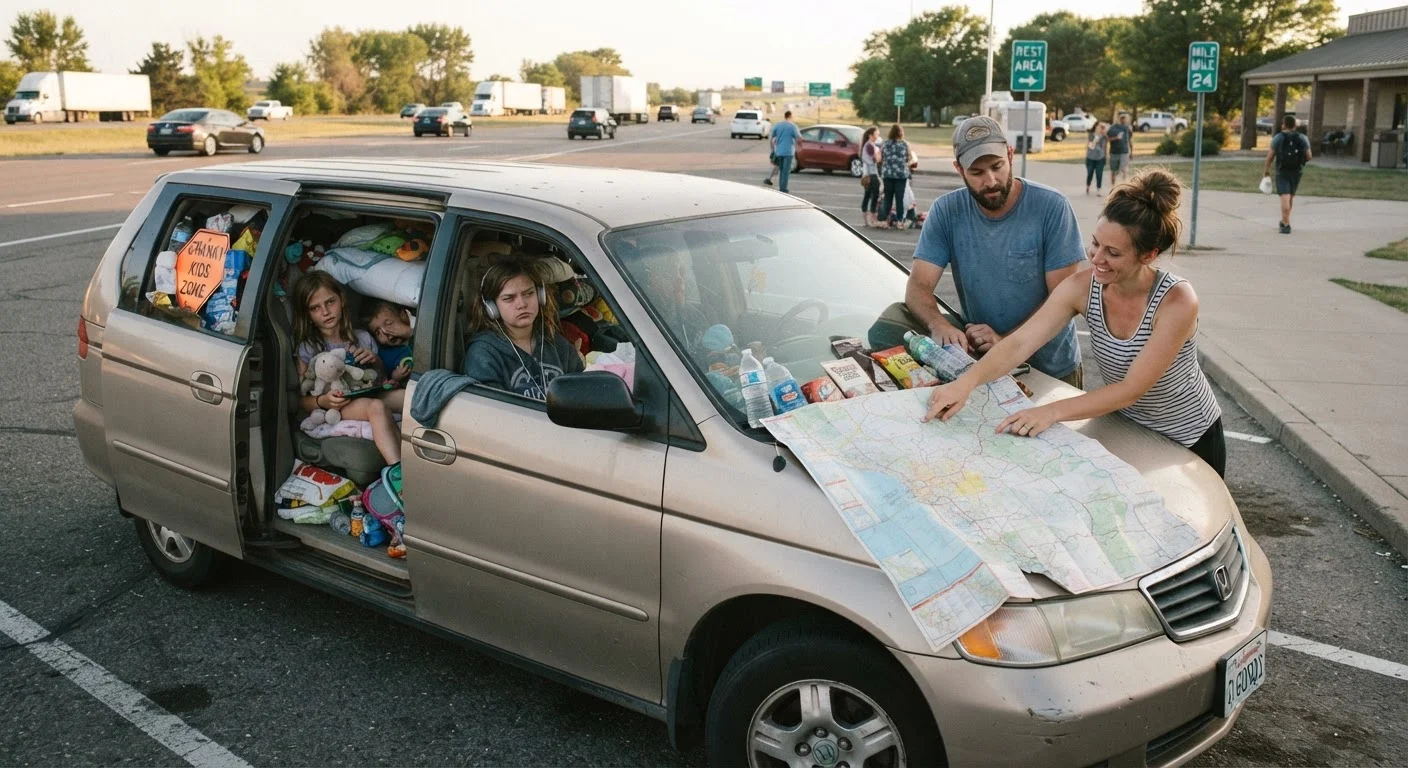
Why Day Two Is the Real Test of Any Family Road Trip
Day one runs on adrenaline. The car is packed, the playlist is queued, and everyone is buzzing with the novelty of it all. But day two? That's when reality shows up uninvited. Kids are tired from sleeping in an unfamiliar place. Adults are already carrying the mental load of navigation, budgeting, and logistics. And the itinerary - which looked perfectly reasonable from the couch - suddenly feels like a military operation.
Most families don't realize the trip is unraveling until someone's already in tears (or giving the silent treatment from the passenger seat). The good news: these are predictable problems with practical fixes. Understanding where things go wrong puts you back in the driver's seat - literally and figuratively.
If you're still in the planning phase, our family road trip planning guide covers the foundational decisions that make day two a whole lot smoother.
The Most Common Day-Two Mistakes Families Make
These aren't edge cases - they show up on road trips across the country, from the Pacific Coast Highway to the Blue Ridge Parkway. Recognize them early and you can sidestep the worst of it.
Treating day two like day one - same pace, same ambition, same energy budget.
Why it happens: Families plan each day in isolation, not accounting for cumulative fatigue. Day one feels like a proof of concept; day two inherits that optimism without the energy to back it up.
Skipping a flexible buffer window in the morning schedule.
Why it happens: Tightly optimized itineraries feel efficient on paper. But with kids, getting everyone fed, dressed, and loaded rarely happens on the minute - and one late start cascades into a ruined afternoon.
Letting kids go too long without food or a real movement break.
Why it happens: Parents focused on driving often push through hunger and restlessness, hoping the next stop is close enough. It rarely is - and blood sugar crashes fuel backseat arguments fast.
Ignoring the navigator (or not having one at all).
Why it happens: Drivers often assume GPS handles everything. But GPS doesn't flag construction-related detours in real time, doesn't know the family prefers scenic routes, and can't mediate when the route changes mid-drive.
Failing to manage expectations about what each stop will actually be like.
Why it happens: Kids build up anticipation based on photos and descriptions. When a 'famous roadside attraction' turns out to be a small plaque beside a highway, the disappointment is real - and loud.
Don't Let a Bad Morning Define the Whole Day
A rocky start on day two can feel like the whole trip is collapsing - but it rarely is. Resist the urge to push harder to 'make up time.' Forcing exhausted kids through a packed schedule typically makes things worse, not better. A calm reset now saves the next three days.
For a broader look at the assumptions that derail trips before they even begin, see our piece on road trip myths that trip up first-time family travelers.
How to Course-Correct When the Day Is Already Going Sideways
90 min
Recommended max stretch between movement breaks for kids
Pediatric travel health guidance generally suggests children need physical activity breaks at least every 90 minutes to maintain comfort and focus during long car rides.
~60%
Of family trips report conflict peaking on day two
Travel behavior researchers have noted that the second day of multi-day trips is consistently the highest-stress point for traveling families, driven by fatigue and over-scheduling.
Even when day two starts rough, recovery is almost always possible - if you act before tensions peak. The first move is to call a reset stop: a park, a diner, a scenic overlook, anywhere that breaks the momentum of frustration. Trying to drive through a bad mood rarely works; a 20-minute physical break tends to reset everyone faster than any pep talk.
Revisit the day's plan with fresh eyes. If you'd scheduled three stops but the family is visibly depleted, cut to one. A shorter, more enjoyable day beats a longer, miserable one. Remember: the trip itself is the destination - not just the endpoint.
Budget overruns often start quietly on day two when families impulse-spend to soothe stress. Keep a rough mental tab, and check out strategies for keeping a road trip budget from falling apart mid-journey before costs snowball. For a wider view of what makes family vacations go flat, the pitfalls that turn family vacations into stressful trips is worth a read too.
Driver Fatigue Is a Real Safety Risk
Day two often means driving on less sleep than usual, in an unfamiliar area, while managing family stress. Drowsy driving is genuinely dangerous - not just uncomfortable. If the primary driver is fatigued, stop. Switch drivers if possible, take a proper rest break, or adjust the day's mileage goal. No itinerary milestone is worth compromising road safety.
Also make sure your car is actually ready for a second full day of driving - tire pressure, fluid levels, and driver alertness all matter. Safe driving habits on long trips are covered in depth at our safe driving hub.
The content provided on our blog site traverses numerous categories, offering readers valuable and practical information. Readers can use the editorial team’s research and data to gain more insights into their topics of interest. However, they are requested not to treat the articles as conclusive. The website team cannot be held responsible for differences in data or inaccuracies found across other platforms. Please also note that the site might also miss out on various schemes and offers available that the readers may find more beneficial than the ones we cover.