Why Children's Bodies React Differently to Car Travel
If you have ever watched a child go from chatty and excited to pale and queasy within the first 30 minutes of a road trip, you know exactly what motion sickness looks like in real time. But understanding why it happens makes it far easier to prevent.
The culprit is a sensory conflict deep inside the brain. The inner ear - responsible for balance and detecting movement - picks up every turn, bump, and acceleration. But when a child is looking at a book, tablet, or the seat in front of them, the eyes report stillness. The brain receives two contradictory messages and responds with the symptoms we recognize as nausea, dizziness, sweating, and pallor.
Children are especially vulnerable because the neural pathways that integrate visual and vestibular (balance-related) signals are still being refined through early childhood. By the teenage years, most kids have developed enough sensory coordination to handle car travel without distress - but the years between toddlerhood and middle school can be genuinely rough.
Watch for Early Warning Signs
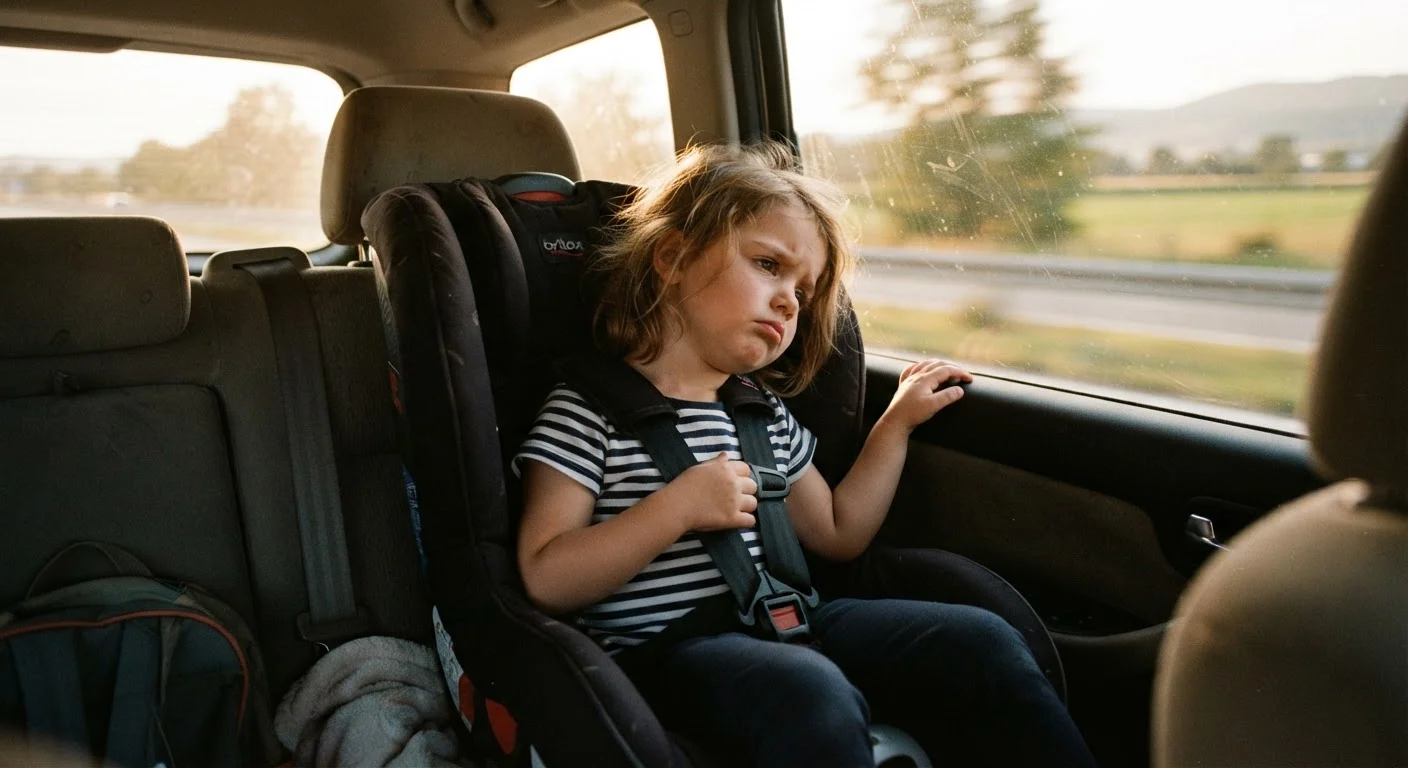
Early warning signs of car sickness include unusual quietness, yawning, pale skin, and complaints of a headache or stomach ache. Catching symptoms early gives you more time to intervene before full nausea sets in. Pulling over for fresh air and a short walk can often reset a child who is just starting to feel off.
Early warning signs to watch for include unusual quietness, yawning, pale skin, and complaints of a headache or stomach ache. Catching symptoms early gives you more time to intervene before full nausea sets in.
Practical Strategies That Actually Help
The good news: most families find significant relief through a combination of positioning, environment, and activity choices - no medication required. Here are the approaches with the strongest practical track record.
Seat Positioning
Forward-facing views help align what the eyes see with what the inner ear feels. The front passenger seat offers the most stable visual field, though child safety requirements limit this option - always follow current car seat guidelines. Among rear seats, the center position often gives the most forward sightline. For families with older children, sitting by a window and focusing on the distant horizon is a simple and effective remedy.
Fresh Air
Cracking a window or running the air vents can meaningfully ease nausea. Stuffy, warm car interiors tend to amplify symptoms. Keeping the cabin cool and well-ventilated is a low-effort adjustment with a noticeable payoff.
Rethink Back-Seat Entertainment
This one stings for road-trip planners, but screens and books are among the most reliable triggers for car sickness. Shifting to audio-based entertainment - age-appropriate podcasts, audiobooks, music, or classic car games like I Spy - removes the visual-vestibular mismatch almost entirely. See how audio and screen options compare in our guide to screen time vs. non-screen entertainment on long drives.
Drive Timing and Breaks
Some families find that early-morning departures - when kids are drowsy and likely to sleep through the first stretch - reduce the window for symptoms to develop. Regular stops every 90 minutes to two hours let children get out, move around, and reset. Our guide on how far to drive each day with kids has more on pacing trips realistically.
Try the Horizon Trick
Encourage your child to look out the front windshield or at the distant horizon rather than at objects inside or close to the car. This simple habit helps realign what the eyes see with what the inner ear feels, and many families find it reduces symptoms within minutes.
Before You Leave: Setting the Trip Up for Success
Preparation before the first mile is just as important as in-car strategies. What kids eat before departing matters - large, greasy, or acidic meals close to departure can accelerate nausea onset. A light, bland snack an hour before leaving is a practical starting point, though every child is different. If your child has a history of severe motion sickness, a conversation with your pediatrician before a long trip is well worth the time.
Packing smart also helps. Having a dedicated "just in case" kit - including a change of clothes, bags, and wipes - reduces stress for everyone and means a messy moment doesn't derail the whole trip. Our road trip packing guide covers what belongs in every family car for exactly these situations.
Finally, keep the mood relaxed. Children who have had bad experiences with car sickness sometimes develop anticipatory anxiety that lowers their threshold for symptoms. A calm, matter-of-fact approach - "we know this can happen, and here's our plan" - is far more helpful than treating each trip as a potential emergency.
This article is for general informational purposes only and is not a substitute for professional medical advice. Consult your child's pediatrician before using any medication or treatment for motion sickness.
Frequently Asked Questions
Car sickness most commonly appears between ages 2 and 12. Many children outgrow it by their early teens as their sensory systems mature, though some individuals continue experiencing motion sickness into adulthood.
Yes. Screens and books require the eyes to focus on a stationary object while the body is moving, which intensifies the sensory mismatch that causes nausea. Audio-based entertainment - podcasts, music, audiobooks - is generally much easier on a motion-sick child.
Light, bland snacks before and during travel are generally better tolerated than heavy, greasy, or acidic foods. An empty stomach can also worsen symptoms, so a small snack before departure is often recommended. Always consult your child's pediatrician for personalized guidance.
Some over-the-counter medications are used for motion sickness in children, but dosing, age restrictions, and potential side effects vary significantly. Parents should consult a pediatrician before giving any medication to a child for this purpose.
Yes - the middle rear seat often provides the steadiest ride with the most stable forward view, which can reduce the sensory mismatch that causes symptoms. If your car seat setup allows it, it is worth trying.
Anticipatory anxiety - worrying about getting sick - can lower a child's threshold for motion sickness. Keeping the mood light, framing the trip positively, and having a calm plan if symptoms arise can all help.
The content provided on our blog site traverses numerous categories, offering readers valuable and practical information. Readers can use the editorial team’s research and data to gain more insights into their topics of interest. However, they are requested not to treat the articles as conclusive. The website team cannot be held responsible for differences in data or inaccuracies found across other platforms. Please also note that the site might also miss out on various schemes and offers available that the readers may find more beneficial than the ones we cover.