Summary
28 items · 30-60 minutes to gather and pack
Why This Checklist Exists (And Why Most Packing Lists Fall Short)
Most road trip packing lists tell you to bring sunscreen and a phone charger. That's not wrong - it's just not enough. The items that actually make or break a family road trip are the ones you don't think of until you're two states from home with a kid who's carsick, a snack bag that's already empty, and zero idea where the insurance card is.
This checklist is built around what families actually need in the car - not what looks tidy on a Pinterest board. It's organized by category so you can check off each section the night before you leave, rather than frantically Tetris-ing everything into the trunk at 6 a.m.
Before you even think about packing, make sure the car itself is road-ready. Our fluid level walkthrough covers the checks any driver can do right in the driveway. And if you want to make sure your documents are in order, see our guide on what to keep in your glove compartment.
Safety & Emergency Essentials
Snacks & Hydration
Entertainment & Activities
Comfort & Organization
The Things Most Parents Forget
What to Think About Before You Start Loading the Car
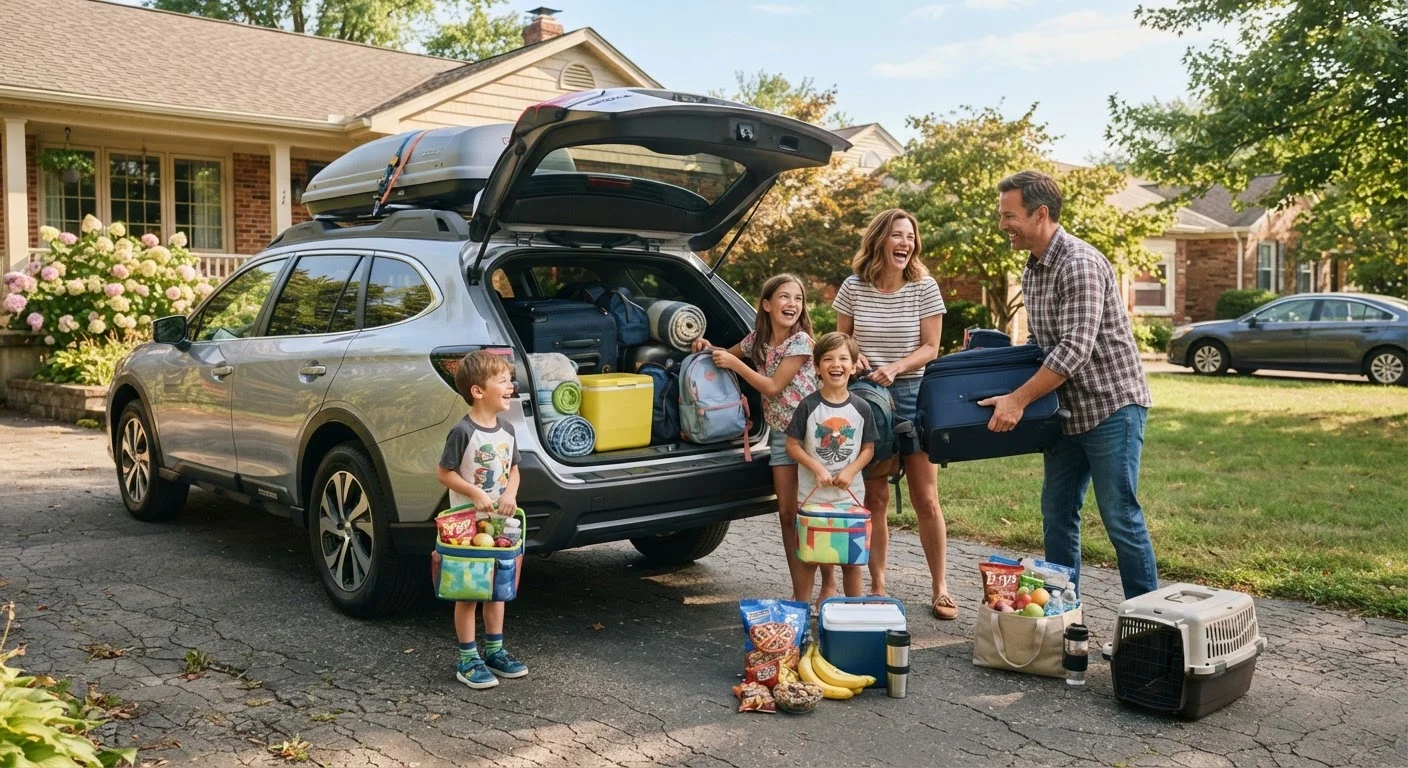
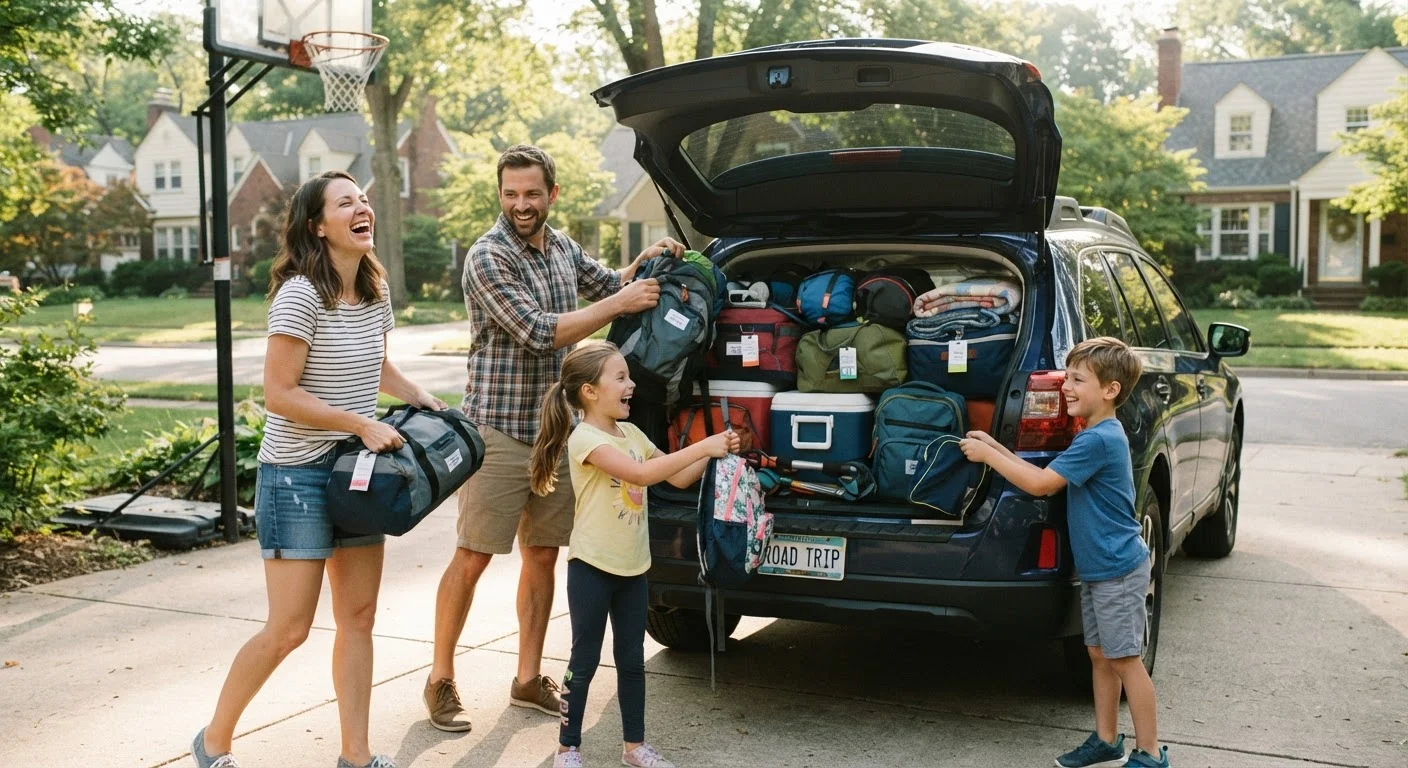
Packing smart is less about having everything and more about having the right things in the right places. A bag no one can reach for 400 miles isn't really packed - it's stored. Build a dedicated grab-and-go bag for the cabin: snacks, wipes, entertainment, and anything you'll need at rest stops. Everything else can go in the trunk.
Don't Pack Everything in the Trunk
It sounds obvious, but many families load the car efficiently and then realize mid-drive that the wipes, the kid's headphones, and the afternoon snacks are all buried under luggage. Identify everything you'll need between stops before you load - those items belong in the cabin, not the cargo area. A grab-and-go bag in the back seat is one of the highest-return packing decisions you can make.
If you're traveling with babies or toddlers, the logistics shift considerably - from diaper bag placement to feeding schedules that align with driving windows. Our guide to road trips with very young children covers the planning differences in detail.
Also worth noting: if your kids are prone to motion sickness, seat position and snack choices matter more than you might expect. What causes carsickness and how to manage it without medication is something every road trip family should read before departure.
On the entertainment side, don't default entirely to screens. A mix of audiobooks, trivia games, and podcasts made for kids can stretch engagement much further - and the screen vs. non-screen entertainment comparison is worth a look if you want to make deliberate choices rather than reactive ones.
Backseat Organizer
Keeps kids' items - books, tablets, water bottles, snacks - within reach without cluttering the floor or seat.
Portable Power Bank
Ensures devices stay charged even when USB ports in the car are occupied or unavailable.
Insulated Cooler Bag
Keeps drinks cold and perishable snacks fresh for the duration of the drive without needing ice.
Volume-Limiting Headphones (for kids)
Protects children's hearing during extended listening sessions while giving each child audio independence.
Roadside Emergency Kit
Provides basic safety equipment - jumper cables, reflective triangles, multi-tool - for unexpected breakdowns.
Offline Map App (downloaded route)
Ensures navigation continues working in rural areas or dead zones with no cell service.
Finally, if you're still finalizing trip finances, the family travel budget checklist is a smart pre-departure step that pairs well with this packing list.
The content provided on our blog site traverses numerous categories, offering readers valuable and practical information. Readers can use the editorial team’s research and data to gain more insights into their topics of interest. However, they are requested not to treat the articles as conclusive. The website team cannot be held responsible for differences in data or inaccuracies found across other platforms. Please also note that the site might also miss out on various schemes and offers available that the readers may find more beneficial than the ones we cover.