

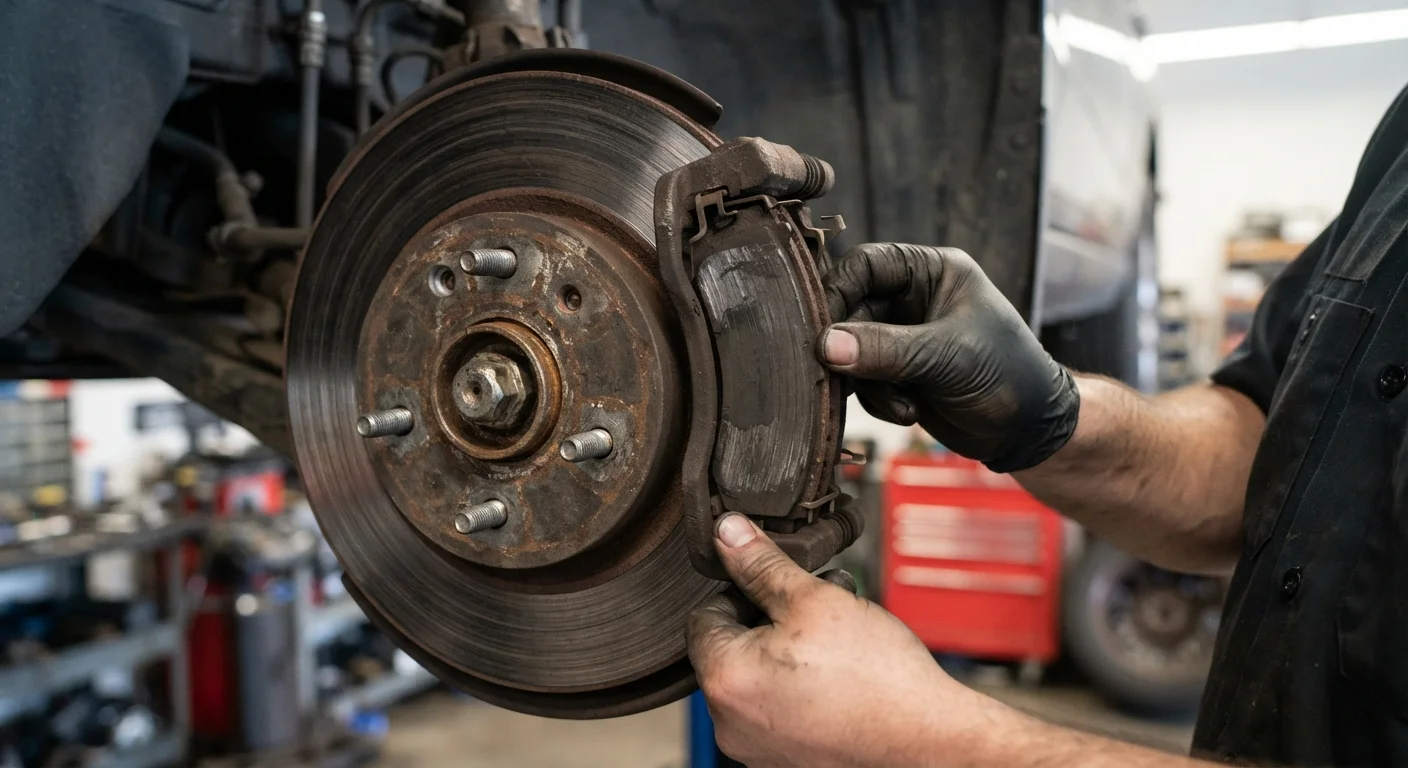
What Uneven Brake Wear Is Actually Telling You
When one brake pad wears down significantly faster than its partner on the same axle - or when front pads wear far more quickly than rear pads without explanation - your braking system is signaling a problem. Brake pads are designed to wear gradually and relatively evenly through normal use. Noticeably uneven wear almost always points to an underlying mechanical issue that, if left unaddressed, can damage your rotors, reduce stopping power, and turn a moderate repair bill into a much larger one.
Understanding the most common mistakes owners and technicians make - and how to avoid them - puts you in a far stronger position when it's time to talk to a professional. See our guide to talking with a mechanic for the right questions to ask before any brake work begins.
Ignoring a vehicle that pulls to one side during braking.
Why it happens: Drivers often attribute mild pulling to road camber or wind, not a braking problem, especially if the vehicle still stops adequately.
Skipping inspection of caliper slide pins when replacing brake pads.
Why it happens: Slide pins are often overlooked because they're inexpensive and the failure isn't immediately obvious - pads may seat correctly at first, then begin dragging weeks later.
Replacing only the worn pads without diagnosing why they wore unevenly.
Why it happens: It's tempting to replace the worn component and move on, especially when time or budget is tight. The root cause often goes unaddressed.
Assuming front-to-rear pad wear differences are always abnormal.
Why it happens: Owners sometimes panic when they learn front pads wear faster than rear pads, not realizing this is expected in most vehicles due to weight transfer during braking.
Using mismatched or incorrect brake pad compounds during replacement.
Why it happens: Cost-conscious replacements sometimes result in pads that don't match the original specification for a vehicle's weight, rotor type, or typical driving conditions.
Key Stats on Brake System Wear
Brake system failures are among the most consequential - and preventable - vehicle safety issues on US roads. Understanding the scale of the problem reinforces why routine inspection matters.
~22%
Brake-related crashes among vehicle defect crashes
According to NHTSA research, brake system issues are consistently among the most frequently cited mechanical factors in vehicle crash investigations.
2-3x
Rotor replacement cost vs. pad-only replacement
Industry estimates suggest that allowing brake pads to wear through to metal-on-metal contact typically results in rotor damage requiring replacement, multiplying repair costs significantly.
30,000-70,000 mi
Typical brake pad lifespan range
According to general automotive industry guidance, brake pad life varies widely depending on driving habits, vehicle weight, and pad compound - making regular inspection more reliable than mileage alone.
How to Protect Your Brake System Going Forward
Catching uneven wear early is the most cost-effective move you can make as a vehicle owner. Ask your mechanic to measure pad thickness on all four corners and inspect caliper slide pins and hardware at every brake service. If your vehicle pulls to one side under braking - even subtly - treat it as an urgent signal rather than a minor nuisance.
Metal-on-Metal Contact Is an Emergency
If you hear a loud grinding or metal scraping sound when braking, your pads may have worn completely through and your rotors are being damaged with every stop. This is a safety-critical condition - have your vehicle inspected by a qualified mechanic as soon as possible and avoid highway driving until it has been assessed.
Tire condition also plays a role in overall braking performance. Uneven tire inflation changes how weight transfers across your axles during a stop, which can accelerate pad wear on one side. Review our tire pressure guide to make sure your tires aren't compounding brake wear issues.
Keeping a simple maintenance log - noting when pads were last inspected and what measurements were recorded - gives you a reliable baseline for future comparisons and helps you spot developing problems before they become emergencies.
The content provided on our blog site traverses numerous categories, offering readers valuable and practical information. Readers can use the editorial team’s research and data to gain more insights into their topics of interest. However, they are requested not to treat the articles as conclusive. The website team cannot be held responsible for differences in data or inaccuracies found across other platforms. Please also note that the site might also miss out on various schemes and offers available that the readers may find more beneficial than the ones we cover.