

The Number on the Tire Is Not Your Target
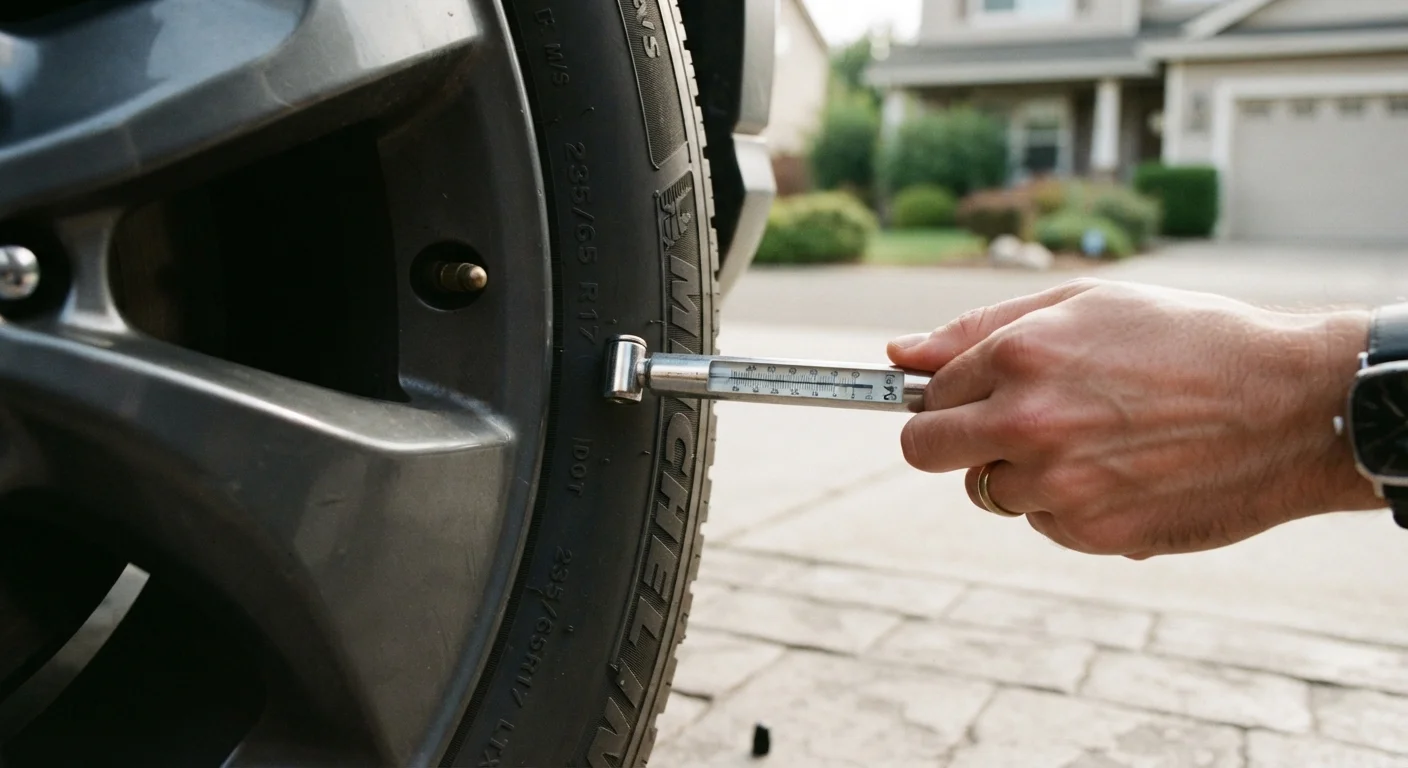
One of the most persistent misconceptions in routine car care is using the PSI number molded into the tire's sidewall as a target. That figure - often 44, 50, or 51 PSI - is the maximum pressure the tire structure can safely contain. Inflating to that number will almost certainly overinflate your tires for normal driving use.
Your actual target is found on the driver's door jamb sticker or in your owner's manual. It's set by the vehicle manufacturer based on the car's weight, suspension geometry, and expected load - and it's typically between 30 and 36 PSI for most passenger vehicles. Front and rear recommendations sometimes differ, so check both. This one distinction, consistently misunderstood, is a root cause of premature tire wear and poor handling that families pay for without realizing it.
Front vs. Rear Tire Pressure
Many vehicles specify different PSI for front and rear tires, particularly trucks, SUVs, and minivans where rear load varies significantly. Always check your door jamb sticker for both axle specifications rather than assuming a single number applies across all four tires. Some vehicles also list a higher rear PSI when carrying a full passenger or cargo load.
What Happens When Pressure Is Wrong
Underinflation is by far the more common problem. A tire running low on air flexes more than it should with every rotation, generating excess heat that degrades the rubber from the inside. The outer edges of the tread wear faster than the center, shortening overall tire life. Fuel economy also suffers - the U.S. Department of Energy has indicated that underinflated tires can reduce gas mileage by roughly 0.2% for every 1 PSI drop across all four tires. Over weeks and months, that adds up noticeably at the pump. For a fuller picture of how maintenance costs compound, see what a vehicle actually costs per year.
Overinflation creates the opposite geometry problem. Too much air causes the tire to bulge in the center, so only the middle strip of tread contacts the road. The ride becomes harsher, braking distances can increase, and center-tread wear accelerates. An overinflated tire is also more vulnerable to impact damage from potholes and curbs. Both extremes affect vehicle stability in emergency maneuvers - something especially relevant for families carrying passengers. For related safety insight, see what parents get wrong about child passenger safety.
~1 PSI
Pressure lost per 10°F temperature drop
The U.S. Department of Energy and tire industry guidance consistently cite this as a standard rule of thumb for seasonal pressure loss.
25%
Underinflation level that triggers TPMS warning
Federal law requires TPMS systems to alert drivers when any tire falls 25% below the recommended PSI - a level at which handling and fuel economy are already affected.
Up to 3%
Fuel economy reduction from underinflated tires
The U.S. Department of Energy estimates fuel economy can decrease by about 0.2% per PSI drop, with cumulative losses across all four tires reaching around 3%.
Temperature Changes Tire Pressure Automatically
Tire pressure is not a set-and-forget number. Air expands when it warms and contracts when it cools. As a general rule, tires lose approximately 1 PSI for every 10°F drop in ambient temperature. That means a tire properly inflated at 34 PSI on a 70°F fall afternoon may read closer to 30 PSI on a 30°F winter morning - without a single slow leak involved.
This seasonal pressure loss explains why TPMS warning lights so commonly appear after the first cold snap of the year. It also means checking pressure only once and forgetting about it leaves your tires underinflated for much of autumn and winter. Monthly checks take less than five minutes and cost nothing beyond a quality gauge. Many misconceptions around seasonal maintenance are covered in common car maintenance myths.
How to Check Tire Pressure Correctly
For an accurate reading, check pressure when tires are cold - meaning the vehicle has been parked for at least three hours, or driven fewer than one mile at low speed. Driving heats the air inside tires and temporarily raises the PSI, which produces a misleadingly high reading.
- Remove the valve stem cap and set it somewhere safe.
- Press a quality dial or digital gauge firmly and squarely onto the valve stem until the hissing stops.
- Read the PSI and compare it to your door jamb sticker.
- Add air if needed, or release small amounts with the pin inside the valve cap if overinflated.
- Recheck after adjustment and replace the cap securely.
If your tires consistently lose pressure faster than normal temperature swings explain, a slow leak, damaged valve stem, or bent wheel rim may be responsible - a scenario worth having a qualified mechanic inspect. Uneven wear patterns can also point to alignment or suspension issues; why brake pads wear unevenly covers a related pattern of symptoms worth understanding.
Best Time to Check: Cold Tires Only
Always measure tire pressure when tires are cold - parked for at least three hours or driven fewer than one mile. Checking after a highway drive can give readings 4-6 PSI higher than actual cold pressure, leading you to believe the tires are fine when they may not be. Early morning before the first trip of the day is the ideal window.
Tires, Longevity, and the Bigger Ownership Picture
A properly inflated set of tires can last significantly longer than one that's perpetually under- or overinflated. Given that tire replacement represents one of the more significant recurring vehicle expenses for most families, consistent pressure maintenance has an outsized return for the minimal time it requires. Families looking to extend the life of an aging vehicle will find tire care especially worthwhile - getting the most from high-mileage vehicles outlines the broader maintenance approach worth adopting as odometer numbers climb.
Some owners assume that checking tire pressure is something only mechanics handle, or that TPMS makes manual checks unnecessary. Neither is accurate. TPMS legally must warn by 25% underinflation - a level at which handling is already compromised. Performing your own checks is both straightforward and empowering. It's one of the clearest examples of routine maintenance that costs nothing to do correctly - and noticeably more to ignore. Many beliefs around what requires a shop visit don't hold up under scrutiny; car ownership myths that cost families money addresses several of them directly.
Frequently Asked Questions
Look for a sticker on the inside edge of the driver's door or door jamb. It lists the recommended PSI for front and rear tires. Your owner's manual also contains this information. Do not use the maximum PSI printed on the tire sidewall as your target.
Most automotive safety organizations recommend checking tire pressure at least once a month and before any long road trip. Significant temperature swings - common in spring and fall - warrant more frequent checks since pressure changes with the weather.
Yes. Overinflation causes the center of the tread to bear most of the contact load, which accelerates center wear and reduces the tire's ability to absorb road impacts. Overinflated tires are also more susceptible to sudden blowouts from potholes or road debris.
A TPMS (Tire Pressure Monitoring System) warning light typically activates when a tire is 25% or more below the recommended PSI - which is already a significant deficit. Treat the warning as urgent and check all four tires with a manual gauge, since TPMS sensors are not always equally accurate across all tires.
No. The number on the sidewall is the maximum rated pressure for the tire, not the recommended operating pressure for your vehicle. Always use the manufacturer's recommendation found on the door jamb sticker or in your owner's manual.
The content provided on our blog site traverses numerous categories, offering readers valuable and practical information. Readers can use the editorial team’s research and data to gain more insights into their topics of interest. However, they are requested not to treat the articles as conclusive. The website team cannot be held responsible for differences in data or inaccuracies found across other platforms. Please also note that the site might also miss out on various schemes and offers available that the readers may find more beneficial than the ones we cover.