

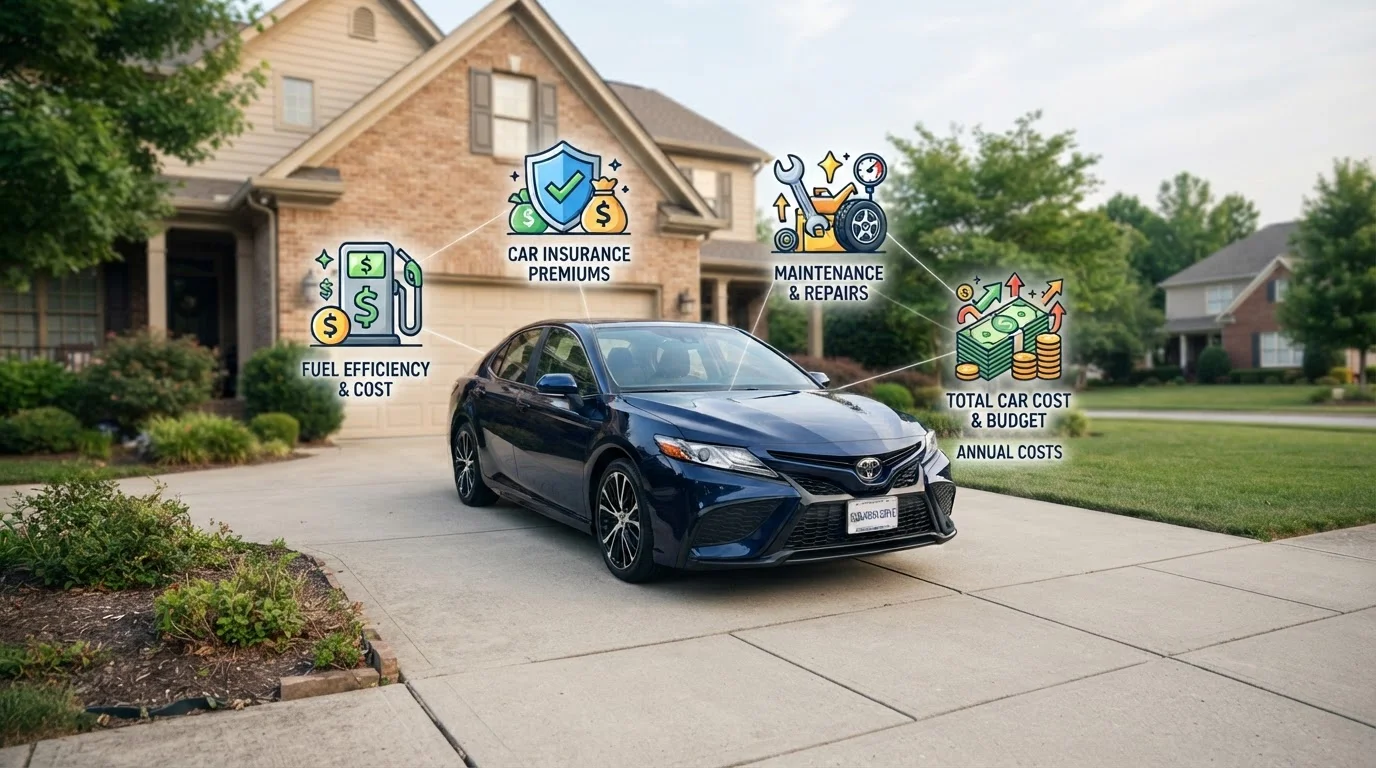
Why the Sticker Price Misleads Buyers
The price on the window sticker - or the monthly payment a dealer quotes - represents only a fraction of what you will actually spend to own and operate a vehicle. For many US families, the gap between the purchase price and the true annual cost comes as a genuine shock.
According to AAA's annual Your Driving Costs study, the average American driver spends thousands of dollars per year beyond their loan or lease payment, once fuel, insurance, maintenance, tires, and depreciation are factored in. The exact figure varies by vehicle class and usage, but the pattern is consistent: ownership costs dwarf the sticker price over time.
Understanding those costs before you sign is one of the most valuable things a buyer can do. The surprises that catch first-time owners off guard - from registration fees to insurance adjustments - are almost entirely avoidable with early planning.
$12,182
Average annual cost to own and operate a new vehicle
According to AAA's Your Driving Costs study, the average new vehicle costs over $12,000 per year when all ownership expenses are included.
~20%
Value lost in year one of ownership
Many new vehicles depreciate approximately 20% or more in the first 12 months, making depreciation the dominant ownership cost.
15,000
Average annual miles driven by US motorists
The Federal Highway Administration estimates the average US driver covers roughly 15,000 miles per year, directly shaping fuel and maintenance costs.
Depreciation: The Largest Cost Most Families Ignore
Depreciation - the loss in a vehicle's market value over time - is typically the single biggest cost of car ownership, yet it rarely appears on any invoice. A new vehicle can lose roughly 20% of its value within the first year, and up to 50% or more over five years, depending on make, model, and market conditions.
Depreciation matters most when you plan to sell or trade in the vehicle. If you paid $35,000 for a car that is worth $18,000 five years later, that $17,000 difference is a real cost - even if you never wrote a check for it. Understanding how depreciation works helps you choose vehicles that hold their value better and time trade-ins more strategically.
Vehicles with strong resale histories - often those with lower total cost of ownership - tend to depreciate more slowly, which is one reason ownership cost comparisons between models can look very different from their purchase price comparisons.
Before purchasing, look up the 5-year projected resale value of any vehicle you are considering using industry-standard used-car valuation tools. A $3,000 price difference at purchase can easily be outweighed by a $6,000 difference in depreciation over five years.
Buyers who compare purchase prices without considering depreciation often end up with vehicles that cost more to own, not less, over the full ownership period.
When comparing two vehicles, calculate the fuel cost difference over 50,000 miles - not just the MPG rating. A vehicle rated 10 MPG higher can save over $2,000 in fuel at current prices over that distance.
Fuel savings compound over time and are one of the most underweighted factors in purchase decisions, particularly for families with long commutes or multiple drivers.
Insurance, Fuel, and Financing: The Recurring Trio
Three costs show up every single month of ownership and represent the most visible ongoing burden for families.
Auto Insurance
Auto insurance premiums depend on your driving record, location, age, credit score (in most states), the vehicle's value, and the coverage levels you carry. Full coverage on a newer financed vehicle is generally required by the lender and costs significantly more than minimum-liability coverage. Expect to revisit your policy annually, as rates can shift even without a claim.
Fuel
Fuel costs are driven by two variables you can partially control: how many miles you drive, and the vehicle's fuel efficiency. A family that drives 15,000 miles per year in a vehicle rated at 25 MPG will use roughly 600 gallons annually - at any given pump price, that total can be substantial. Choosing a more fuel-efficient vehicle at purchase is one of the most durable ways to reduce ongoing costs.
Financing
If you carry a loan, the interest paid over the loan term is a real ownership cost. On a $30,000 vehicle financed at 7% over 60 months, the total interest paid exceeds $5,500. Shorter loan terms reduce total interest significantly, though they raise the monthly payment. For general guidance on household budget planning, see the family budgeting strategies that can help you model these trade-offs before committing.
Get Insurance Quotes Before You Commit
Insurance premiums can vary by hundreds of dollars annually for the same driver insuring different vehicles. Pull actual quotes for any car you are seriously considering before signing a purchase agreement. Some vehicles cost significantly more to insure due to repair costs, theft rates, or safety ratings - a factor that belongs in your total cost comparison.
Maintenance, Repairs, and Tires
Scheduled maintenance - oil changes, filter replacements, fluid flushes, brake service - is non-negotiable for preserving both reliability and resale value. These costs are predictable and manageable when budgeted in advance. Deferring them, however, turns small expenses into large ones: a neglected timing belt can cause engine failure costing several thousand dollars.
Tires are a separate and often underestimated line item. A full set of replacement tires for a family SUV can run $600-$1,000 or more installed, and most vehicles need replacement every 40,000-60,000 miles depending on driving habits and tire type.
Unexpected repairs are harder to plan for, which is why many financial advisors suggest maintaining a dedicated vehicle repair fund. The habits that protect your ownership investment - consistent service records, timely fluid changes, and accurate coverage - are exactly what keeps repair surprises to a minimum. You can also find practical upkeep guidance in the car maintenance section.
Deferred Maintenance Multiplies Repair Costs
Skipping scheduled services to save money in the short term is one of the most reliably expensive decisions a car owner can make. Minor issues caught at routine service intervals - worn belts, low fluids, marginal brake pads - become major repairs if left unaddressed. Follow the manufacturer's maintenance schedule in your owner's manual, not the interval stickers placed by service shops, which can differ.
Fees, Taxes, and Registration
Government-mandated costs add meaningfully to the first year of ownership in particular. Sales tax on a vehicle purchase is calculated on the sale price in most states and can add several thousand dollars to the out-of-pocket total. Title and documentation fees, dealer processing fees, and state registration charges are all real costs that belong in your budget from day one.
Annual registration renewal fees vary by state and are sometimes tied to the vehicle's value, meaning newer or higher-value vehicles cost more to register. Some states also impose annual personal property taxes on vehicles. These costs are fully predictable - look them up for your state before finalizing any purchase decision.
For a broader look at the paperwork and fees that surprise new owners, the first-time owner realities guide covers DMV fees and grace periods in practical detail.
Sales Tax Is Due at Purchase, Not Over Time
Unlike loan payments that spread over months or years, sales tax on a vehicle purchase is typically due upfront at the time of sale. In states with a 6-8% sales tax rate, that adds $1,800-$2,400 to a $30,000 purchase before any other fees. Factor this into your cash-on-hand requirements, not just your monthly payment calculation.
How to Build Your Total Ownership Budget
Mapping total cost of ownership (TCO) before committing to a vehicle is a straightforward exercise that pays significant dividends. Start by estimating these annual categories:
- Depreciation: Estimate expected resale value at your planned ownership horizon and subtract from purchase price.
- Insurance: Get actual quotes for the specific vehicle and your driver profile before buying.
- Fuel: Calculate annual miles ÷ vehicle MPG × current average fuel price in your area.
- Financing interest: Use a loan amortization calculator to find total interest over the term.
- Scheduled maintenance and tires: Budget roughly $1,000-$1,500 per year as a starting point for most passenger vehicles, adjusting for mileage and vehicle type.
- Registration and taxes: Look up your state's annual renewal fees and any applicable personal property tax.
Adding these figures gives you a realistic annual ownership cost - often $8,000-$12,000 for a mid-size family vehicle - that you can compare against your household's budget. The new vs. used decision framework and the common ownership myths that cost families money are both worth reading before making a final choice.
“The total cost of vehicle ownership is one of the most underestimated line items in a household budget. Families who calculate it before buying - not after - make dramatically better financial decisions.”
— AAA Automotive Research Division, Publisher of the annual Your Driving Costs study
This article is for general informational and educational purposes only. It does not constitute financial or legal advice. Consult a qualified financial professional for guidance specific to your circumstances.
The content provided on our blog site traverses numerous categories, offering readers valuable and practical information. Readers can use the editorial team’s research and data to gain more insights into their topics of interest. However, they are requested not to treat the articles as conclusive. The website team cannot be held responsible for differences in data or inaccuracies found across other platforms. Please also note that the site might also miss out on various schemes and offers available that the readers may find more beneficial than the ones we cover.