

What Causes a Car to Lose Value?
Depreciation is driven by several overlapping factors, most of which are outside any individual owner's control. Time is the most fundamental: as a vehicle ages, newer models with updated technology, safety features, and efficiency standards make it comparatively less desirable.
Supply and demand in the used-vehicle market also play a significant role. A model that was popular when purchased may face stiff competition from a refreshed version, pulling down resale prices. Fuel economy trends, economic conditions, and even seasonal demand all shift what buyers are willing to pay.
Within an owner's control are factors like mileage, maintenance history, and condition. A vehicle with lower mileage, no accident history, and a documented service record consistently commands higher resale prices than a comparable model that has been neglected. See our guide to keeping a maintenance log for practical advice on building this habit from day one.
~20%
Average first-year value loss for a new car
Industry estimates consistently place first-year depreciation between 15-20% of the original purchase price for most new vehicles.
~50%
Typical value remaining after five years
Automotive valuation sources suggest most new cars retain roughly half their purchase price by year five, though this varies widely by make and model.
12,000-15,000
Annual miles considered standard in resale valuations
Exceeding this mileage benchmark each year generally accelerates depreciation in resale market assessments.
The Depreciation Curve: When Value Drops Fastest
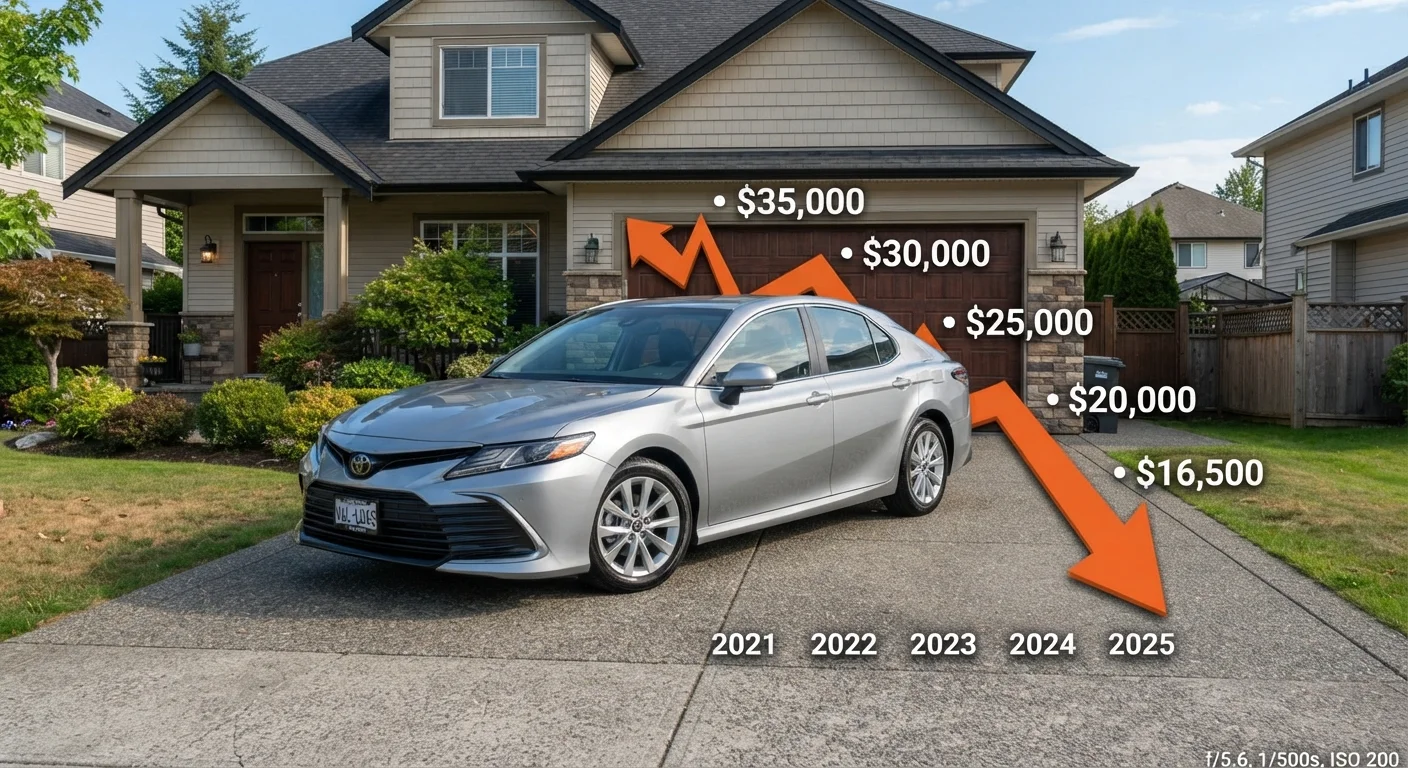
Depreciation is not a flat, steady decline - it follows a curve that is steepest in the earliest years. Industry data consistently shows that new vehicles lose a substantial portion of their value in years one through three, with the rate of loss gradually flattening after that.
This pattern has a practical implication for families: a two- or three-year-old used vehicle that has already absorbed the largest depreciation hit can represent meaningfully different economics than buying new, even if the purchase price difference appears modest at first glance.
After roughly the five-year mark, many vehicles enter a slower depreciation phase. At very high mileage - typically above 100,000 miles - value tends to stabilize at a lower floor. If your family vehicle is approaching that range, our article on getting the most out of high-mileage vehicles covers how to manage costs effectively at that stage.
Depreciation Varies Significantly by Vehicle Type
Not all vehicles depreciate at the same rate. Trucks and SUVs have historically held value better than sedans in the US market, partly due to sustained demand. Electric vehicles have shown more variable depreciation patterns as the market matures. Always research the specific make and model you're considering rather than relying on averages alone.
How Depreciation Affects Real Ownership Decisions
Understanding depreciation changes how you frame several common ownership decisions - from when to trade in, to how much gap insurance to carry, to how long to keep a vehicle to maximize value extracted from the purchase.
For families considering a trade-in or private sale, knowing the approximate depreciation trajectory of their specific vehicle helps set realistic expectations. Holding a well-maintained vehicle past the steep early depreciation years often means recouping a larger share of its remaining value rather than selling at the bottom of that curve.
Depreciation also intersects with auto financing. When a vehicle depreciates faster than a loan is paid down, the owner can end up "underwater" - meaning they owe more than the car is currently worth. Gap insurance is designed to cover this difference in the event of a total loss.
Building responsible ownership habits from the start is one of the most practical defenses against excessive value loss. Our overview of responsible car ownership habits covers the consistent practices that keep both your vehicle and its value in better shape over time.
Time Your Ownership to Match the Curve
If you plan to sell or trade in a vehicle, doing so before extremely high mileage accumulates and after the steepest depreciation years have passed - roughly years three through six - can help you retain more of the vehicle's remaining value. Keeping the car well-maintained and the exterior in good condition throughout will support a stronger resale position.
Frequently Asked Questions
On average, a new car loses around 15-20% of its purchase price in the first year. By the end of year three, total depreciation is often 40-50%. These figures vary by make, model, and market conditions.
Trucks, SUVs, and certain import brands with strong reliability reputations historically retain value better than average. However, depreciation rates change with market demand, fuel prices, and model updates, so no outcome is guaranteed.
Yes. Higher mileage generally accelerates depreciation because it signals more wear on the vehicle. The industry commonly uses annual mileage benchmarks - around 12,000-15,000 miles per year - when estimating residual value.
You cannot stop depreciation, but consistent maintenance, keeping mileage reasonable, avoiding accidents, and maintaining clean interior and exterior condition can help preserve resale value compared to a neglected vehicle.
If you never plan to sell, depreciation has less immediate financial impact. However, it still matters for insurance replacement-value calculations and if your circumstances change unexpectedly and you need to sell or trade in.
Purchasing a vehicle that's already two to three years old means the steepest depreciation has already occurred on someone else's ownership. That said, used vehicles come with their own considerations including unknown history and potential repair costs.
The content provided on our blog site traverses numerous categories, offering readers valuable and practical information. Readers can use the editorial team’s research and data to gain more insights into their topics of interest. However, they are requested not to treat the articles as conclusive. The website team cannot be held responsible for differences in data or inaccuracies found across other platforms. Please also note that the site might also miss out on various schemes and offers available that the readers may find more beneficial than the ones we cover.