

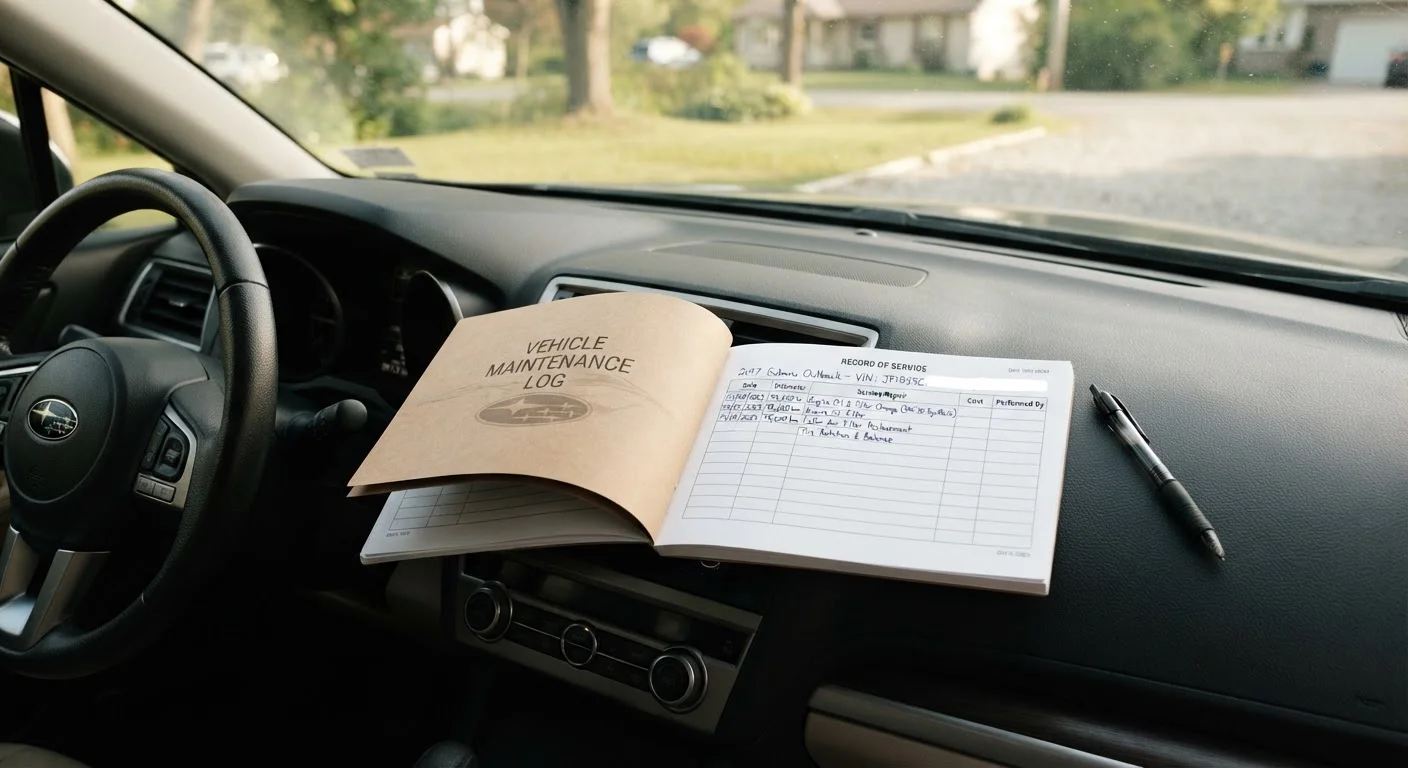
Why a Maintenance Log Is Worth the Two Minutes It Takes
Most car owners know they should change their oil regularly and rotate their tires - but far fewer keep a written record of when those services actually happened. That gap is where money quietly disappears: in missed intervals, repeated diagnostics, and lower resale offers from skeptical buyers.
A maintenance log is simply a running record of every service your vehicle receives. It costs nothing to start, takes minutes to maintain, and pays off in three concrete ways: it helps you stay on schedule, gives mechanics faster context when something goes wrong, and provides documented proof of care that supports your car's value at resale. For families managing multiple vehicles, it can also reduce the mental load of trying to remember what was done to which car and when.
This pairs naturally with broader ownership habits - as we cover in our guide on responsible car ownership habits - where consistent records are one of the key pillars of keeping ownership costs predictable.
What to Include in Every Log Entry
A useful log entry doesn't need to be elaborate. Each entry should capture five things:
- Date of the service
- Odometer reading at the time of service
- Service performed (oil change, tire rotation, brake inspection, etc.)
- Parts or fluids used (e.g., 5W-30 synthetic oil, OEM air filter)
- Who performed the work (dealership name, independent shop, or self)
If a mechanic flags something for future attention - a slightly worn belt, a brake pad approaching its limit - note that too. These advisory items become the basis for your next maintenance conversation and help you plan spending before it becomes urgent.
Dealer and Independent Shop Records
Many dealerships and chain service shops store your vehicle's service history in their own systems. While convenient, those records live with the shop - not with you. Always request a printed or emailed receipt for every visit and add it to your own log so you maintain a complete, portable record regardless of where you service the car.
Not sure what intervals apply to your vehicle? Our guide on your family car's maintenance schedule breaks down manufacturer-recommended service timelines for the most common services.
Best Practices for Keeping Records That Actually Get Used
Record every service immediately after it is performed - not days later.
Memory fades quickly, and a delayed entry risks missing exact mileage or service details. Accurate, timely entries make the log genuinely useful for tracking intervals and spotting patterns over time.
Log all services, not just major ones - including DIY work and fluid top-offs.
Small services like windshield wiper replacements, tire rotations, and fluid checks tell a complete story of how the vehicle has been cared for. Gaps in small-service records can raise unnecessary doubts for future buyers or mechanics.
Keep receipts or invoices alongside your written log entries.
Receipts provide third-party verification that work was actually done, which carries more weight with buyers and mechanics than self-reported notes alone. They also serve as a reference for parts used if a warranty question arises.
Use your owner's manual service schedule as the backbone of your log.
The manufacturer's recommended intervals - not marketing claims or shop upsell suggestions - are the authoritative guide for your specific engine and drivetrain. Anchoring your log to these intervals helps you stay on schedule and avoid unnecessary services.
Note any unusual symptoms or sounds at the time they occur, even before repair.
Mechanics can diagnose problems significantly faster when they have a timeline of when a symptom started and what conditions trigger it. An unrepaired symptom log also helps you describe the issue accurately under pressure at a shop.
For high-mileage vehicles especially, a thorough log becomes even more valuable. Our article on getting the most out of high-mileage vehicles explains how maintenance priorities shift as the odometer climbs - and a detailed history makes those decisions much easier.
Quick Ways to Start Today
You don't need a special system or an app subscription to get started. A dollar-store notebook tucked in the glove box, a notes file on your phone, or a simple spreadsheet all work equally well - the format is far less important than the habit. If you're new to car ownership, our guide for first-time car owners walks through the full picture of routine care from the ground up.
Understanding how a documented service history supports resale value goes hand-in-hand with understanding how cars depreciate over time. Buyers who see organized records typically feel more confident - and that confidence often translates into stronger offers.
“A vehicle's service history is one of the most powerful tools a seller has. Buyers will pay more - and negotiate less - when they can see documented proof that the car was cared for.”
— Cars & Driving Editorial Team, Automotive ownership and maintenance advisors
The content provided on our blog site traverses numerous categories, offering readers valuable and practical information. Readers can use the editorial team’s research and data to gain more insights into their topics of interest. However, they are requested not to treat the articles as conclusive. The website team cannot be held responsible for differences in data or inaccuracies found across other platforms. Please also note that the site might also miss out on various schemes and offers available that the readers may find more beneficial than the ones we cover.