

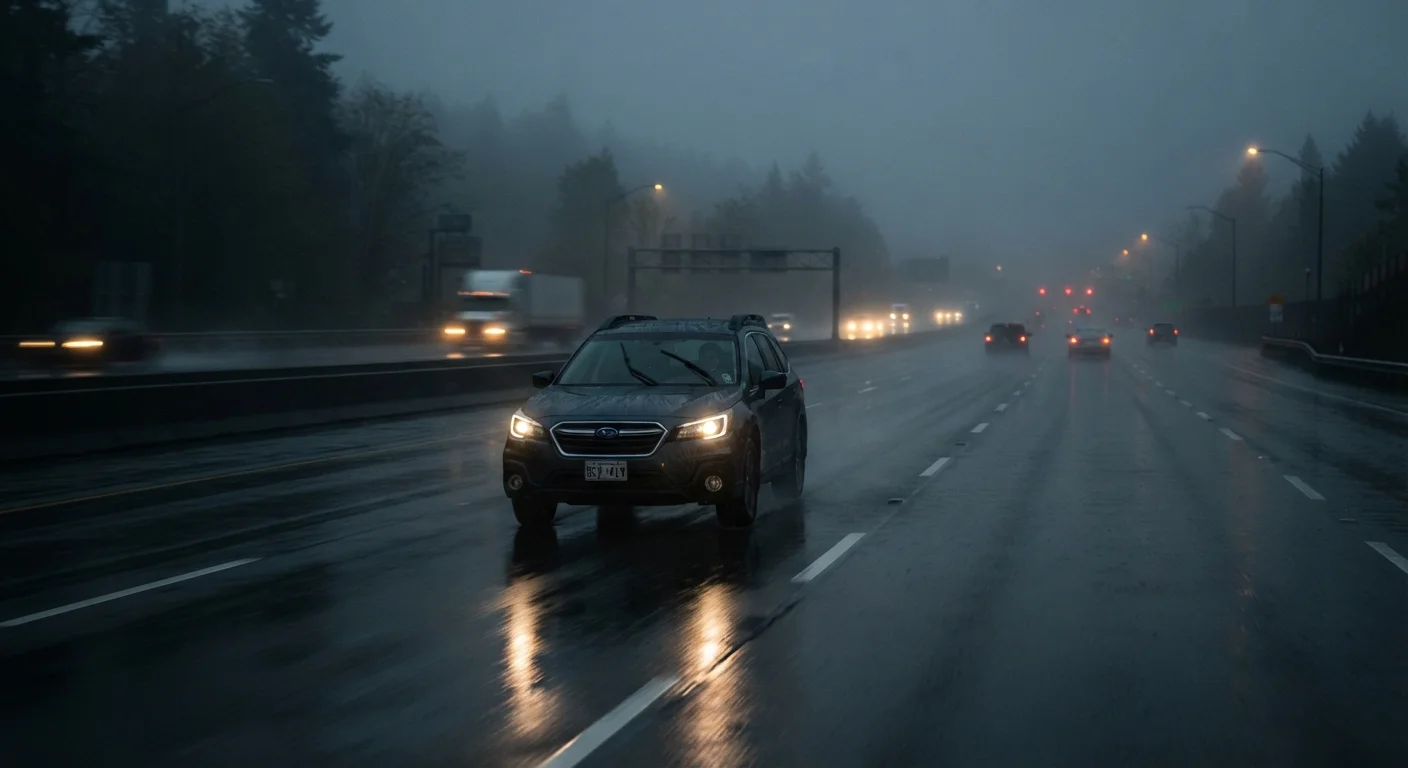
Why Weather Changes Everything Behind the Wheel
Clear, dry conditions give drivers the widest margin for error. Adverse weather shrinks that margin fast. Rain reduces tire grip and visibility simultaneously. Snow and ice can cut traction to a fraction of normal levels. Fog removes your ability to anticipate what's ahead. Each hazard demands a distinct response - and treating them as interchangeable is one of the most common mistakes drivers make.
According to the Federal Highway Administration, weather-related crashes account for roughly 21% of all vehicle crashes annually in the United States, resulting in significant injuries and fatalities. The good news is that most weather-related crashes are preventable with informed technique. This guide breaks down how to adapt for each major condition.
For a broader framework on building consistent driving habits, see evidence-informed safe driving practices that help turn good intentions into reliable behavior.
What you will need
Step-by-Step: Adjusting Your Driving for Rain, Snow, and Fog
The adjustments below apply whether you encounter these conditions suddenly or plan for them in advance. Apply them as conditions develop - don't wait until visibility drops to zero or your tires lose grip before reacting.
Slow down - deliberately, not just slightly
Reduce your speed well below the posted limit as soon as conditions deteriorate. On wet roads, a vehicle traveling at 60 mph needs significantly more distance to stop than the same vehicle at 45 mph. On snow or ice, stopping distances can be four to ten times longer than on dry pavement, depending on tires and road temperature.
A useful rule: if road conditions look questionable, your speed should feel uncomfortably slow by normal standards. That discomfort is appropriate.
Increase your following distance significantly
The standard three-second following rule is a minimum for dry roads. In rain, extend this to at least six seconds. On packed snow or ice, many safety organizations recommend eight to ten seconds or more. This gives you room to brake gradually rather than abruptly, which is essential when traction is reduced.
Count from when the vehicle ahead passes a fixed point - a sign, a bridge seam - until you pass the same point. Adjust your speed until you consistently meet the target gap.
Turn on your headlights (even in daylight)
In rain, snow, or fog, turn on your low-beam headlights - not just your daytime running lights, which typically do not activate tail lights. Being visible to other drivers is as important as seeing the road yourself. Many states legally require headlights whenever windshield wipers are in use; check your state's rules, but turn them on regardless.
In fog specifically, use low beams or fog lights. High beams scatter off moisture particles and reduce your own sight distance while blinding oncoming drivers.
Disable cruise control on any slippery or low-visibility surface
Cruise control is designed for stable, predictable conditions. On wet or icy roads, your vehicle may hydroplane or lose traction briefly - and cruise control can respond by accelerating to maintain your set speed, making a slide worse. Keep your foot near the brake and maintain manual control of your throttle at all times in adverse weather.
Handle ice and black ice with minimal inputs
Black ice is a thin, nearly transparent layer of ice that forms when surface temperatures drop to freezing while the road appears wet. Bridges, overpasses, and shaded sections freeze first. If the road suddenly becomes silent under your tires and steering feels unusually light, you may be on black ice.
The correct response: ease off the accelerator gently, do not brake or turn sharply, and steer in the direction you want to go. Allow the vehicle to slow naturally. If you begin to skid, steer toward the direction of the skid - counter-intuitively, this helps regain traction.
Know when to pull over or postpone
There are conditions in which continuing to drive is genuinely not safe regardless of skill level - whiteout snow, dense freezing fog at night, or roads covered in untreated ice. Pulling over to a well-lit, off-road location and waiting for conditions to improve is a legitimate and sound decision. So is postponing a trip entirely.
Before any winter or storm-season drive, check forecasts and road condition reports through your state's department of transportation. Many states offer real-time road condition maps online.
Practice Smooth, Gradual Inputs
In any low-traction condition, sudden movements - hard braking, sharp steering, or rapid acceleration - are the primary triggers for losing control. Think of every input as needing to be gentler than usual. Brake earlier, turn earlier, and accelerate later than you would on dry roads. This habit alone reduces your crash risk significantly in adverse conditions.
Common Mistakes That Make Bad Conditions Worse
Even experienced drivers fall into predictable traps in adverse weather. Understanding these errors helps you avoid them proactively.
- Overconfidence in all-wheel drive (AWD): AWD improves acceleration on slippery surfaces but does not meaningfully improve braking. Many AWD drivers travel too fast for icy conditions as a result.
- Using high beams in fog: High beams reflect off water droplets in fog, creating glare that actually reduces your visibility. Low beams or dedicated fog lights are far more effective.
- Braking mid-curve on ice: Braking while turning transfers weight abruptly and can cause a spin. Reduce speed before any curve, then maintain steady throttle through it.
- Following posted speed limits as a ceiling: Speed limits reflect safe travel under ideal conditions. In rain, snow, or fog, a lower speed is often required by law and always required by physics.
AWD Does Not Mean Ice-Proof
All-wheel drive and four-wheel drive improve a vehicle's ability to accelerate on slippery surfaces, but they offer no advantage when braking. Drivers of AWD vehicles frequently over-estimate their safety margin on snow and ice and travel at speeds that their braking distance cannot support. Always match your speed to the road's ability to stop you - not just move you.
For additional preparation before you leave home, the family road trip safety walkthrough covers tire condition, emergency kits, and other checks that matter even more in bad weather.
Weather-related risks share important parallels with nighttime driving hazards - reduced visibility and reduced reaction time demand the same disciplined adjustments. And because defensive anticipation is central to all of these situations, reviewing what defensive driving actually means can reinforce your overall approach.
The content provided on our blog site traverses numerous categories, offering readers valuable and practical information. Readers can use the editorial team’s research and data to gain more insights into their topics of interest. However, they are requested not to treat the articles as conclusive. The website team cannot be held responsible for differences in data or inaccuracies found across other platforms. Please also note that the site might also miss out on various schemes and offers available that the readers may find more beneficial than the ones we cover.