

Summary

22 items · 30–60 minutes

Why a Pre-Trip Walkthrough Matters

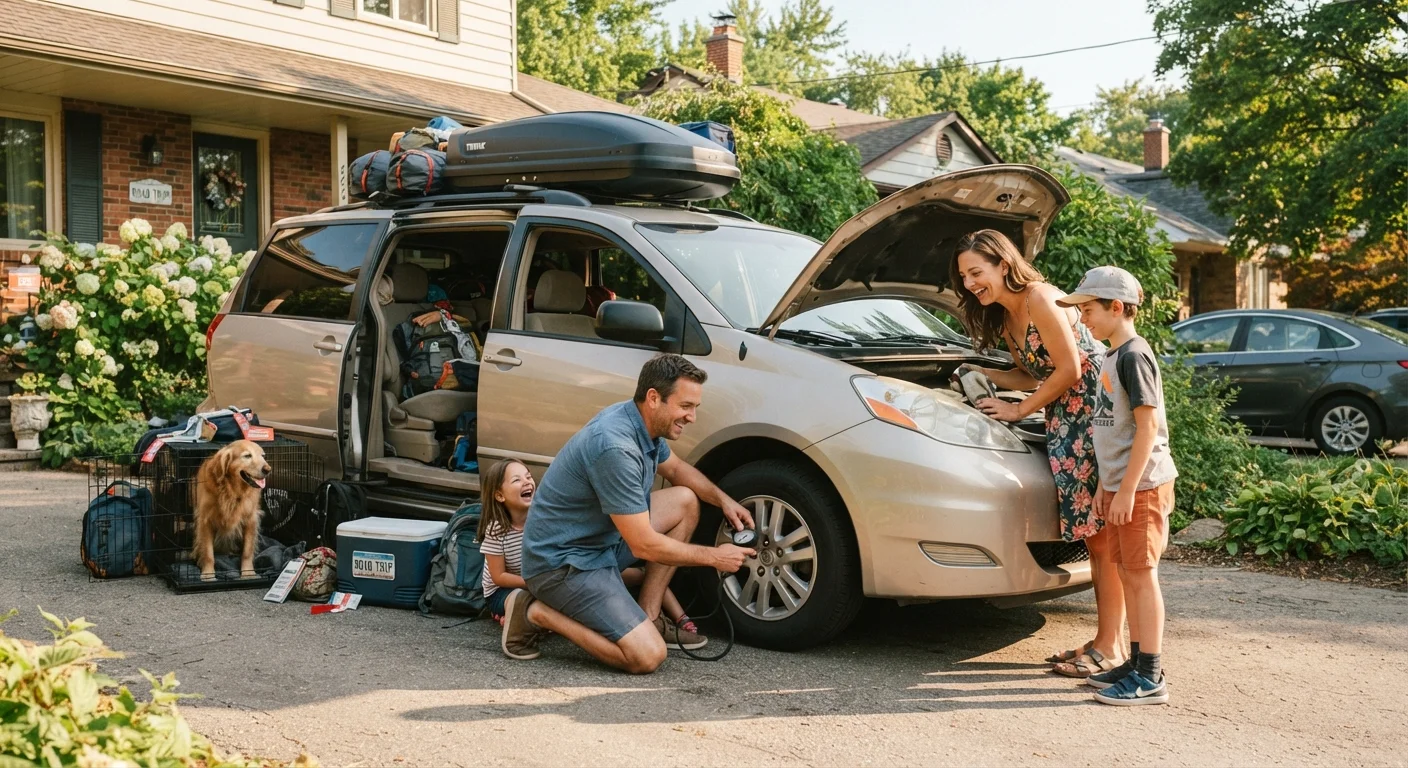
Most road trip accidents and breakdowns are preventable. A focused 30-to-60-minute inspection before you leave the driveway is one of the highest-value safety habits a family can develop. It doesn't require a mechanic's training — just a methodical approach and knowledge of what to look for.

This checklist is designed to cover the full vehicle, the occupants, and the documents every family needs on the road. For a broader view of safe driving practices, see our complete family safe driving reference. If you're traveling with infants or toddlers, road trips with very young children require some additional planning steps not covered here.

Required

Tire pressure gauge

Accurately measures tire inflation so you can match the vehicle manufacturer's recommended PSI.

Required

Tread depth coin (quarter)

A simple, no-cost method for estimating remaining tire tread depth before departure.

Required

Flashlight or work light

Illuminates the engine bay, undercarriage, and tire sidewalls during early-morning or garage inspections.

Required

Vehicle owner's manual

Contains the correct fluid specs, tire pressure ratings, and maintenance intervals specific to your vehicle.

Required

Emergency roadside kit

Provides jumper cables, flares, a first-aid kit, and basic tools if a breakdown occurs far from help.

Required

Child seat instruction manual

Guides correct installation and harness adjustment for each child's car seat or booster.

The Pre-Trip Checklist

Work through each group in order. Flag any item you're uncertain about — if you find a potential safety issue you can't assess confidently, consult a qualified mechanic before departing. Our guide to checking your own fluid levels walks through the engine bay checks in more detail.

Tires

Check all four tires — plus the spare — for correct inflation using a tire pressure gauge; compare to the vehicle placard inside the driver's door jamb, not the maximum figure printed on the tire sidewall. Must
Inspect tread depth on each tire; insert a quarter into the tread groove — if you can see the top of Washington's head, tread depth is too low for safe highway driving. Must
Look for visible cuts, bulges, or uneven wear patterns on the tire sidewalls and tread surface. Must
Confirm the spare tire is inflated, accessible, and that the jack and lug wrench are present and functional. Should

Fluids

Check engine oil level using the dipstick with the engine cold; top off or schedule an oil change if you're within 500 miles of your next service interval. Must
Verify coolant (antifreeze) level in the overflow reservoir — low coolant on a long summer drive can cause overheating. Must
Inspect brake fluid level in the reservoir under the hood; if it's near or below the minimum line, have a mechanic evaluate the brakes before departure. Must
Check windshield washer fluid and top off if low — visibility is critical, especially during highway driving or inclement weather. Should

Lights and Visibility

Test all exterior lights — headlights (low and high beam), taillights, brake lights, turn signals, and reverse lights — with a helper walking around the vehicle. Must
Clean the windshield inside and out, and replace wiper blades that streak, skip, or leave blind spots. Should
Verify all mirrors are clean, properly adjusted, and undamaged. Should

Passenger Safety

Inspect every child safety seat for correct installation according to the manufacturer's instructions and your vehicle's owner's manual — the seat should not move more than one inch side to side when tested at the belt path. Must
Confirm that all passengers have working seatbelts and that no belt is frayed, twisted, or failing to latch securely. Must
Secure all cargo in the trunk or cargo area so items cannot become projectiles during sudden stops. Must
Brief all older children and passengers on basic safety rules — staying seated while the vehicle is moving, window and door behavior, and what to do if you pull over. Nice to have

Emergency Kit and Documents

Confirm your emergency kit includes jumper cables (or a jump starter pack), a reflective triangle or road flares, a first-aid kit, a flashlight with working batteries, and a basic tool kit. Must
Verify that your current proof of insurance, vehicle registration, and driver's license are in the vehicle. Must
Save roadside assistance contact numbers in your phone and write them down as a backup in case of no cell signal. Should
Include a written list of emergency contacts, medical allergy information for each family member, and any needed prescription details in a sealed envelope in the glove compartment. Nice to have

Route and Weather Readiness

Check the weather forecast for your entire route and planned stops — not just your departure city — and review conditions for mountain passes, coastal areas, or storm-prone corridors. Must
Identify at least one alternate route in case of road closures, and share your planned itinerary with someone not traveling with you. Should
If driving into known adverse weather, review how to adjust your driving — our guide on driving in rain, snow, and fog covers key adjustments. Should

Don't Ignore Brake Warning Signs

If you hear grinding, squealing, or feel pulsing when you apply the brakes, do not depart until a qualified mechanic has inspected the brake system. Brake failure is among the most dangerous mechanical issues on the highway. A pre-trip brake check is not optional — it's a safety non-negotiable.

Don't overlook paperwork. Make sure your glove compartment is stocked — our article on documents to keep in your glove compartment covers exactly what belongs there. Once the vehicle checks are done, cross-reference your packing with what families actually need in the car to make sure you haven't missed comfort or safety gear.

Child Seat Installation Must Be Verified Every Trip

A car seat that was correctly installed last month may have shifted, loosened, or been improperly re-installed after cleaning. The National Highway Traffic Safety Administration (NHTSA) recommends checking installation before every significant trip. Many local fire stations and certified Child Passenger Safety Technicians (CPSTs) offer free inspection events — a worthwhile step before a long journey.

Share

Cars & Driving Editorial Team · Contributor

Cars & Driving Editorial Team is the collective byline for our editorial team and contributor network. Articles published under this byline or an editorial pen name are researched, written, and reviewed according to our editorial standards for clarity, consistency, and independence before publication.

The content provided on our blog site traverses numerous categories, offering readers valuable and practical information. Readers can use the editorial team’s research and data to gain more insights into their topics of interest. However, they are requested not to treat the articles as conclusive. The website team cannot be held responsible for differences in data or inaccuracies found across other platforms. Please also note that the site might also miss out on various schemes and offers available that the readers may find more beneficial than the ones we cover.