

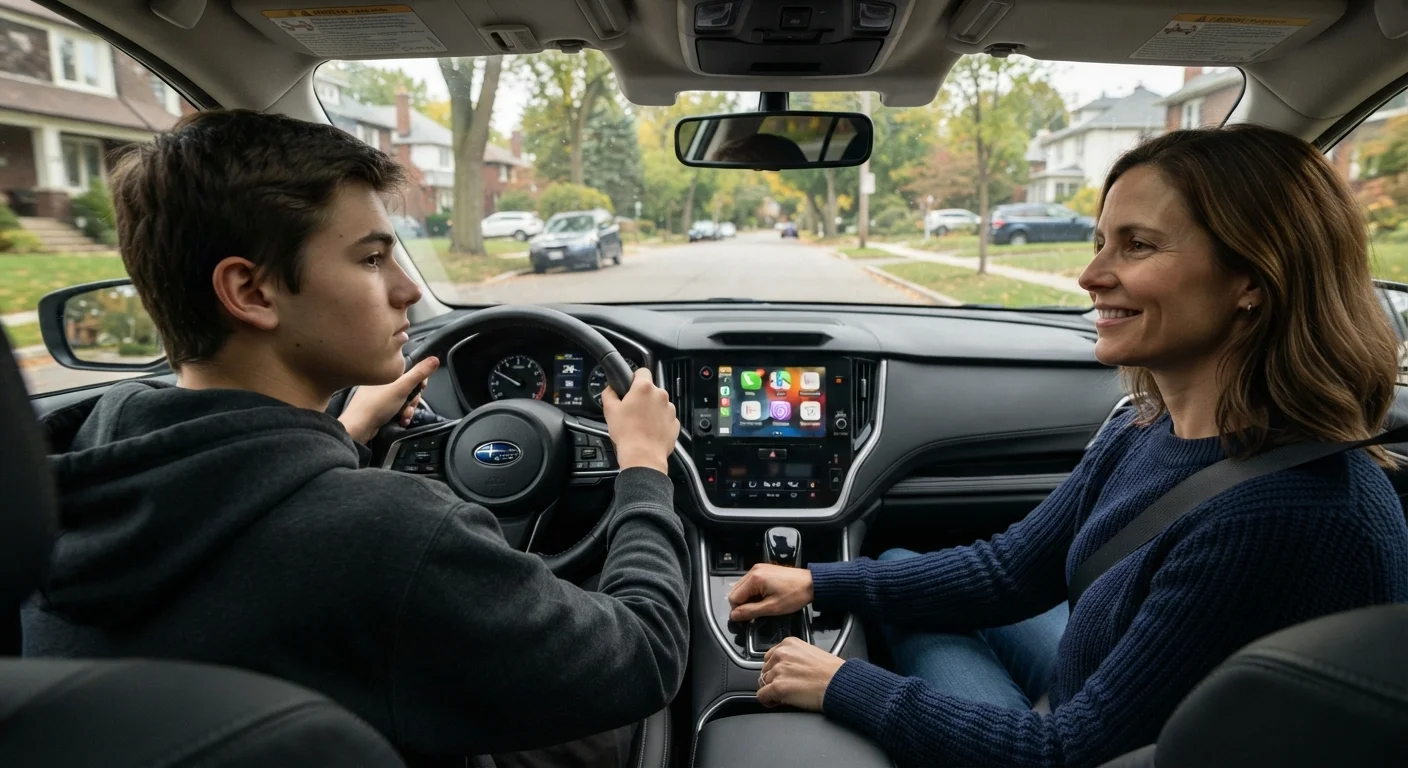
Why Teen Drivers Face Disproportionate Crash Risk
Motor vehicle crashes are a leading cause of death for teenagers in the United States. According to the Centers for Disease Control and Prevention, teen drivers ages 16-19 are involved in fatal crashes at rates higher than nearly any other age group. Two factors drive this: limited experience and immature risk perception.
New drivers lack the automatic, practiced responses that experienced drivers use without thinking - scanning intersections, judging closing speeds, or managing skids. At the same time, adolescent brain development means risk assessment and impulse control are still maturing. The combination is predictably dangerous in the first months of independent driving, which is precisely the problem GDL systems are designed to address.
~4x
Crash rate vs. drivers 20 and older
The CDC reports that per mile driven, teen drivers ages 16-19 are approximately four times more likely to crash than drivers aged 20 and above.
First 3 months
Highest-risk window after licensure
The Insurance Institute for Highway Safety identifies the initial months after a teen receives driving privileges as the period of greatest crash vulnerability.
40-60 hrs
Typical state-required supervised driving hours
Most U.S. states require 40 to 60 hours of adult-supervised practice before a teen can progress to the intermediate license phase.
How the Three GDL Phases Work
While details vary by state, most graduated licensing systems follow a three-phase structure:
- Learner's Permit Phase: Teens - typically at age 15 or 16 - can drive only with a licensed adult supervisor in the vehicle. Most states require a minimum number of supervised hours (commonly 40-60) before advancing, and some require a minimum holding period of six months or more. This is the stage for building core skills in lower-risk conditions.
- Intermediate (Restricted) License Phase: The teen can drive without a supervisor but faces restrictions - most commonly a nighttime driving curfew (often 11 p.m. to 5 a.m.) and limits on carrying teen passengers. Some states also prohibit cell phone use explicitly during this phase beyond general distracted driving law. The intermediate phase typically lasts 12 months or until the driver reaches a set age.
- Full Unrestricted License: Once age and time requirements are met, remaining restrictions lift. In most states this happens between 17 and 18.
Families can find their state's exact requirements through the state DMV website. Understanding the rules in writing - rather than relying on word of mouth - helps avoid misunderstandings about what is and isn't allowed.
Check Your State's GDL Rules Directly
GDL requirements differ meaningfully from state to state - including minimum permit age, required supervised hours, nighttime curfew start times, and passenger limits. Rather than relying on what other families say, look up your state's exact rules on the official DMV or motor vehicle agency website before your teen begins any phase of the process.
The Two Restrictions That Matter Most
Research consistently identifies nighttime driving and peer passengers as the two highest-risk conditions for new drivers. The Insurance Institute for Highway Safety reports that crash rates per mile driven are substantially higher at night and that risk rises sharply with each additional teen passenger in the vehicle.
For families, this means the intermediate-phase restrictions around these two factors are the most important ones to take seriously - and to enforce consistently. A teen who drives responsibly during daylight hours can still be at significantly elevated risk the moment those two variables enter the picture.
For a deeper look at the mechanics of nighttime risk, see our article on why night driving is riskier than most people realize.
GDL Restrictions Have Legal Consequences
Violating intermediate license restrictions - such as exceeding passenger limits or driving past curfew - can result in fines, license suspension, or a reset of the holding period in some states. Beyond the legal consequences, violations also signal real safety risk. Parents should treat GDL rules as enforceable boundaries, not suggestions.
What Parents Can Do Beyond the Legal Requirements
GDL laws define the floor, not the ceiling. Studies suggest that parent involvement during the intermediate phase - continuing to ride along occasionally, debriefing after drives, and setting household rules stricter than the law requires - is associated with safer outcomes.
Practical steps families can take:
- Log more hours than required. The state minimum is a baseline. Varied practice in rain, highway traffic, and unfamiliar areas builds the kind of experience that reduces crash risk.
- Establish a household driving agreement. A written agreement covering curfews, passenger rules, phone use, and what happens if rules are broken gives teens a clear framework and removes ambiguity.
- Stay involved past the permit phase. Many parents disengage once the intermediate license is granted. This is the stage where most teen crashes occur.
- Model the behavior you expect. Teens observe how parents actually drive - not just how parents say to drive.
Evidence-based practices for building lasting safe driving habits apply as much to new teen drivers as to adults.
Once your teen moves toward full licensure, you'll also want to understand the insurance side. Adding a teen driver to your policy has financial implications families should plan for in advance.
Frequently Asked Questions
The three stages are: a supervised learner's permit phase, a restricted intermediate license phase, and a full unrestricted license. The learner phase requires an adult supervisor in the vehicle at all times. The intermediate phase allows unsupervised driving but restricts nighttime hours and passenger counts. The full license removes most restrictions once the driver meets the age and experience thresholds.
Most states require between 40 and 60 hours of supervised practice, with some mandating that a portion occur at night. The exact requirement varies by state, so families should verify the rule with their state DMV. More practice beyond the minimum is generally associated with better outcomes.
In most states, teens can apply for a full unrestricted license between ages 17 and 18, provided they have met all phase requirements. A handful of states allow full licensure at 16 with sufficient training, while others set the threshold at 18. Check your state's DMV for the precise ages.
Research consistently shows that carrying peer passengers increases teen crash risk significantly, and that risk rises with each additional teen passenger. Social interaction diverts attention, and peer presence can pressure new drivers into risky behavior. This is why most intermediate GDL phases limit the number of non-family passengers allowed.
Yes - research from the Insurance Institute for Highway Safety and other bodies indicates that strong GDL programs are associated with reductions in fatal crash involvement among 16-year-old drivers. States with more comprehensive restrictions tend to see greater reductions compared to states with weaker GDL provisions.
The content provided on our blog site traverses numerous categories, offering readers valuable and practical information. Readers can use the editorial team’s research and data to gain more insights into their topics of interest. However, they are requested not to treat the articles as conclusive. The website team cannot be held responsible for differences in data or inaccuracies found across other platforms. Please also note that the site might also miss out on various schemes and offers available that the readers may find more beneficial than the ones we cover.