

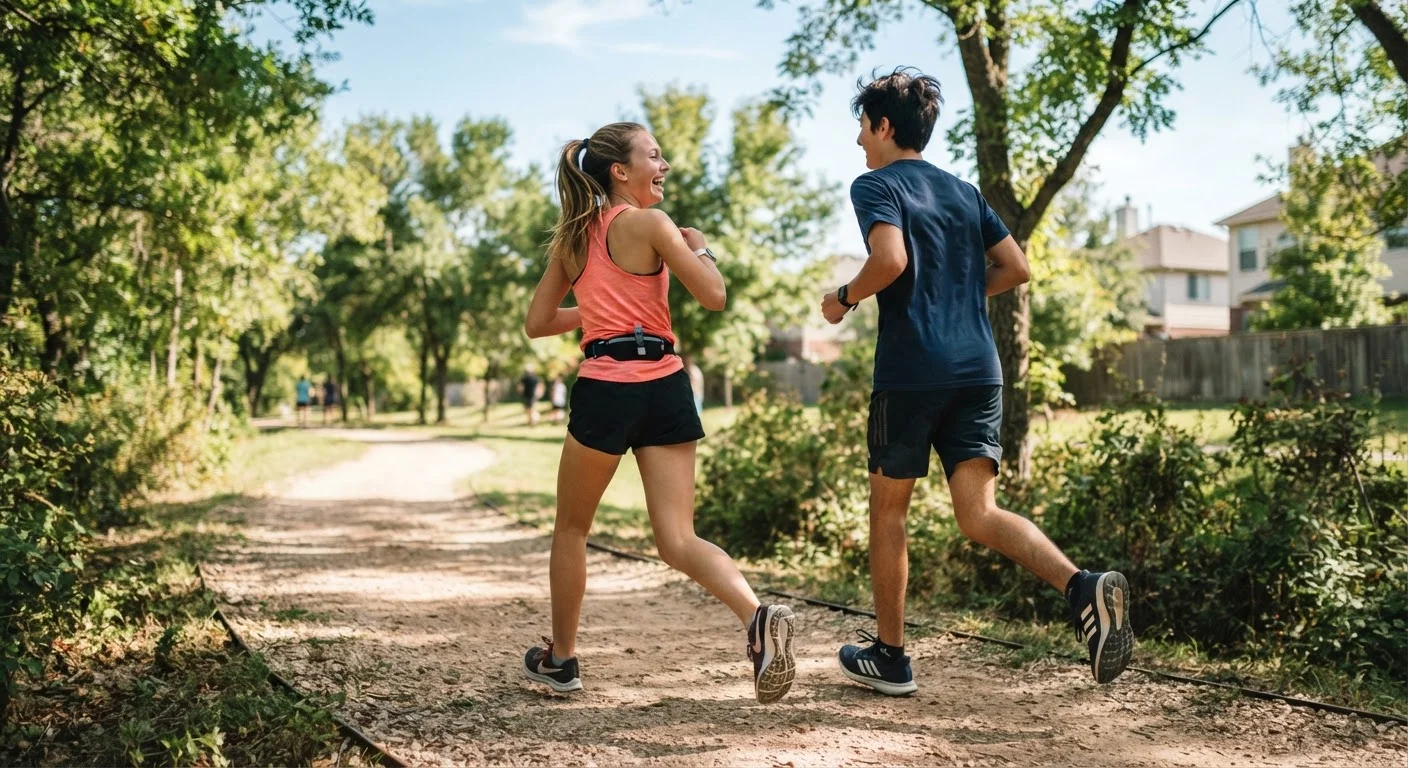
A Body in Progress: What Makes Teen Physiology Distinct
Adolescence is one of the most physiologically active periods of human life. Between roughly ages 10 and 18, the body undergoes dramatic changes - skeletal growth accelerates, hormones surge, and the brain undergoes significant rewiring. All of this shapes how a teenager responds to exercise in ways that adults simply don't experience.
One important difference involves the growth plates - areas of developing cartilage near the ends of long bones. Because these plates haven't yet hardened into solid bone, repetitive high-impact stress or excessive compressive loading can pose a greater injury risk for teens than for adults. This doesn't mean teens should avoid vigorous activity; rather, variety, technique, and appropriate progression matter more at this stage.
Teens also tend to have a higher heart rate during exercise than adults performing the same relative effort. Their cardiovascular systems are still calibrating efficiency, which means perceived exertion can feel more intense during prolonged aerobic work. On the flip side, they often recover faster between bouts of activity - a trait that makes interval-style or varied movement particularly well-suited to adolescent physiology.
Growth Plate Injuries: Worth Knowing About
Growth plates typically close by the late teens, but timing varies between individuals and between boys and girls. Persistent joint pain in an active adolescent - particularly around the knee or ankle - warrants evaluation by a healthcare provider rather than being dismissed as standard growing pains. Early attention to overuse signals generally leads to better outcomes.
How Motivation Works Differently for Teenage Exercisers
Adults often approach exercise with outcome-oriented goals - weight management, cardiovascular health, stress relief. Teenagers tend to be driven by fundamentally different motivators: social belonging, immediate enjoyment, and identity expression. Research consistently shows that when teens feel exercise is something happening to them rather than something they chose, adherence drops sharply.
This matters practically. A teen required to run laps is having a very different experience from one who joined a dance class with friends. Both may be getting equivalent cardiovascular benefit, but only one is building an intrinsic connection to movement. Common assumptions about teen fitness often overlook how central autonomy is to adolescent motivation.
Peer dynamics also play a significant role. Teens who feel competent around their peers in physical settings are more likely to stay active. Creating low-judgment environments - where skill level isn't publicly ranked - supports sustained participation more than competitive pressure does.
Let Teens Lead Their Activity Choices
When possible, involve teenagers in selecting the types of movement they pursue. Offering a shortlist of options - rather than a single prescribed activity - preserves a sense of autonomy while still providing structure. Teens who feel ownership over their exercise choices tend to stay engaged longer and develop a more positive relationship with physical activity overall.
Building Habits That Outlast Adolescence
The movement patterns teens establish have a meaningful influence on their activity levels into adulthood. This makes the adolescent years a genuine window of opportunity - not to train teens like miniature athletes, but to help them discover forms of movement they genuinely enjoy.
Variety is a practical strategy here. Teens who are exposed to multiple activity types - team sports, individual pursuits, outdoor movement, structured classes - are more likely to find something that sticks. For families wondering how to structure this, exploring both outdoor and indoor options can help tailor activity to seasons, interests, and practical constraints.
It's also worth noting that unstructured active play and organized exercise continue to serve different developmental purposes even into the teen years. Not all movement needs to be formal or performance-tracked to count.
~20%
US teens meeting daily activity guidelines
According to the CDC's Youth Risk Behavior Survey, only about 1 in 5 high school students achieve the recommended 60 minutes of physical activity daily.
60 min
Recommended daily activity for adolescents
The U.S. Department of Health and Human Services Physical Activity Guidelines for Americans recommend at least 60 minutes of moderate-to-vigorous activity most days for children and adolescents ages 6-17.
3x/week
Muscle and bone-strengthening frequency advised
Guidelines recommend that at least three days per week of an adolescent's activity include muscle-strengthening and bone-strengthening exercises, such as gymnastics, jumping, or resistance work.
This article is for general informational and educational purposes only and is not a substitute for professional medical advice. Consult a qualified healthcare provider regarding your teenager's specific health, fitness, or development questions.
Frequently Asked Questions
Yes. Major health guidelines generally recommend adolescents get around 60 minutes of moderate-to-vigorous physical activity most days, which is more than the adult recommendation. This higher target reflects the role of movement in supporting healthy growth, bone density, and brain development during adolescence.
Moderate resistance training with proper technique is considered safe and beneficial for adolescents by most major pediatric health organizations. The key is age-appropriate loads, qualified supervision, and avoiding maximal-effort lifting before skeletal maturity. Teens should always work with a knowledgeable coach or trainer.
Research suggests several factors: increased academic pressure, changing social priorities, and a shift from play-based activity to performance-focused sport. Teens also become more self-conscious about their bodies, which can reduce confidence in gym or team settings. Activities that emphasize fun and social connection tend to maintain engagement better.
Physical activity is associated with reduced symptoms of anxiety and depression in adolescents, and it supports better sleep and stress regulation. The developing brain is particularly responsive to the mood-regulating effects of movement, partly due to endorphin release and reduced cortisol levels following exercise.
Shared family activity can strengthen motivation and connection, but teens often value peer-based and self-chosen activity just as much. A balanced approach - some shared movement plus freedom to pursue individual interests - tends to support longer-term habits.
The content provided on our blog site traverses numerous categories, offering readers valuable and practical information. Readers can use the editorial team’s research and data to gain more insights into their topics of interest. However, they are requested not to treat the articles as conclusive. The website team cannot be held responsible for differences in data or inaccuracies found across other platforms. Please also note that the site might also miss out on various schemes and offers available that the readers may find more beneficial than the ones we cover.