

Our Verdict
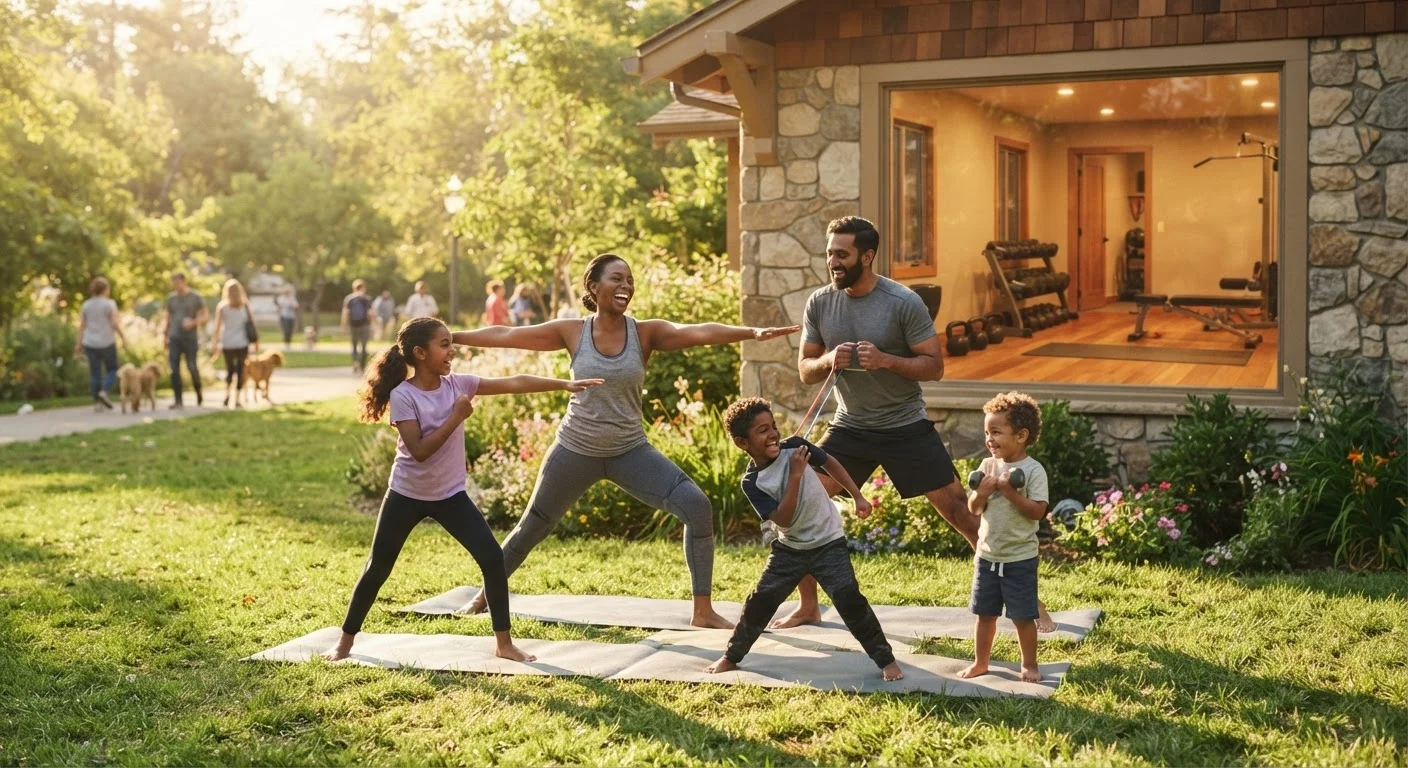
Neither outdoor nor indoor exercise wins outright. Outdoor movement offers powerful mood, social, and environmental benefits, while indoor settings provide reliability, safety, and year-round consistency. Families who combine both - adapting to season, budget, and individual needs - tend to build the most durable movement habits.
| Best for | Recommended |
|---|---|
| Families wanting low-cost, mood-boosting activity in favorable climates | Outdoor Exercise |
| Households in areas with harsh winters, extreme heat, or safety concerns | Indoor Exercise |
| Families with children of varying ages seeking flexible, structured options | A combined approach |
| Adults managing chronic conditions or specific physical needs | Indoor Exercise (with professional guidance) |
Why the Setting of Exercise Actually Matters
Where a family chooses to move - a backyard trail, a neighborhood park, a living room floor, or a community recreation center - shapes more than logistics. Environment influences motivation, habit formation, safety, and even the physiological benefits of exercise itself. For families juggling school schedules, work commitments, and mixed fitness levels, choosing between outdoor and indoor movement is a genuinely practical question.
This isn't about one option being superior. It's about understanding the real trade-offs so families can make informed decisions that stick. For a closer look at weaving movement into tight schedules regardless of setting, see our guide on fitting activity into a packed family day.
What Outdoor Exercise Offers - and Where It Falls Short
Research consistently associates time spent exercising in natural environments with reduced stress, improved mood, and lower perceived effort compared to equivalent indoor activity. Sunlight exposure during outdoor movement also supports vitamin D synthesis, a nutrient many Americans don't get enough of. For kids especially, unstructured outdoor play builds coordination, risk assessment, and social skills - benefits that a treadmill simply can't replicate. Our article on active play vs. structured exercise for children explores how these developmental differences play out.
The limitations are real, however. Weather is the most obvious - extreme heat, cold, ice, and air quality alerts can make outdoor activity unsafe or impossible for stretches of the year. Urban families may also face barriers around green space access, traffic, or neighborhood safety. For families with younger children or members managing health conditions, outdoor exercise requires extra planning around supervision and terrain.
Use Seasons as Your Activity Planner
Rather than forcing one setting year-round, let the seasons guide you. Spring and fall often offer the most accessible outdoor conditions for families; build those months around parks, trails, and outdoor play. Use winter and midsummer as opportunities to explore indoor movement options - community centers, home workouts, or fitness classes. Variety itself can sustain motivation across the year.
What Indoor Exercise Offers - and Where It Falls Short
Indoor exercise environments - whether a home setup, a community center, or a fitness facility - provide consistency that weather can't disrupt. Climate control makes sustained activity achievable in summer heat and winter cold alike, which matters enormously for building reliable habits. Structured classes and equipment also allow for progressive, targeted movement, which can be valuable for adults with specific fitness goals or those managing chronic conditions. Families curious about exercise with specific health considerations can explore exercising with chronic pain for general context.
Cost is the primary drawback. Gym memberships and fitness classes carry ongoing expenses that add up across a family. Home equipment requires upfront investment and dedicated space. There's also a motivation dimension - some people find indoor settings monotonous, particularly children who thrive on varied, exploratory movement. Understanding whether group or solo formats help with indoor motivation is worth considering; our piece on group fitness classes versus solo exercise breaks this down.
| Outdoor Exercise | Indoor Exercise | |
|---|---|---|
| Cost | Generally low to free | Can be high (memberships, equipment) |
| Weather dependence | High - seasonal limitations apply | None - consistent year-round |
| Mood and mental health benefits | Strong - nature exposure adds benefit | Moderate - setting-dependent |
| Safety and supervision | Variable - terrain, traffic, climate | Controlled and predictable |
| Suitability for children | Excellent for free play and exploration | Good for structured classes and rainy days |
| Habit consistency | Weather-dependent variability | High - fewer external barriers |
| Equipment needed | Minimal for most activities | Moderate to high depending on format |
Building a Balanced Family Movement Routine
Most families benefit from treating outdoor and indoor exercise as complementary rather than competing. A practical approach is to default to outdoor movement when conditions allow - walks, cycling, backyard play, park visits - and use indoor options as a reliable fallback during poor weather or busy periods. This hybrid model reduces cost while preserving consistency.
Age and ability differences within a family also matter. Young children generally favor outdoor free play; older kids may engage more with structured indoor activities like dance, martial arts, or home fitness routines. Adults, particularly those over 60, may find certain indoor low-impact options gentler on joints - our guide on low-impact exercise options and who they suit covers this well. For a broader starting point on building shared habits across ages, see getting the whole family moving.
120 min/week
Outdoor time linked to wellbeing benefits
A study published in Scientific Reports found that spending at least 120 minutes per week in nature was associated with good health and wellbeing in adults.
Only 1 in 4
US children meeting activity guidelines
The CDC reports that only about 24% of children aged 6-17 in the US meet recommended physical activity guidelines, highlighting the importance of accessible movement options.
This article is for general informational purposes only and is not a substitute for professional medical advice. Consult a qualified healthcare provider before beginning any new exercise program, especially for children, older adults, or individuals with existing health conditions.
The content provided on our blog site traverses numerous categories, offering readers valuable and practical information. Readers can use the editorial team’s research and data to gain more insights into their topics of interest. However, they are requested not to treat the articles as conclusive. The website team cannot be held responsible for differences in data or inaccuracies found across other platforms. Please also note that the site might also miss out on various schemes and offers available that the readers may find more beneficial than the ones we cover.