

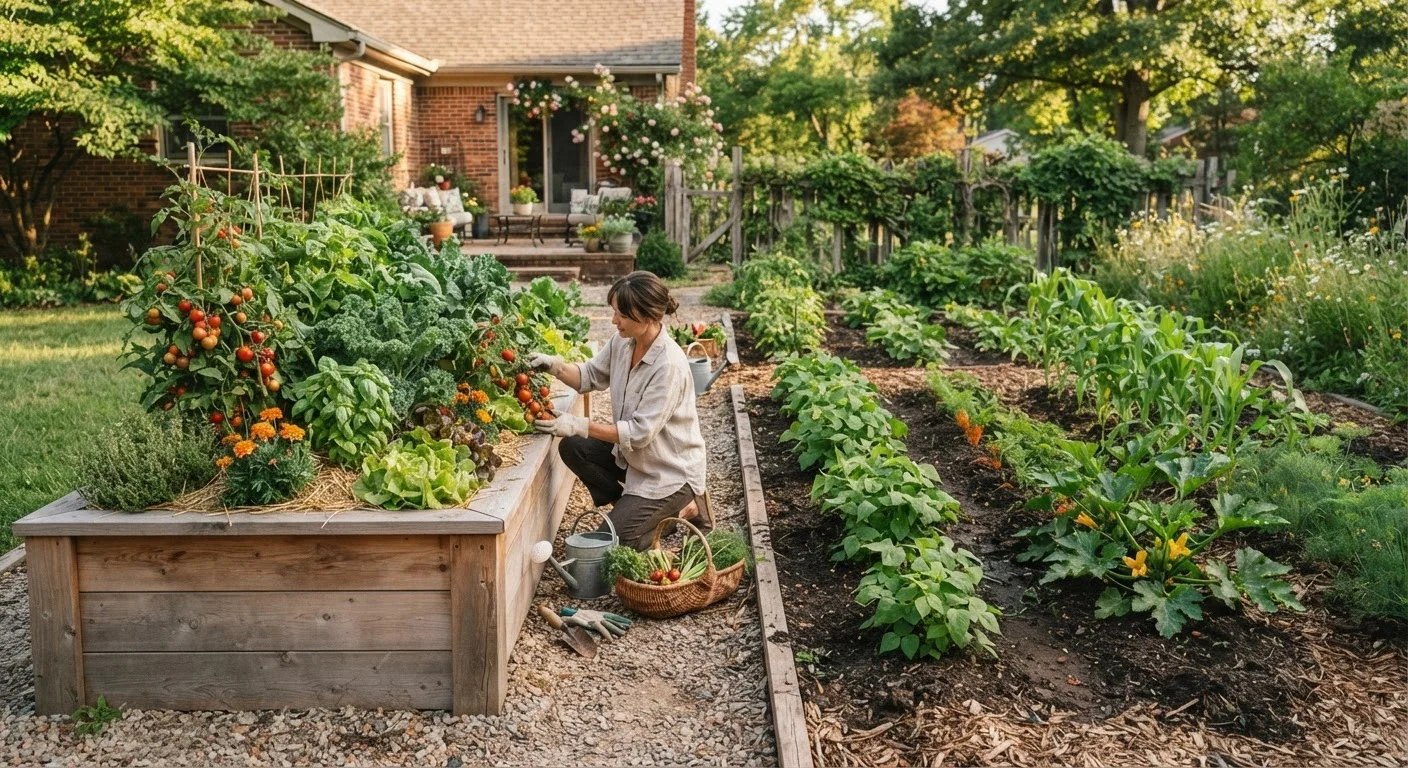
Option A
Raised Beds
The structured, controlled growing environment.
Best for: Gardeners dealing with poor native soil, limited mobility, or wanting faster warm-up in spring.
Option B
In-Ground Planting
The traditional, expansive approach to growing.
Best for: Households with healthy existing soil who want to grow large quantities with lower startup costs.
Understanding the Core Difference
The choice between raised beds and in-ground planting is one of the first decisions a new gardener faces - and it shapes everything from your budget and workload to what you can grow and when. Both methods produce excellent results in the right circumstances, so understanding what each approach actually involves is more useful than declaring a universal winner.
Raised beds are contained growing structures - typically framed with wood, stone, or composite materials - filled with a custom soil mix. They sit above the surrounding ground, anywhere from 6 to 24 inches tall. In-ground planting means working directly in your yard's native soil, typically amended with compost or other materials to improve fertility and structure.
Before committing to either, it helps to understand what your existing soil is working with. Our guide on what soil your garden actually needs explains how to read your soil's current condition - information that directly influences which approach makes more sense for your yard.
| Criterion | Raised Beds | In-Ground Planting |
|---|---|---|
| Startup Cost | Moderate to high | Low to moderate |
| Soil Control | Complete - custom fill | Dependent on native soil |
| Drainage | Excellent by design | Varies by site and soil type |
| Spring Warm-Up | Faster - earlier planting | Slower in cooler climates |
| Weed Pressure | Generally lower | Higher, especially early on |
| Scalability | Limited by cost and space | Easy to expand |
| Accessibility | High - adjustable height | Requires kneeling or bending |
| Root Depth | Limited by bed depth | Unrestricted |
| Long-Term Maintenance | Annual soil topping needed | Improves with ongoing amendment |
Startup Costs and Physical Setup
Raised beds carry a real upfront cost. Framing materials, hardware, landscape fabric, and enough quality fill soil to pack a 4×8-foot bed 12 inches deep can run anywhere from $100 to $400 or more depending on material choices and local pricing. That investment multiplies with each additional bed.
In-ground planting, by contrast, requires little structural spending. The main investment is in soil amendments - compost, aged manure, or other organic matter - and basic tools. For households looking to grow a large vegetable patch, in-ground planting is typically the more cost-efficient path.
6-12 in.
Minimum recommended raised bed depth
Most vegetable crops need at least 6 inches of quality soil depth; root crops like carrots benefit from 12 or more.
2-3 weeks
Earlier planting window in raised beds
Raised bed soil warms faster in spring, commonly allowing planting 2-3 weeks earlier than adjacent in-ground plots in northern US climates.
4×8 ft
Most common raised bed footprint
A 4-foot width allows a gardener to reach the center from either side without stepping into the bed, protecting soil structure.
That said, the labor picture is more nuanced. Preparing a new in-ground bed in compacted or clay soil can be physically demanding - involving double-digging or tilling to loosen the ground. Raised beds eliminate that initial digging effort, since you're filling a structure rather than working the native earth.
Soil Quality, Drainage, and Root Health
Raised beds give gardeners complete control over soil composition. You can build a mix tailored exactly to what you're growing - typically a blend of topsoil, compost, and an aerating material like perlite or coarse sand. This matters enormously in regions where native soil is dense, nutrient-poor, or prone to waterlogging. Raised beds also drain freely, which protects roots from standing water.
In-ground planting depends on what's already there. In parts of the US with naturally rich, loamy topsoil, in-ground planting is highly productive with minimal amendment. In areas with heavy clay or sandy soils, more consistent amendment work is needed over multiple seasons before the ground performs well. This is a long-term investment, but it pays dividends: well-conditioned in-ground soil tends to support a broader, deeper root zone over time.
Amending In-Ground Soil Takes Time
Transforming compacted or nutrient-poor native soil into productive garden ground is a multi-season process. Adding compost each fall and spring, avoiding compaction by staying off wet soil, and mulching consistently are the core practices. Most gardeners see measurable improvement after two to three full growing seasons of consistent amendment.
For gardeners just getting started, the complete first-timer's gardening guide walks through both approaches in the context of a full first season - from site selection to harvest.
Weed Control, Pests, and Season Length
Raised beds naturally reduce weed pressure. Because you're filling with clean soil rather than working ground that may contain dormant weed seeds, the initial weed burden is often much lower. A layer of landscape fabric beneath the bed provides additional protection. Over time, weeds can still arrive via wind or mulch, but they're generally easier to manage in a contained structure.
In-ground beds require more consistent weeding, particularly in the first two or three years. Mulching generously around plants is one of the most effective tools for suppressing weed competition without chemicals.
On season length: raised beds warm up more quickly in spring because the soil mass is exposed on all sides and heats from the ambient air. In cooler northern climates, this can extend your effective growing season by two to three weeks on the front end. In-ground soil stays cooler longer, which can actually benefit heat-sensitive crops in summer but delays planting in spring.
If you're weighing all your space options, it's also worth seeing how both approaches compare to container gardening - particularly useful if you're working with a patio or very small yard.
The content provided on our blog site traverses numerous categories, offering readers valuable and practical information. Readers can use the editorial team’s research and data to gain more insights into their topics of interest. However, they are requested not to treat the articles as conclusive. The website team cannot be held responsible for differences in data or inaccuracies found across other platforms. Please also note that the site might also miss out on various schemes and offers available that the readers may find more beneficial than the ones we cover.