

Why Terminology Matters Before You Start
Walk into any home improvement store for bathroom repair supplies and you'll encounter dozens of products with overlapping names. Grout and caulk sit side by side. Tile sealers and grout sealers look nearly identical. Porcelain and ceramic tiles appear the same on the shelf. Getting the wrong product doesn't just waste money - it can lead to repairs that fail within months.
This reference guide defines the core terms clearly so you can shop, plan, and communicate with confidence. Whether you're patching a cracked floor tile, regrouting a shower surround, or sealing freshly laid backsplash tile, the vocabulary below is your starting point.
For a broader look at which bathroom and household repairs are reasonable to attempt yourself, see our practical DIY vs. pro framework.
| Grout joint width for sanded grout | 1/8 inch or wider |
| Grout joint width for unsanded grout | Under 1/8 inch |
| Porcelain tile water absorption rate | Generally under 0.5% (ANSI A137.1 standard) |
| Typical grout cure time before sealing | Minimum 72 hours (varies by product) |
| Recommended grout resealing frequency (wet areas) | Every 1-3 years |
| Material used at corners and tub edges | Flexible silicone caulk, not grout |
Tile Types: Ceramic, Porcelain, Natural Stone, and More
Tiles are not interchangeable. Each material has distinct characteristics that affect installation, sealing requirements, and repair difficulty.
- Ceramic tile: Made from clay fired at relatively low temperatures. It is softer and more porous than porcelain, making it easier to cut but more prone to chipping and moisture absorption. Common in wall applications and lighter-traffic floors.
- Porcelain tile: A denser, harder subtype of ceramic fired at higher temperatures with finer clay. It has very low water absorption (generally under 0.5%), making it well suited for wet areas including shower floors and walls.
- Natural stone (marble, slate, travertine, granite): Quarried material that varies widely in porosity. Nearly all natural stone tile requires sealing before and after grouting because the stone will absorb grout pigment without protection.
- Glass tile: Non-porous and resistant to staining, but requires a white-pigmented or non-sag adhesive mortar to prevent color bleed-through. Grout joints must be kept consistent.
- Mosaic tile: Small tiles - often glass, stone, or ceramic - pre-mounted on mesh sheets. Grout joints tend to be narrow, requiring unsanded grout.
Sanded grout
Cement-based grout containing fine sand particles that reduce shrinkage. Used for tile joints 1/8 inch wide or greater.
Unsanded grout
Smooth, sand-free cement grout used for narrow joints under 1/8 inch. Required for glass and polished stone tiles to prevent surface scratching.
Epoxy grout
A two-part grout system using resin and hardener instead of cement. Highly stain- and moisture-resistant; generally does not require sealing.
Penetrating sealer
A sealer that is absorbed below the surface of grout or stone, creating an invisible moisture barrier without altering the surface appearance.
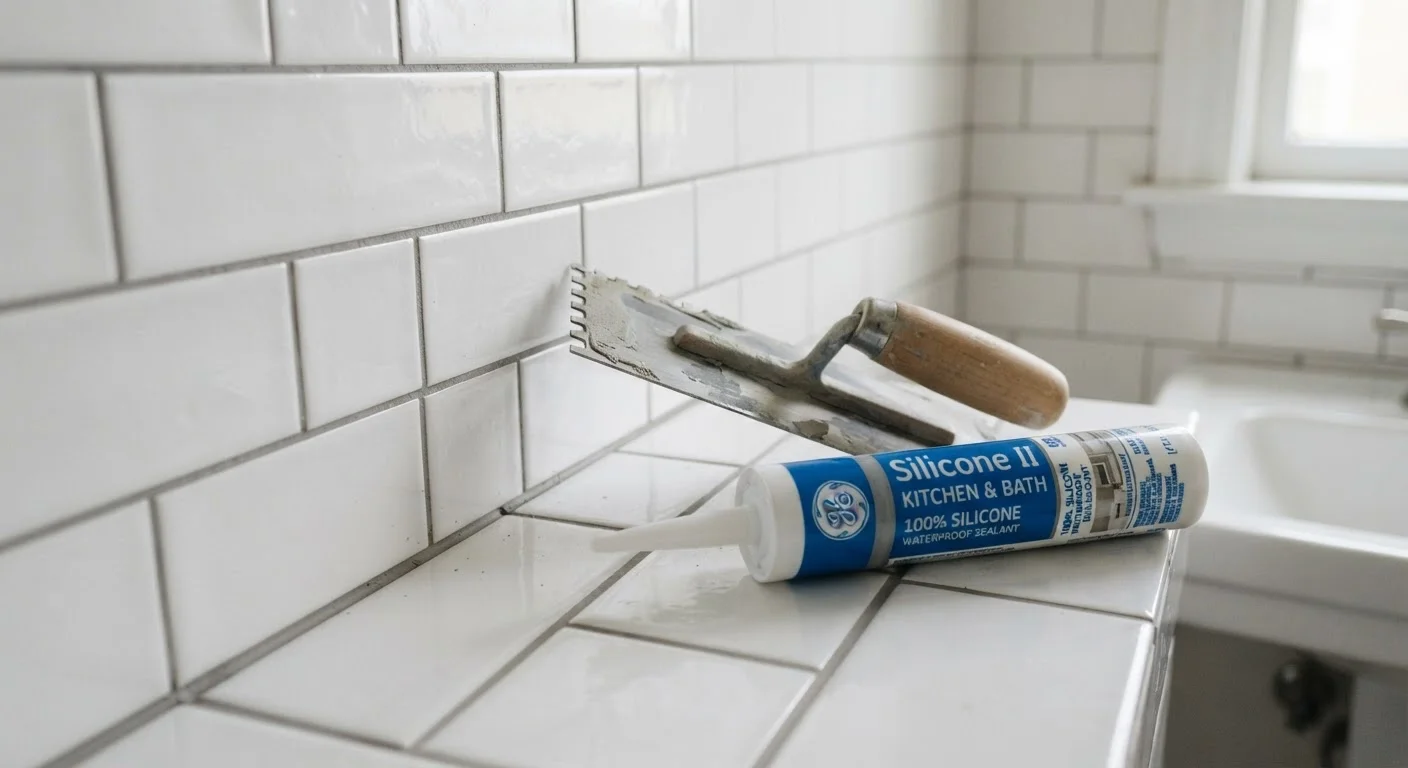
Silicone caulk
A flexible, waterproof sealant used at movement joints such as corners, tub edges, and tile-to-fixture transitions. It accommodates structural movement that would crack rigid grout.
Porosity
A measure of how much liquid a material can absorb. High-porosity tiles (like some natural stone) require sealing; low-porosity tiles (like glazed porcelain) typically do not.
Mortar bed
A thick layer of cement mortar used as the setting surface for tile. Common in traditional shower installations; requires specific repair approaches compared to backer-board systems.
Grout joint
The intentional gap left between tiles during installation, later filled with grout. Joint width determines which grout type is appropriate.
Grout Types: Matching the Right Mix to the Job
Grout fills the joints between tiles. Choosing the wrong type leads to cracking, staining, or moisture infiltration.
Sanded vs. Unsanded Grout
Sanded grout contains fine sand particles that prevent shrinkage in wider joints (typically 1/8 inch or wider). It is the standard choice for floor tiles and most wall installations with normal-width joints. Unsanded grout is smoother and recommended for joints narrower than 1/8 inch - common with glass mosaic tiles or polished stone where sand could scratch the surface.
Epoxy Grout
Epoxy grout uses a resin-and-hardener system rather than cement. It is highly resistant to stains, chemicals, and moisture, making it a popular choice for shower floors and kitchen backsplashes. It is harder to work with - it sets quickly and requires careful cleanup - but it generally does not require sealing.
Furan and Other Specialty Grouts
Furan-resin grout is designed for industrial or extreme chemical-exposure environments and is rarely used in residential bathroom repair. Knowing it exists helps when reading product labels so you don't confuse it with standard options.
Epoxy Grout: Plan Your Work Time Carefully
Epoxy grout begins to set much faster than cement-based grout, especially in warm temperatures. Most formulations give you a working window of 20-45 minutes. Mix only as much as you can apply and clean up within that window. Leftover mixed epoxy grout cannot be saved for later use.
Sealants and Caulk: What Each One Does
Two distinct categories of sealant appear in bathroom tile work, and mixing them up is one of the most common repair mistakes.
Grout Sealer
A grout sealer is applied to cured cement-based grout to reduce moisture absorption and resist staining. It does not bond surfaces together - it penetrates or coats the grout to create a barrier. Grout sealers come in two main forms: penetrating sealers (absorbed into the grout, invisible finish) and membrane-forming sealers (coat the surface, can alter sheen). Most cement grout in wet areas benefits from resealing every one to three years depending on use and product guidance.
Tile Sealer
Tile sealers protect porous tile surfaces - primarily natural stone - from absorbing liquids, oils, and grout pigment. Non-porous tiles such as glazed ceramic or porcelain do not need a tile sealer.
Caulk vs. Grout at Transition Points
At corners, changes in plane (where a floor meets a wall), and where tile meets a tub or fixture, movement is inevitable as the structure expands and contracts. Grout is rigid and will crack at these joints over time. Flexible, waterproof silicone caulk - ideally color-matched to the grout - belongs at these transition points, not grout. For a deeper look at caulk behavior and failure modes, the article on why caulking fails and how to do it so it lasts covers surface prep and product selection in detail.
Understanding the distinction between caulking and weatherstripping also helps when you're addressing gaps in other parts of the bathroom, such as around windows or door frames.
0.5%
Max water absorption for porcelain tile
ANSI A137.1 defines porcelain tile as having water absorption of 0.5% or less, distinguishing it from standard ceramic.
72 hrs
Minimum grout cure time before sealing
Most cement-based grout manufacturers recommend waiting at least 72 hours before applying a sealer, though conditions and products vary.
1-3 yrs
Typical grout resealing interval in wet areas
Industry guidance generally suggests resealing cement grout in showers and tub surrounds every one to three years depending on usage and product type.
Quick Reference: Putting It All Together
When you're standing in front of a cracked grout line or a popped tile, the decision tree is fairly simple once you know the vocabulary:
- Identify the tile material - is it glazed ceramic, porcelain, or natural stone? This tells you whether a tile sealer is needed and how carefully you must protect the surface during repair.
- Measure the joint width - under 1/8 inch means unsanded grout; 1/8 inch or wider means sanded grout. Epoxy grout is an option for either width in high-moisture settings.
- Check the location - corners and tub edges need caulk, not grout. Flat field areas between tiles use grout.
- Plan sealing - cement-based grout in a shower or around a tub should be sealed after full cure (typically 72 hours minimum, but follow product guidance). Natural stone tile needs sealing before grout is applied.
If your repair involves re-tiling a large area, removing old mortar bed, or working near supply lines, consider whether the scope has grown beyond a straightforward DIY task. The first-time homeowner's maintenance guide is a useful companion for building a broader sense of what falls in each category.
With the right terminology in hand, you'll shop more efficiently, avoid mismatched products, and give any tile repair a much better chance of lasting.
The content provided on our blog site traverses numerous categories, offering readers valuable and practical information. Readers can use the editorial team’s research and data to gain more insights into their topics of interest. However, they are requested not to treat the articles as conclusive. The website team cannot be held responsible for differences in data or inaccuracies found across other platforms. Please also note that the site might also miss out on various schemes and offers available that the readers may find more beneficial than the ones we cover.