

Option A
Caulking
The permanent, rigid seal for stationary gaps.
Best for: Sealing fixed joints between surfaces that don't move, such as window frames meeting siding or a tub surround meeting tile.
Option B
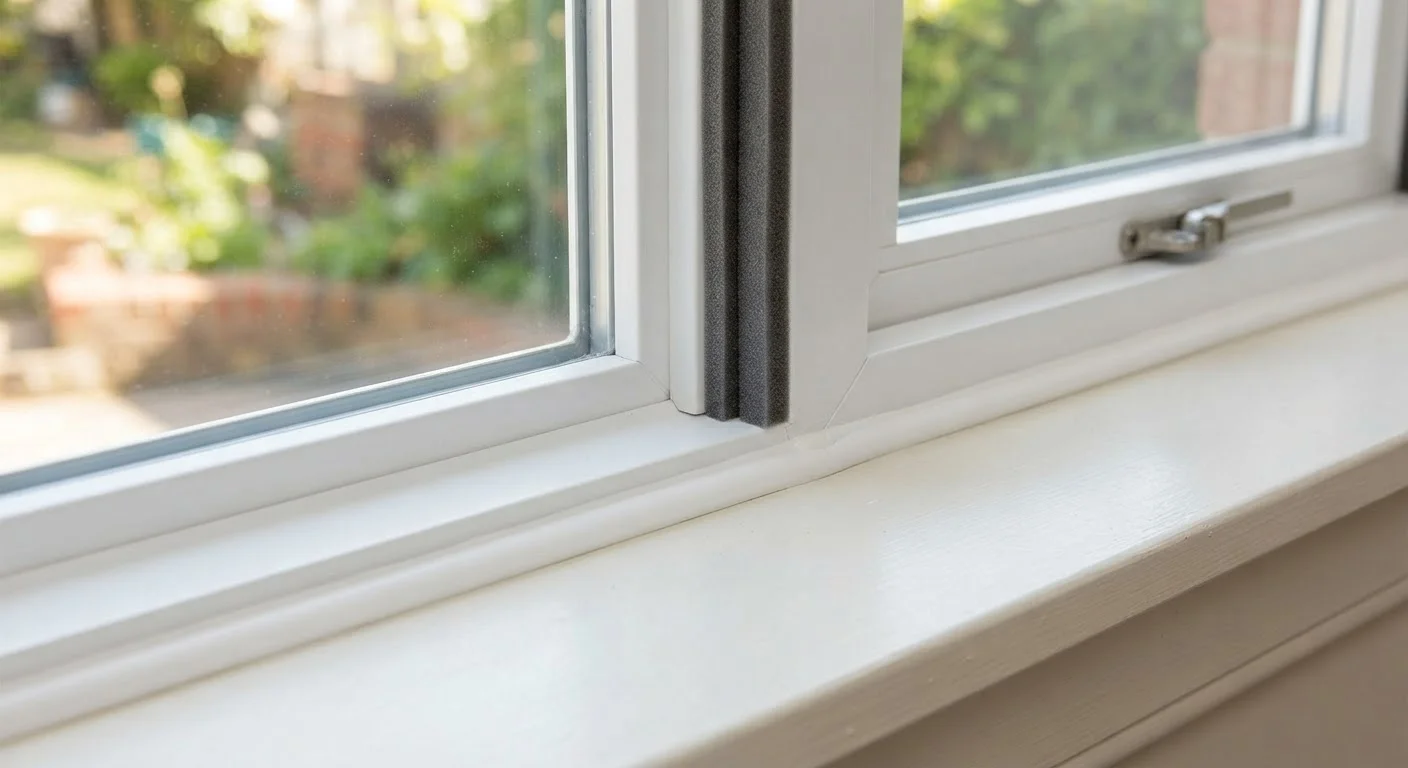
Weatherstripping
The flexible, compressible seal for moving parts.
Best for: Creating an airtight closure on doors, windows, and hatches that open and close regularly.
Why the Distinction Matters
Walk through any hardware store and you'll find caulk and weatherstripping within a few feet of each other, often marketed under similar energy-saving messaging. Both seal gaps. Both block drafts. But they are engineered for fundamentally different conditions - and choosing the wrong one for a given spot means the seal will fail far sooner than it should.
The core principle is simple: caulk is for gaps that never move; weatherstripping is for gaps that open and close. Caulk cures into a semi-rigid or flexible bead that bonds to adjacent surfaces. It handles slight thermal expansion, but it cannot tolerate the repeated mechanical stress of a door or window opening and closing dozens of times a day. Weatherstripping is designed for exactly that stress - it compresses and recovers, cycle after cycle, without losing its seal.
Getting this right pays off in both comfort and durability. A seasonal home maintenance checklist will often list both tasks separately because they address different parts of the building envelope.
| Criterion | Caulking | Weatherstripping |
|---|---|---|
| Primary purpose | Seals fixed, stationary gaps | Seals gaps on moving parts |
| Handles repeated movement | No - cracks under repeated flexing | Yes - designed to compress and recover |
| Typical locations | Window frames, tub surrounds, trim joints | Door edges, window sashes, attic hatches |
| Material forms | Latex, silicone, elastomeric tubes | Foam tape, V-strip, sweeps, bulb seals |
| Typical lifespan | 5-20 years depending on product and prep | 2-10 years depending on traffic and type |
| DIY difficulty | Low to moderate | Low to moderate |
| Water resistance | High (silicone or siliconized latex) | Low to moderate - not for wet areas |
Where Caulking Belongs
Caulk belongs anywhere two stationary surfaces meet and leave a gap - whether at the interior or exterior of your home. Common locations include:
- Around window and door frames where they meet the exterior siding or interior trim
- Along baseboards and crown molding where they meet walls - primarily an aesthetic seal but also reduces air infiltration
- At plumbing penetrations where pipes pass through walls or floors
- Around the bathtub, shower surround, and sink edges - locations where water exposure makes a watertight seal essential
- Where siding meets the foundation on the exterior of the home
For wet areas like bathrooms, choose a siliconized latex or 100% silicone caulk rated for kitchen and bath use - these resist mold and adhere well to non-porous surfaces like tile and porcelain. For exterior gaps, look for paintable elastomeric or acrylic latex caulk that can handle temperature swings. See our guide on keeping wet areas watertight for specifics on bathroom applications.
One common mistake is applying caulk to a joint that's already failed without removing the old material first. Caulking over old, cracked caulk rarely bonds well. Understanding why caulking fails - and how surface prep affects the outcome - can save you from repeating the same fix in six months.
A Note on Interior vs. Exterior Caulk
Not all caulks are interchangeable between indoor and outdoor applications. Exterior caulks are formulated to handle UV exposure, freeze-thaw cycles, and wider temperature swings than interior products. Always check the product label for its rated application environment. Using an interior-only caulk on an exterior joint can result in premature cracking, adhesion failure, or water infiltration.
Where Weatherstripping Belongs
Weatherstripping is the right tool wherever a gap opens and closes with normal use. It attaches to the frame or to the moving part itself, creating a seal when the door or window is shut. Major application areas include:
- Exterior door edges - the sides and top of the door, where the door meets the door stop
- The bottom of exterior doors - typically handled by a door sweep or threshold insert
- Double-hung and casement windows - particularly the sash channels and meeting rails where sections overlap
- Attic hatches and pull-down stairs - often overlooked but a significant source of conditioned air loss
- Garage doors - the perimeter seal and bottom seal both use weatherstripping-type materials
The four most common weatherstripping types are: foam tape (easiest to install, lower durability), V-strip or tension seal (durable, good for door-stop channels), door sweeps (attached to the door bottom), and compression bulb or Q-lon seals (long-lasting, used on the door stop itself). Match the type to the location and how much traffic the opening handles. A heavy-use front door benefits from more durable compression or V-strip material rather than basic foam tape.
If you're tackling doors and windows as part of a broader comfort upgrade, weekend home comfort projects offer good context for prioritizing where to start.
Up to 30%
Home heating/cooling lost through air leaks
The U.S. Department of Energy estimates that air leaks through gaps, cracks, and openings can account for up to 30% of a home's heating and cooling costs.
$0-$10
Typical cost of a door weatherstripping kit
Basic foam or V-strip door weatherstripping kits are widely available at hardware stores for minimal cost, making this one of the most accessible DIY energy improvements.
2-10 years
Typical weatherstripping lifespan
Lifespan varies significantly by material type and traffic volume; foam compresses faster, while vinyl and metal V-strip can last a decade or more on low-traffic entries.
Using Both Together for a Complete Seal
Most air-sealing projects require both materials - not one or the other. A well-sealed exterior door, for example, uses caulk around the fixed door frame where it meets the siding, and weatherstripping on the moving parts where the door itself contacts the frame. Treating these as competing choices is a common misunderstanding that leaves gaps unaddressed.
Similarly, a window that's been freshly weatherstripped at the sash should also have its fixed frame caulked to the interior and exterior trim. Air can easily bypass perfect weatherstripping if adjacent stationary joints remain open.
For homeowners thinking about the bigger picture, air sealing through caulking and weatherstripping works best in combination with adequate insulation. The comparison of attic versus wall insulation explains how different parts of the building envelope lose heat differently - and where sealing efforts tend to have the most impact on comfort and energy use.
Start with a walk-through of your home on a cold or windy day: hold your hand near door and window edges to feel for drafts, and inspect older caulk lines for cracks, gaps, or separation. Those two quick checks will tell you where to focus your effort first.
The content provided on our blog site traverses numerous categories, offering readers valuable and practical information. Readers can use the editorial team’s research and data to gain more insights into their topics of interest. However, they are requested not to treat the articles as conclusive. The website team cannot be held responsible for differences in data or inaccuracies found across other platforms. Please also note that the site might also miss out on various schemes and offers available that the readers may find more beneficial than the ones we cover.