

Why Families Overlook This Connection
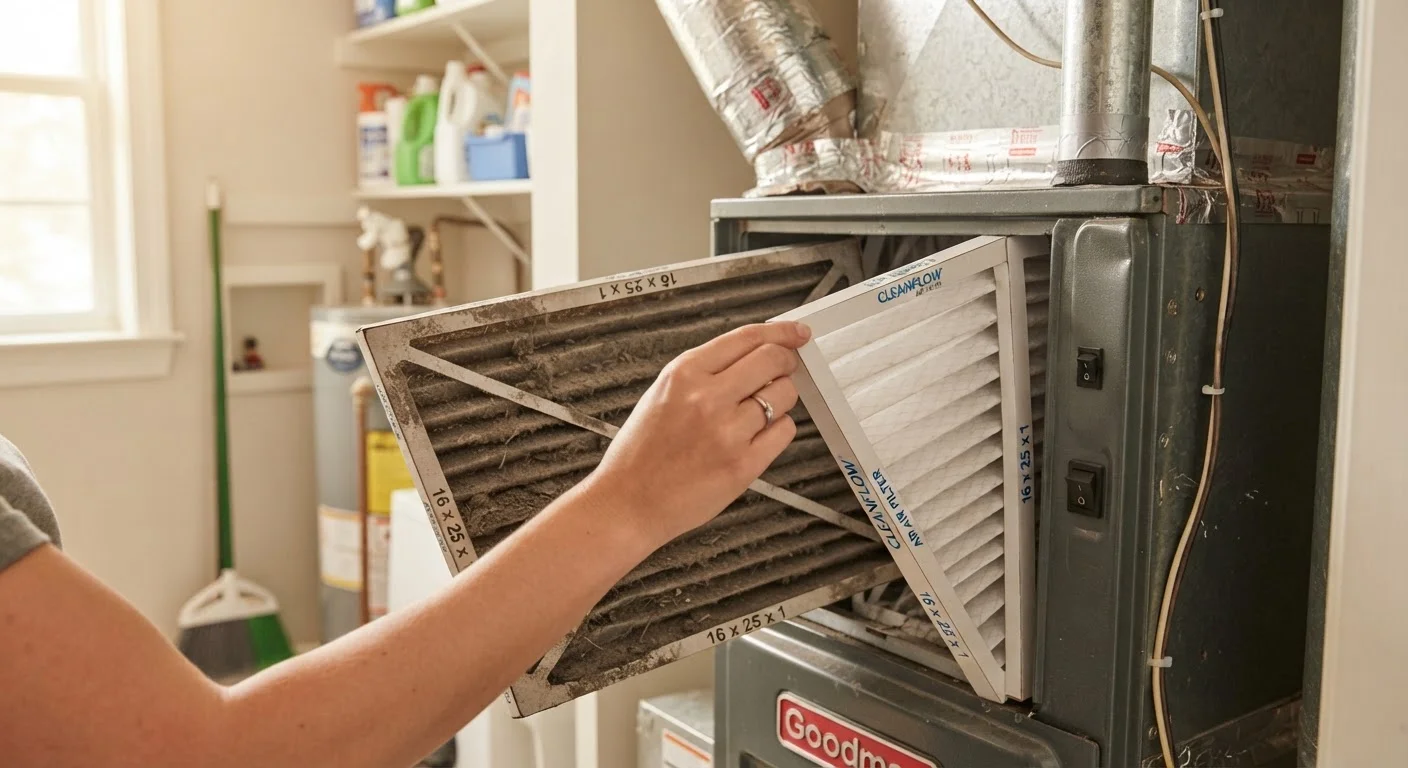
Most households think of furnace filter changes as a mechanical chore - something that keeps the HVAC system running, similar to an oil change in a car. (For a parallel look at routine maintenance schedules, see our family car maintenance guide.) But there is a second, equally important dimension: every cubic foot of air your family breathes indoors has almost certainly passed through that filter first.
When the filter is clean, it intercepts dust, pet dander, pollen, mold spores, and fine particles before they cycle through your ductwork and back into living spaces. When it is clogged, two problems emerge simultaneously: the system strains to pull air through the blocked media, and the filter's ability to trap new particles collapses. At that point, airborne contaminants bypass the filter and spread throughout the home.
The result is an indoor environment that feels stuffy, triggers more sneezing and irritation, and places unnecessary mechanical stress on equipment that is expensive to repair or replace. Understanding this two-part connection - HVAC efficiency and air quality - is what turns a forgettable chore into a household priority.
How Airflow and Air Quality Are Linked
Your HVAC system operates as a closed loop. Air is pulled from each room through return vents, passed through the filter, conditioned by the furnace or air handler, and pushed back out through supply registers. The filter sits at the entry point of this loop - everything that enters the system passes through it.
2-5×
How much more polluted indoor air can be than outdoor air
The U.S. Environmental Protection Agency has noted that indoor air pollutant levels are often two to five times higher than typical outdoor concentrations.
~15%
Potential energy waste from a clogged filter
The U.S. Department of Energy notes that a dirty HVAC filter can increase energy consumption, with estimates of efficiency losses commonly cited around 15% under severely restricted conditions.
90%
Of time Americans spend indoors on average
According to EPA research, Americans spend approximately 90% of their time indoors, making indoor air quality directly relevant to daily health and comfort.
A filter with adequate airflow resistance for its MERV rating captures particles efficiently without making the blower work too hard. A filter that is overloaded - either too dirty or rated too densely for the system - creates a pressure imbalance. Some rooms receive less conditioned air; others may feel drafty as the system compensates. Dust begins accumulating inside the ductwork itself, creating reservoirs that are far harder and more costly to address than a simple filter swap.
Filter choice matters as well as frequency. A MERV 6 filter captures large debris but lets finer particles through. A MERV 11 filter catches mold spores and fine dust but requires a system capable of handling the added resistance. Matching the filter rating to your system's specifications - typically found in the owner's manual or on the filter slot frame - is as important as remembering to change it.
Set a Filter Reminder You'll Actually Use
Write the installation date on the filter's cardboard frame with a marker as soon as you install it. Then set a recurring calendar alert - monthly for pet households, every 60-90 days for others - so the reminder comes to you rather than relying on memory. Buying a few filters at once means you will never skip a change because you forgot to restock.
Household Factors That Affect How Fast Filters Clog
Not every home has the same filter replacement schedule. Several conditions accelerate loading and should push your household toward more frequent inspections:
- Pets: Dander and fur shed continuously and are among the fastest filter-loading materials in a typical home.
- High occupancy: More people means more skin cells, fabric fibers, and tracked-in outdoor particles.
- Renovation or construction nearby: Drywall dust, sawdust, and outdoor construction debris enter through gaps and vents and overwhelm filters quickly.
- Allergy or asthma sufferers: These households benefit from more frequent changes and possibly a higher-rated filter to manage fine particle loads.
- Seasonal pollen peaks: Spring and fall often bring elevated airborne pollen that saturates filters faster than summer or winter months.
A practical habit: pull the filter out and hold it up to the light every 30 days. If you cannot see light through the media, replace it regardless of how long it has been installed. This visual check takes under two minutes and costs nothing.
Filter maintenance fits naturally into a broader seasonal home checklist. Our seasonal home maintenance checklist includes filter inspection alongside other tasks - gutters, caulking, and more - so nothing drifts past its service window.
Choosing the Right Filter Without Overcomplicating It
Walk into any home improvement store and the filter aisle can feel overwhelming. Here is a straightforward framework for most US families:
- MERV 1-4
- Fiberglass panel filters. Capture only large debris. Generally not recommended for homes where indoor air quality is a concern.
- MERV 5-8
- Pleated filters. Capture dust mites, pollen, and mold spores. A reasonable baseline for most households without special health considerations.
- MERV 9-12
- Higher-efficiency pleated filters. Capture fine particles including some pet dander and smoke particles. A practical upgrade for pet owners or allergy households.
- MERV 13+
- Hospital-grade filtration. Highly effective but may restrict airflow in residential systems. Verify compatibility with your HVAC equipment or consult a licensed HVAC technician before using.
Check Your HVAC Manual Before Upgrading
Not all residential HVAC systems are engineered to pull air through high-density filters. Using a filter rated significantly above your system's design tolerance can reduce airflow enough to trigger safety shutoffs or damage the blower motor over time. If your manual is unavailable, a licensed HVAC technician can advise on the appropriate filter range for your specific equipment.
For most families, a MERV 8-11 pleated filter changed on a consistent schedule delivers meaningful air quality benefits without stressing the system. The discipline of regular replacement matters more than chasing the highest-rated filter on the shelf.
If you are exploring other comfort upgrades that pair well with clean filtration, our weekend home comfort projects article covers practical improvements from weatherstripping to attic ventilation that work alongside a well-maintained HVAC system.
Frequently Asked Questions
Most standard 1-inch filters should be replaced every 1 to 3 months. Homes with pets, multiple occupants, or allergy sufferers benefit from more frequent changes - closer to monthly. Thicker filters (4-5 inches) may last up to 6-12 months; check manufacturer guidance for your specific model.
Filters rated MERV 8-11 generally offer a good balance of allergen capture and adequate airflow for most residential HVAC systems. MERV 13 filters capture finer particles but may restrict airflow in systems not designed for higher resistance - consult your HVAC manual or a technician before upgrading.
A saturated filter can no longer trap particles effectively, allowing dust, mold spores, and allergens to recirculate through your home. While a dirty filter alone may not cause illness, it can aggravate respiratory conditions, allergies, and asthma. It is not a substitute for medical evaluation if symptoms persist.
Very dense filters create more air resistance, which can strain your blower motor, reduce airflow to rooms, and cause the system to overheat or short-cycle. Over time this may shorten the lifespan of your HVAC equipment. Match the filter to what your system is rated to handle.
Washable filters typically carry lower MERV ratings than disposable mid-range filters and must be fully dried before reinstallation to prevent mold growth inside the unit. They can be cost-effective over time but require consistent maintenance discipline to remain effective.
Yes. Restricted airflow from a clogged filter forces the blower to work harder, consuming more energy. Keeping a clean filter in place helps your system operate closer to its designed efficiency, which can have a modest effect on energy use over time - though results vary by system age and condition.
The content provided on our blog site traverses numerous categories, offering readers valuable and practical information. Readers can use the editorial team’s research and data to gain more insights into their topics of interest. However, they are requested not to treat the articles as conclusive. The website team cannot be held responsible for differences in data or inaccuracies found across other platforms. Please also note that the site might also miss out on various schemes and offers available that the readers may find more beneficial than the ones we cover.