

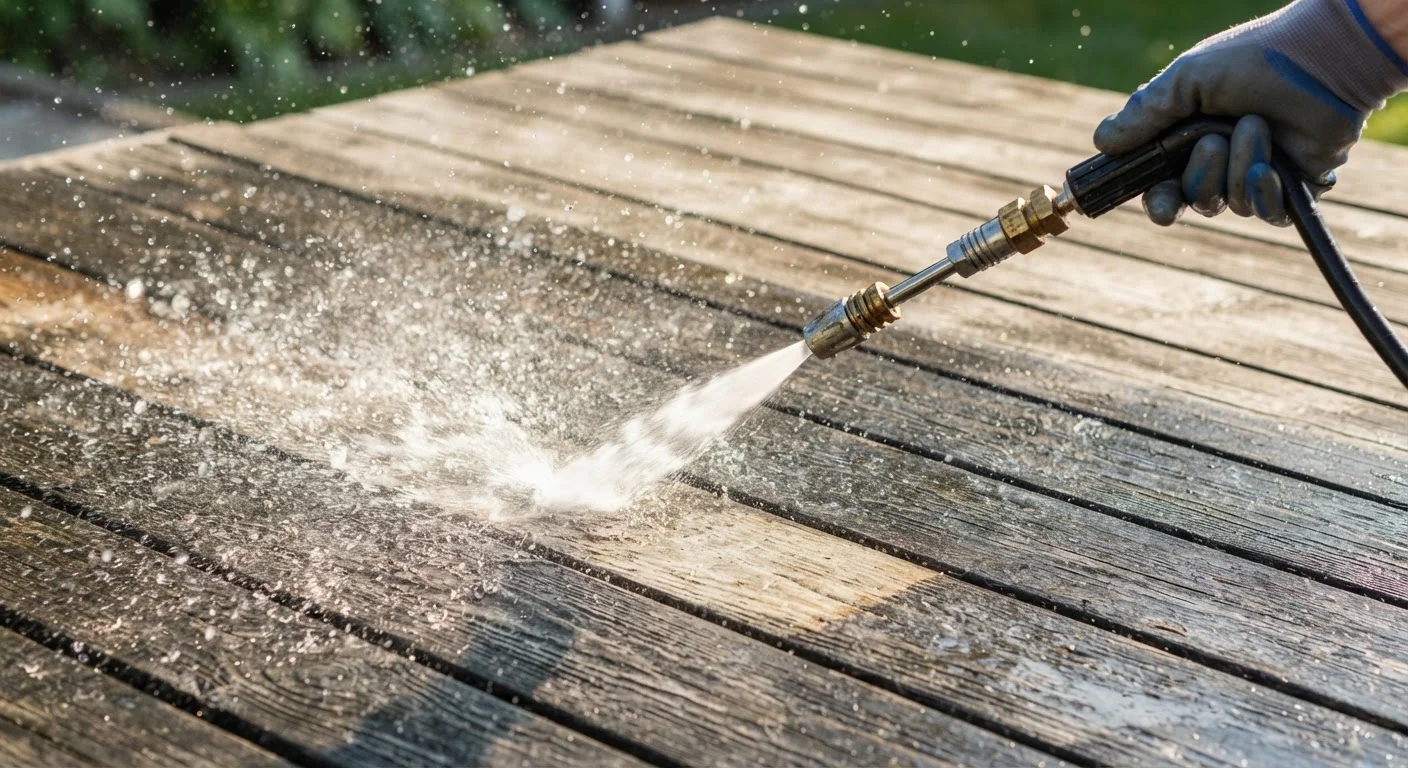
Why Pressure Washing Myths Cause Real Damage
Pressure washing looks straightforward: point, pull trigger, rinse away grime. That simplicity is exactly why so many homeowners skip the research and go straight to maximum pressure. The result is splintered deck boards, gouged vinyl siding, forced moisture intrusion behind cladding, and stripped paint - damage that ranges from cosmetic to structurally significant.
Understanding what pressure washing actually does to different materials helps you protect those surfaces rather than unknowingly degrade them. Whether you're cleaning a composite deck before resealing or rinsing mildew off siding before winter, separating pressure washing fact from fiction is the first step. For complementary seasonal upkeep, see our guide on maintaining a wood deck through the seasons.
Myth
More pressure means a deeper, more thorough clean.
Fact
Excessive pressure damages surface fibers, forces water into gaps, and can etch soft materials - without cleaning them any better.
Most residential cleaning jobs - siding, decks, driveways, fences - require far less pressure than homeowners assume. Soft wood like cedar or pine can be visibly gouged at pressures above 1,200 PSI. Vinyl siding manufacturers commonly recommend staying at or below 1,500 PSI with a wide-angle nozzle. The actual cleaning is done by a combination of water volume, dwell time, and detergent - not raw force.
Myth
Pressure washing is safe for every exterior surface.
Fact
Certain surfaces - including older wood, soft brick, stucco, and painted trim - can be seriously damaged by pressure washing and may require gentler alternatives.
Stucco is particularly vulnerable: high-pressure water can penetrate surface cracks, expand them, and introduce moisture that leads to mold behind the wall. Older painted surfaces may contain lead paint, and pressure washing can aerosolize those particles - creating a health hazard. Soft or deteriorating brick can have mortar joints eroded by direct high-pressure water. Always assess surface condition before washing, and consult a professional if the material is old or fragile.
Myth
You don't need detergent - water pressure alone cleans everything.
Fact
Biological growth like mildew, algae, and mold requires a cleaning agent to be fully removed; water pressure alone displaces it rather than killing it.
Pressure washing mildew without a detergent or appropriate cleaning solution often just spreads spores rather than eliminating them. A mild detergent allowed to dwell on the surface for several minutes before rinsing is far more effective at breaking down organic growth. Using less pressure with a proper cleaner typically produces a cleaner, longer-lasting result than high pressure with water alone.
Myth
The nozzle angle doesn't matter much as long as you're using the right pressure.
Fact
Nozzle angle is one of the most critical variables - the wrong angle at any pressure can cause immediate surface damage.
A zero-degree (red) nozzle concentrates water into a pencil-thin stream capable of cutting wood and stripping paint. A 15-degree (yellow) nozzle is appropriate for concrete and heavy-duty surfaces. A 40-degree (white) nozzle is suitable for siding, vehicles, and painted surfaces. Using a narrow-angle nozzle on a wood deck even briefly can leave visible streaks and raised grain that cannot be fully reversed. Always match the nozzle to the surface, not to the size of the job.
Myth
Pressure washing a deck right before staining is the best preparation method.
Fact
Pressure washing can raise wood grain and introduce moisture - both of which must be fully resolved before any stain or sealant is applied.
Washing a deck and staining it the same day or even the next day is a common mistake. Wet wood does not absorb stain properly, and raised grain creates an uneven finish. After pressure washing, wood typically needs at least 48-72 hours of dry weather to return to an appropriate moisture level - and may need light sanding to smooth raised fibers before any coating is applied. Rushing this step often results in peeling or blotchy stain within a single season.
Applying These Principles to Your Exterior Cleaning
Putting the correct knowledge into practice is straightforward once you know the variables to control: PSI (pounds per square inch), GPM (gallons per minute - which affects cleaning power more than most homeowners realize), nozzle spray angle, standoff distance, and the use of appropriate cleaning solutions.
1,200-1,500 PSI
Recommended range for wood decks and vinyl siding
Many pressure washer manufacturers and exterior coating producers cite this range as appropriate for soft wood and vinyl surfaces to minimize damage risk.
48-72 hours
Minimum drying time before applying deck stain
Wood surface moisture must return to an acceptable level after washing before stain or sealant penetrates effectively and bonds properly.
40 degrees
Nozzle angle for siding and painted surfaces
A wide-angle nozzle distributes water pressure across a broader surface area, significantly reducing the risk of gouging or stripping finishes.
For siding, a wide-angle nozzle (40 degrees) held at least 12-18 inches from the surface is a common starting point. Work from the top down to avoid driving water behind panels. For wood decks, a fan tip at lower PSI - and always spraying with the wood grain rather than across it - reduces the risk of fuzzing or splintering the surface fibers.
If a surface is older, painted, or shows existing deterioration, consider whether hand scrubbing with a cleaning solution is safer than pressure washing at all. The goal is a clean surface, not a clean surface with new damage. Just as with other home improvement decisions, evidence matters - the same skepticism that helps when evaluating energy-efficient home upgrade claims applies here too.
Older Paint May Contain Lead - Proceed With Caution
Homes built before 1978 may have exterior paint containing lead. Pressure washing painted surfaces on older homes can dislodge paint chips and disperse fine particles. If your home was built before 1978 and you're unsure about the paint, consult a certified lead-safe contractor before pressure washing any painted exterior surface. This is not a task where guessing is appropriate.
The content provided on our blog site traverses numerous categories, offering readers valuable and practical information. Readers can use the editorial team’s research and data to gain more insights into their topics of interest. However, they are requested not to treat the articles as conclusive. The website team cannot be held responsible for differences in data or inaccuracies found across other platforms. Please also note that the site might also miss out on various schemes and offers available that the readers may find more beneficial than the ones we cover.