

Why Energy Efficiency Myths Persist
Energy-efficient home upgrades have become a major area of interest for US families looking to cut utility costs and improve comfort. Unfortunately, a mix of marketing messages, well-meaning neighbors, and oversimplified advice has produced a set of persistent myths that can lead homeowners to spend money in the wrong places - or skip improvements that genuinely work.
The good news is that the evidence on what actually reduces home energy use is well-established. Understanding it helps you prioritize upgrades that fit your household budget and your home's specific needs. The myths below are among the most commonly repeated - and most worth correcting.
Myth
Replacing windows is the single best way to cut heating and cooling costs.
Fact
Window replacement typically delivers modest energy savings relative to its high upfront cost; air sealing and insulation almost always offer better returns.
New windows can reduce drafts and improve comfort, but studies from the U.S. Department of Energy have consistently found that the energy savings from window replacement alone rarely justify the cost when compared to other measures. A significant share of heat loss in most homes occurs through the ceiling and walls, not the glass. If your windows are in poor structural condition or causing comfort problems, replacement may be worthwhile for other reasons - but framing it primarily as an energy-savings investment often overstates the financial benefit.
Myth
Switching to LED bulbs will dramatically lower your electricity bill.
Fact
LEDs use significantly less energy than incandescent bulbs, but lighting typically represents only a portion of total home electricity use, so savings are real but proportional.
LED lighting is genuinely more efficient - roughly 75% less energy than traditional incandescent bulbs for the same light output, according to Energy Star program data. However, in most US homes, lighting accounts for roughly 10-15% of electricity consumption. Heating, cooling, water heating, and large appliances collectively dwarf that share. LEDs are a smart, low-cost upgrade, but they work best as one part of a broader efficiency strategy rather than a standalone solution to a high electricity bill.
Myth
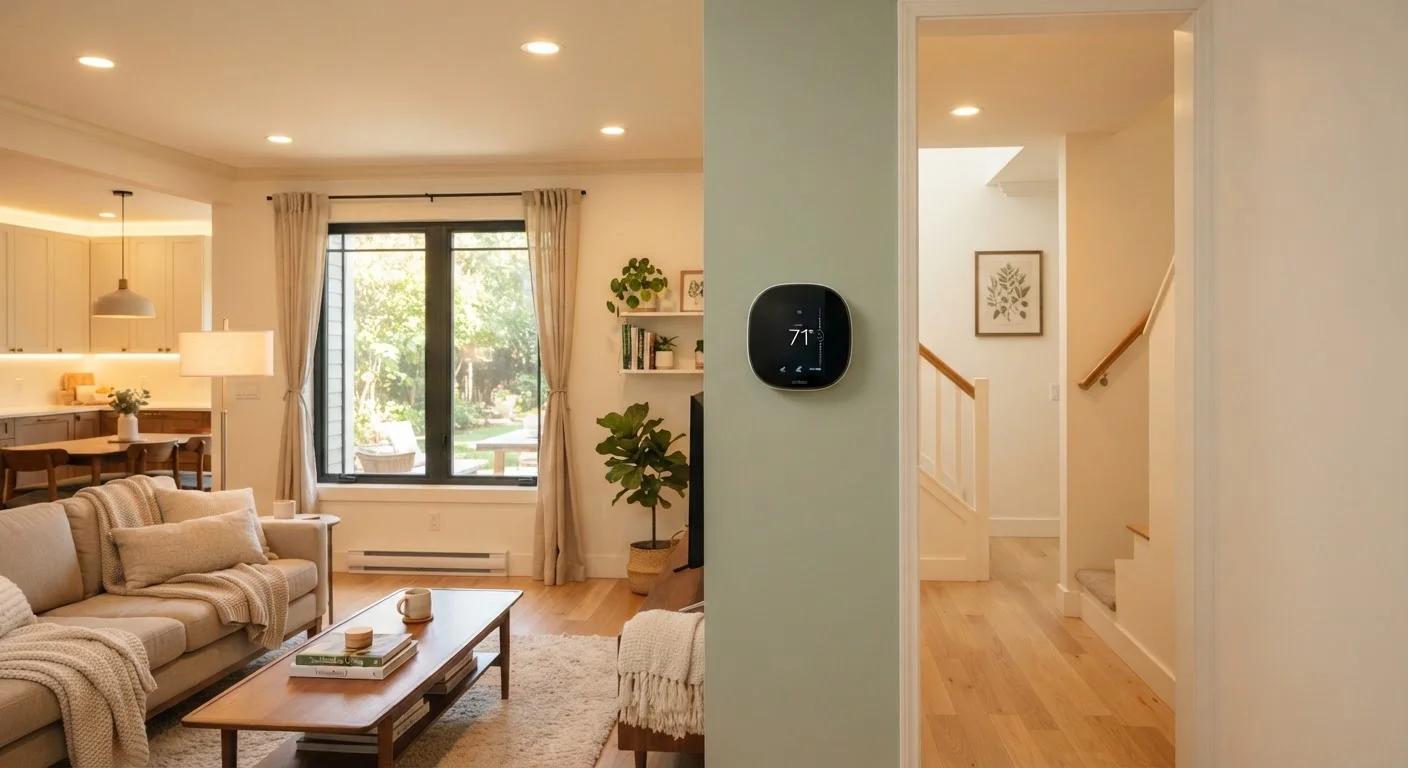
Smart thermostats will automatically optimize your energy use without any setup.
Fact
Smart thermostats can reduce HVAC energy use, but they require proper configuration and occupancy schedules to deliver meaningful savings.
A smart thermostat left in default or manual mode often behaves little differently from a conventional programmable one set incorrectly. The efficiency gains come from scheduling setbacks - reducing heating or cooling when the home is unoccupied or overnight - and from learning or geofencing features that need to be enabled and refined. Out of the box, without intentional setup, studies have found that some households see minimal improvement and occasionally higher energy use if defaults run heating or cooling more continuously than the previous thermostat did.
Myth
Turning off lights and unplugging devices has no meaningful effect on energy bills.
Fact
Phantom loads - energy drawn by electronics in standby mode - can account for a noticeable share of a home's electricity use.
The Lawrence Berkeley National Laboratory has estimated that standby power consumption in U.S. homes can represent roughly 5-10% of residential electricity use. Devices like televisions, gaming consoles, cable boxes, and phone chargers draw power even when not actively in use. Power strips with switches make it easier to cut standby draw from clusters of electronics. While this alone won't resolve a major efficiency problem, it's a zero-cost behavioral change that adds up over time.
Myth
More insulation is always better, regardless of what you already have.
Fact
Insulation has diminishing returns beyond recommended levels; the biggest gains come from addressing areas that are significantly under-insulated.
Adding insulation to a home with very little - particularly in the attic, where heat rises and escapes most readily - can produce substantial savings. But stacking more insulation on top of an already well-insulated attic yields progressively smaller benefits. The U.S. Department of Energy publishes recommended R-values (a measure of thermal resistance) by climate zone, giving homeowners a practical benchmark. Spending beyond those targets rarely pays back meaningfully, so it's worth assessing your current levels before investing further.
Where Your Energy Dollars Actually Go Farthest
The upgrades with the strongest documented returns tend to be the least glamorous: air sealing gaps around doors, attic hatches, and pipe penetrations; adding insulation to an under-insulated attic; and servicing your HVAC system regularly. Our guide on attic vs. wall insulation breaks down where heat loss is typically concentrated and how to prioritize fixes.
Before committing to any major upgrade, a professional home energy audit - often available through state energy offices or utilities at low or no cost - uses blower door tests and thermal imaging to identify exactly where your home is losing conditioned air. That data-driven starting point is more reliable than any single rule of thumb.
Don't Skip the Audit Step
Investing in upgrades without first understanding where your home is actually losing energy can mean spending on the wrong problem. A blower door test or professional energy audit provides a reliable map of your home's weaknesses. Many state energy programs and utility companies offer audits at reduced or no cost - check with your local utility before committing to any major project.
For a practical Saturday-scale starting point, weekend comfort projects like weatherstripping and door sweeps can meaningfully reduce drafts at low cost. And don't overlook HVAC filter maintenance - as explained in our piece on HVAC airflow and indoor air quality, a clogged filter forces your system to work harder, quietly driving up energy use.
10-15%
Share of home electricity used for lighting
Lighting represents a relatively modest portion of total home electricity consumption in most U.S. households, according to U.S. Energy Information Administration data.
5-10%
Electricity lost to standby phantom loads
Lawrence Berkeley National Laboratory research has estimated standby power can account for roughly this share of residential electricity use.
If resale value is part of your thinking, it's worth reviewing what research shows about renovation resale returns before committing to large-ticket projects. The same skeptical, evidence-first mindset applies to other household decisions - myths about spending and saving show up in many areas of family life, as explored in our look at savings misconceptions families encounter.
The content provided on our blog site traverses numerous categories, offering readers valuable and practical information. Readers can use the editorial team’s research and data to gain more insights into their topics of interest. However, they are requested not to treat the articles as conclusive. The website team cannot be held responsible for differences in data or inaccuracies found across other platforms. Please also note that the site might also miss out on various schemes and offers available that the readers may find more beneficial than the ones we cover.