

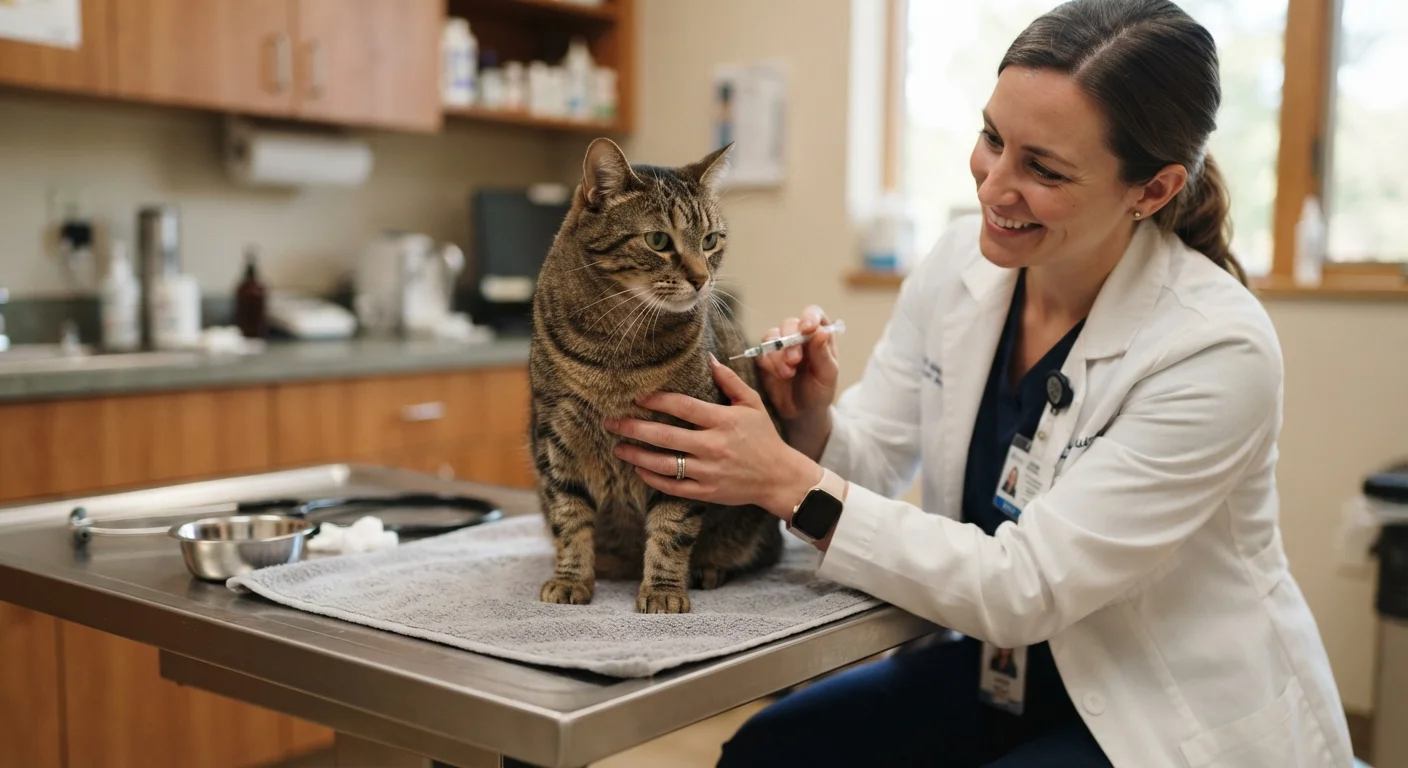
The Two-Category Framework Vets Use
When a veterinarian talks about your cat's vaccine plan, they're working from a framework that divides immunizations into two groups: core and non-core. This isn't marketing language - it's a clinical distinction rooted in disease prevalence, severity, and the realistic risk of exposure for any given cat in any given environment.
Core vaccines are universally recommended because the diseases they prevent are either widespread enough that every cat faces meaningful exposure risk, severe enough that infection is frequently fatal, or transmissible to humans (zoonotic). Non-core vaccines are applied selectively, based on a cat's lifestyle, health history, geographic location, and household composition.
Understanding this framework helps you have a more productive conversation with your vet - and it helps you push back thoughtfully if a recommendation doesn't seem to fit your cat's situation. See our guide to the annual vet visit for how to prepare those conversations in advance.
~90%
US states with rabies vaccination laws for cats
According to the American Veterinary Medical Association, the vast majority of US states legally require rabies vaccination for pet cats.
2-3%
Estimated US cats with FeLV infection
The AAFP estimates roughly 2-3% of cats in the general US population test positive for feline leukemia virus, with higher rates among sick and stray cats.
1 in 10,000
Estimated rate of injection-site sarcoma
Published veterinary literature has estimated feline injection-site sarcoma occurs in approximately 1 in 10,000 to 1 in 30,000 vaccine administrations.
Core Vaccines: What Every Cat Needs
The following vaccines are considered core for cats in the United States, per AAFP guidelines:
- FVRCP - A combination vaccine covering three diseases: feline viral rhinotracheitis (caused by feline herpesvirus-1), calicivirus, and panleukopenia (feline distemper). All three are highly contagious and can be life-threatening, especially in kittens. Panleukopenia, in particular, has a high fatality rate without treatment.
- Rabies - Required by law in most US states for cats, not just dogs. Rabies is invariably fatal once clinical signs appear and poses a direct risk to humans. The vaccine is available in one-year and three-year formulations; your vet will advise which is appropriate and what your local regulations require.
Kittens typically receive a series of FVRCP vaccines starting at 6-8 weeks of age, given every 3-4 weeks until 16-20 weeks old, followed by a booster at one year. After that, FVRCP is generally given every one to three years depending on the specific product and your cat's lifestyle.
Keep a Vaccine Record for Your Cat
Ask your vet for a printed or digital copy of your cat's vaccination history at every visit. This record is essential if you ever board your cat, move to a new state, or switch veterinary practices. Many clinics also use pet health apps or portals where records are stored automatically.
Non-Core Vaccines: When Optional Becomes Recommended
Non-core doesn't mean unimportant - it means the decision requires individualized judgment. The most commonly discussed non-core vaccines for cats include:
- FeLV (Feline Leukemia Virus) - Spread through saliva, grooming, and shared food bowls between cats. The AAFP recommends this vaccine for all kittens as a baseline and for adult cats with outdoor access or exposure to unfamiliar cats. For a strictly indoor, single-cat household, the ongoing need may diminish after the kitten series.
- FIV (Feline Immunodeficiency Virus) - The FIV vaccine has had a complicated history; a previously available vaccine was discontinued in the US. Currently, no FIV vaccine is licensed in the United States, so this is largely a moot point for most owners - mention it to your vet if you've heard conflicting information.
- Bordetella and Chlamydia felis - Occasionally recommended for cats in shelters, catteries, or multi-cat households where respiratory infections are harder to control.
- Feline infectious peritonitis (FIP) - Research in this area has advanced significantly, but vaccine availability in the US remains limited and recommendations vary.
Vaccine Timing Matters as Much as Vaccine Choice
Maternal antibodies passed to kittens through their mother's milk can temporarily neutralize vaccines given too early, which is why the kitten series is spaced out over several weeks rather than given all at once. Completing the full kitten series on schedule is one of the most important steps in establishing durable immunity.
Comparing feline and canine vaccine frameworks can be useful - many of the same myths arise in both species. Our overview of common dog vaccination myths highlights how vets approach vaccine misinformation across species.
How Vets Assess Your Cat's Individual Risk
A good veterinarian doesn't apply a single vaccine checklist to every cat. They weigh several practical factors:
- Indoor vs. outdoor lifestyle - Cats that roam outdoors face far greater exposure to FeLV, respiratory viruses, and rabies.
- Multi-cat households and boarding - More cats means more pathogen exposure, which shifts the calculus on non-core vaccines.
- Age and immune status - Senior cats, immunocompromised cats, and very young kittens require careful consideration of both protection needs and vaccine tolerability.
- Geographic region - Some diseases have higher prevalence in certain areas, and local regulations affect rabies timing and documentation.
- Medical history - A cat with a prior injection-site reaction or known health conditions may need a modified approach.
This is precisely why a one-time vaccine decision isn't enough. Your cat's risk profile changes over time - an indoor cat who starts going outside, a new cat joining the household, or a move to a different region all warrant a fresh conversation. Broader preventive care, including dental health, follows the same logic: proactive, individualized, and revisited regularly.
“Vaccination protocols should not be 'one size fits all.' The goal is to vaccinate each animal against the diseases for which it is at risk, at the intervals that optimize protection while minimizing unnecessary interventions.”
— American Association of Feline Practitioners, Feline Vaccination Guidelines, AAFP
Frequently Asked Questions
Every cat should receive core vaccines: FVRCP (covering feline viral rhinotracheitis, calicivirus, and panleukopenia) and rabies. These protect against diseases that are severe, highly contagious, or zoonotic. Your vet will confirm the appropriate schedule based on your cat's age and health history.
Indoor cats still need core vaccines because diseases like panleukopenia and rabies pose real risks even with limited outdoor exposure. Non-core vaccines, such as FeLV, are more strongly recommended for cats with outdoor access or contact with other cats.
After the initial kitten series, most core vaccines are boosted at one year and then every one to three years depending on the specific vaccine and product used. Rabies frequency also depends on local regulations and the vaccine type. Your vet will tailor the schedule.
The vast majority of cats tolerate vaccines without significant side effects. Mild reactions like temporary soreness or lethargy are normal. Serious reactions are rare but possible; report any swelling, persistent vomiting, or difficulty breathing to your vet promptly.
Feline leukemia virus (FeLV) is a serious retrovirus spread through close cat-to-cat contact. The AAFP recommends the FeLV vaccine for all kittens and for adult cats with outdoor access or exposure to other cats. Strictly indoor cats with no feline housemates may not require it after the kitten series.
Feline injection-site sarcoma (FISS) is a rare but serious tumor that can occur at vaccination sites. The estimated occurrence rate is very low. Veterinary guidelines address this by recommending specific injection sites and tracking any persistent lumps. Discuss concerns openly with your vet.
The content provided on our blog site traverses numerous categories, offering readers valuable and practical information. Readers can use the editorial team’s research and data to gain more insights into their topics of interest. However, they are requested not to treat the articles as conclusive. The website team cannot be held responsible for differences in data or inaccuracies found across other platforms. Please also note that the site might also miss out on various schemes and offers available that the readers may find more beneficial than the ones we cover.