

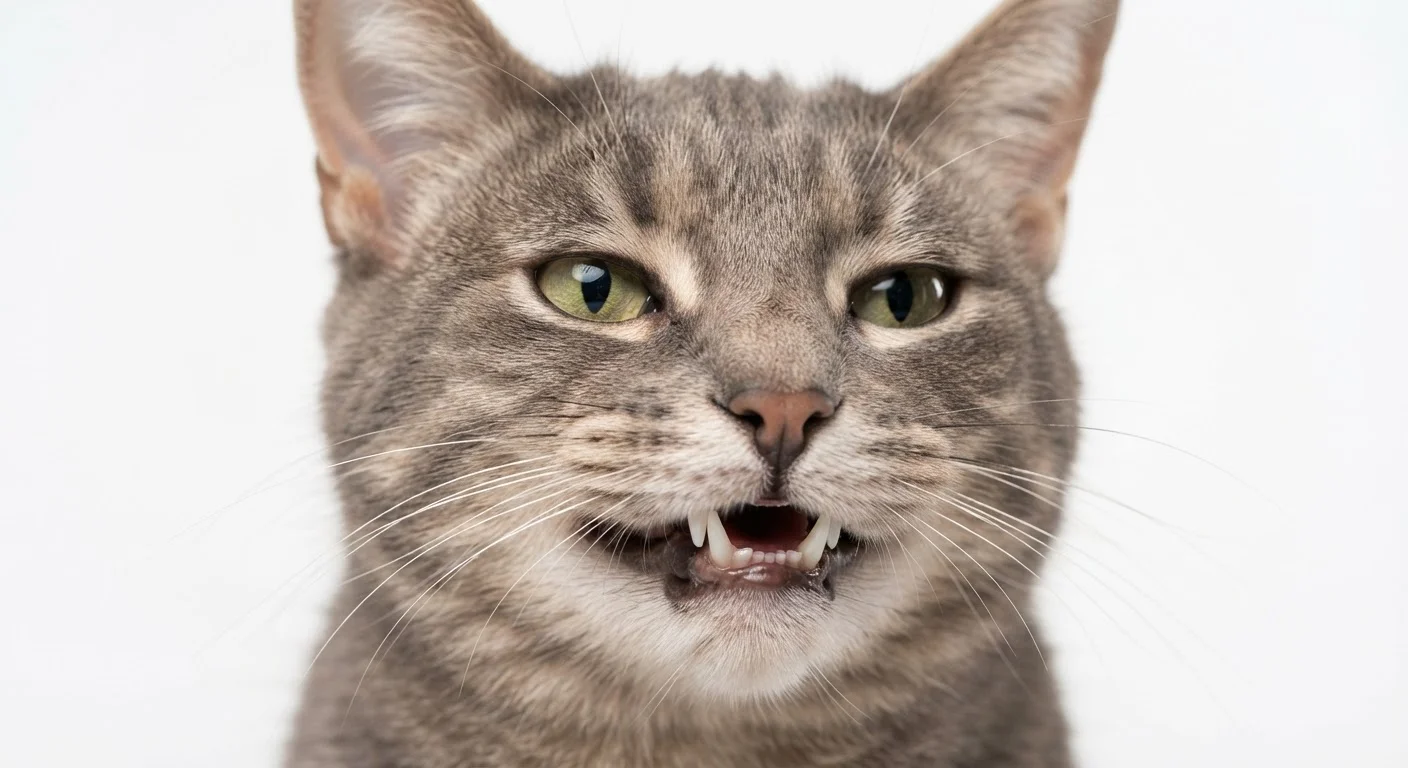
Why Cat Dental Health Is So Often Missed
Dental disease ranks among the most commonly diagnosed conditions in cats, yet it remains one of the least addressed by owners. The gap exists for understandable reasons: cats rarely cry out when their teeth hurt, owners aren't routinely shown how to inspect a cat's mouth, and bad breath can seem like a normal feline quirk rather than a clinical signal.
Unlike dogs, who may paw at their mouths or go off food dramatically, cats tend to adapt quietly to oral discomfort-continuing to eat, albeit with behavioral changes owners may not connect to dental pain. This stoic tendency is explored in depth in Signs Your Cat May Be in Pain, which details how cats mask discomfort as an instinctive survival behavior.
Awareness is the first line of defense. Owners who understand what feline dental disease looks like-and why it matters-are far better positioned to catch problems early.
70-85%
Cats with dental disease by age three
Veterinary dental specialists consistently cite this range based on clinical prevalence data across the cat population.
20-60%
Cats affected by tooth resorption
Estimates vary across studies, reflecting differences in detection methods and population examined.
#1
Most common health condition diagnosed in adult cats
Periodontal disease is frequently cited by veterinary organizations as the top diagnosed condition in adult cats.
How Dental Disease Develops in Cats
Dental disease in cats follows a predictable progression. It begins with plaque-a soft, bacteria-laden film that forms on tooth surfaces after every meal. If not disrupted through brushing or mechanical abrasion, plaque mineralizes into tartar (also called calculus) within days. Tartar cannot be removed by brushing alone; it requires professional scaling.
As tartar accumulates along the gumline, bacteria invade the gingival sulcus-the small gap between tooth and gum. This triggers gingivitis, characterized by red, swollen, and easily bleeding gums. At this stage, the disease is reversible with a professional cleaning and good home care. Without intervention, it advances to periodontitis, where the supporting structures of the tooth-bone, ligaments, and root-are permanently damaged.
Diet plays a supporting role. Wet versus dry food each carries distinct dental implications: while some dry kibble provides mild mechanical cleaning, neither eliminates the need for active dental care. Owners should discuss diet and its oral health effects with their veterinarian directly.
Warning Signs Every Owner Should Know
Because cats conceal pain so effectively, owners need to watch for indirect signals rather than obvious distress. The following signs warrant a veterinary evaluation:
- Persistent bad breath - Halitosis in cats is not normal. A noticeably foul or unusually strong odor often indicates bacterial overgrowth, gum infection, or deeper dental disease.
- Changes in eating habits - Dropping food, favoring one side of the mouth, or showing reluctance toward hard food can signal tooth pain.
- Pawing at the face or mouth - An uncommon but telling behavior suggesting oral discomfort.
- Increased drooling or blood-tinged saliva - May indicate gingival inflammation or a more advanced lesion.
- Behavioral changes - Irritability, withdrawal, or reduced grooming (particularly around the face) can reflect chronic oral pain. Reading your cat's body language can help you recognize when something is subtly off.
Don't Assume Normal If Your Cat Still Eats
Cats are highly motivated to eat even when experiencing significant oral pain. A cat that eats normally is not necessarily pain-free. Dental disease can be severe before any change in appetite is apparent to the owner, which is why proactive veterinary examinations matter more than relying on behavioral cues alone.
Tooth Resorption: The Condition Unique to Cats
Feline tooth resorption (TR) is a painful and surprisingly common condition in which the tooth structure begins to erode from the inside out or from the root surface. It affects an estimated 20-60% of cats at some point in their lives, though the cause is not yet fully understood by researchers.
The condition is difficult to detect without dental X-rays because early lesions typically occur at or below the gumline. Visible signs-when they appear at all-may include a pinkish notch at the base of a tooth or gum tissue appearing to grow over the tooth surface. Affected cats are often in significant pain but may show no outward signs until the disease is advanced.
Tooth Resorption Requires Dental X-Rays to Diagnose
Visual inspection alone-even by a veterinarian-cannot reliably detect feline tooth resorption in its early stages. Full-mouth dental radiographs taken under anesthesia are the only way to identify lesions below the gumline. If your cat has not had dental X-rays, early-stage TR may be present without any owner-visible signs.
Treatment is almost always extraction of the affected tooth or teeth. While this sounds alarming, cats adapt well to tooth loss and typically experience substantial relief afterward. Regular dental X-rays during professional cleanings are essential for detecting TR before it reaches an advanced stage.
Preventive Care: What Actually Works
Consistent home care is the cornerstone of feline dental health. Options vary in effectiveness:
- Daily tooth brushing - The gold standard. Use a soft-bristled toothbrush and toothpaste formulated specifically for cats. Human toothpaste contains fluoride and xylitol, both of which are toxic to cats. Ideally, brushing should begin in kittenhood to build acceptance, but adult cats can also be gradually acclimated.
- Dental treats and chews - Some carry the Veterinary Oral Health Council (VOHC) seal, indicating they have met evidence-based standards for plaque or tartar reduction. These are supplements to brushing, not replacements.
- Water additives and dental gels - Efficacy varies; look for VOHC-accepted products and discuss options with your vet before introducing them.
Start brushing training with a finger wrap or gauze pad before introducing a toothbrush-this builds mouth-handling tolerance without the novelty of an unfamiliar tool.
Gradual desensitization significantly improves long-term acceptance of toothbrushing, especially in cats that were not handled around the mouth as kittens.
When evaluating dental products, look specifically for the VOHC (Veterinary Oral Health Council) seal-this designation means the product met pre-set efficacy standards in clinical trials, not just marketing claims.
The VOHC seal provides an objective benchmark in a market crowded with dental products that vary widely in actual effectiveness.
Annual wellness exams are the right time to have your veterinarian assess your cat's oral health as part of a broader checkup. See The Annual Vet Visit for what to bring and what questions to ask.
Professional Cleanings and What to Expect
A thorough veterinary dental cleaning-called a prophylaxis-requires general anesthesia. This is not optional: anesthesia allows the veterinarian to scale below the gumline, probe each tooth individually, take full-mouth dental X-rays, and extract any compromised teeth safely. Conscious dental cleanings, sometimes marketed as an alternative, cannot replicate this and may miss the most consequential pathology.
Frequency of professional cleanings varies by individual cat. Some cats need annual cleanings; others, particularly those with good home care and naturally healthy mouths, may go longer. Your veterinarian's exam findings-not a fixed calendar-should guide scheduling.
Owners sometimes express concern about anesthesia risks, particularly in older cats. These concerns are valid and worth discussing with your vet, who can assess your cat's overall health before any procedure. Pre-anesthetic bloodwork is standard practice. Dental disease itself poses real systemic risks: oral bacteria can enter the bloodstream and have been associated with changes in kidney, heart, and liver function in cats. For a side-by-side perspective on how dental neglect affects another species, see dental health in dogs.
This article is for general informational purposes only and does not constitute veterinary advice. Always consult a licensed veterinarian for guidance specific to your cat's health needs.
The content provided on our blog site traverses numerous categories, offering readers valuable and practical information. Readers can use the editorial team’s research and data to gain more insights into their topics of interest. However, they are requested not to treat the articles as conclusive. The website team cannot be held responsible for differences in data or inaccuracies found across other platforms. Please also note that the site might also miss out on various schemes and offers available that the readers may find more beneficial than the ones we cover.