

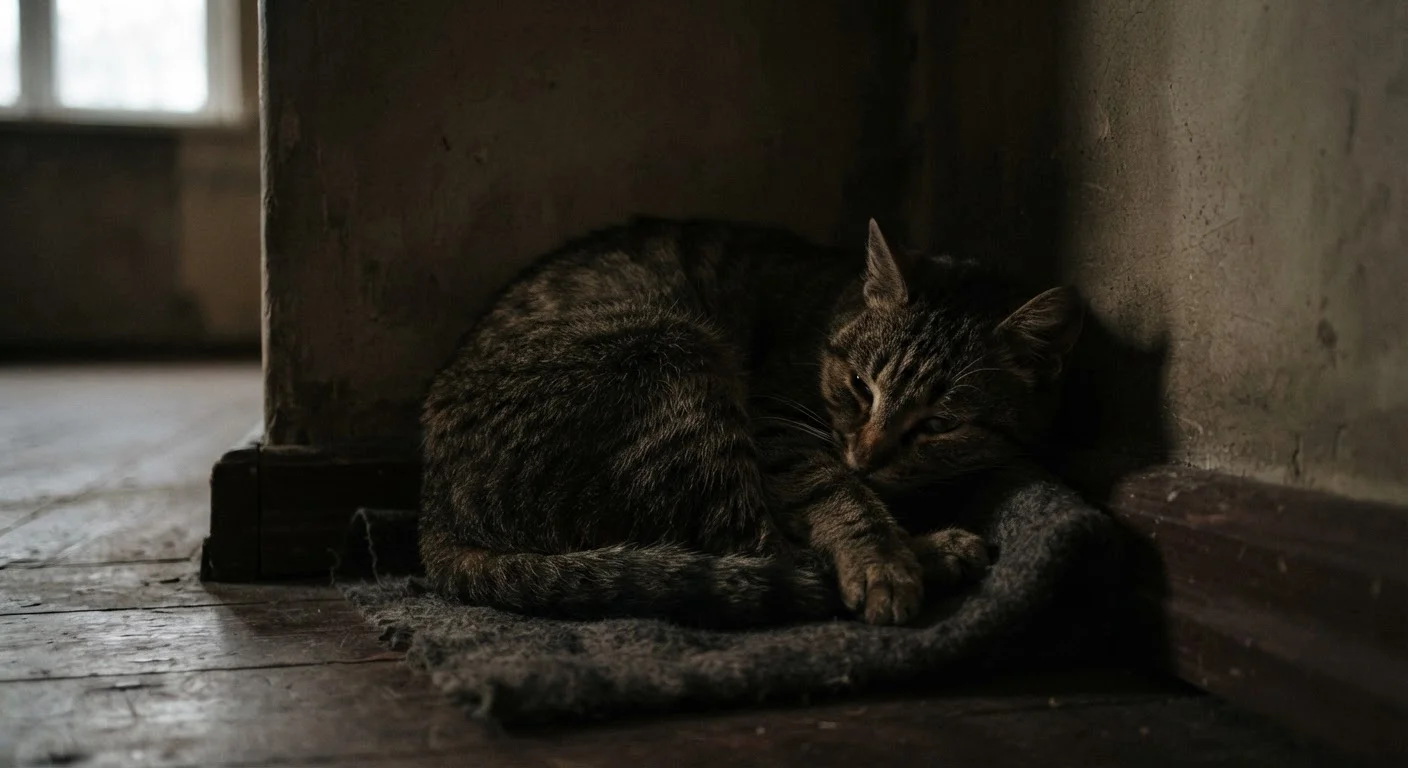
Why Cats Are Wired to Hide Pain
Unlike dogs, who may vocalize or seek comfort when hurt, cats evolved as both predators and prey. Showing weakness in the wild signals vulnerability, so masking discomfort became a deeply ingrained survival instinct. That same instinct still operates in your domestic cat - even when the only threat in their environment is a curious toddler.
This biological tendency makes pain recognition a genuine challenge for cat owners. By the time a cat shows obvious signs of distress, the underlying problem may have been present for days, weeks, or longer. Understanding the subtle early signals is one of the most important things you can do for your cat's long-term health.
For a broader look at how cats communicate discomfort through posture and expression, see our practical guide to feline body language.
Cats and Pain Tolerance: A Common Misconception
Many owners assume their cats would clearly show pain if it were serious. In reality, cats tolerate - or rather conceal - significant discomfort without obvious distress signals. Veterinary professionals increasingly recognize that stoic behavior in cats does not reflect a lower pain threshold; it reflects a highly effective masking instinct. This is why routine wellness exams remain important even when a cat appears perfectly fine.
Key Signs Your Cat May Be Hurting
Withdrawal and Increased Hiding
A cat that suddenly retreats to closets, under beds, or other isolated spots more than usual may be in pain. Hiding reduces the demand to interact or move, both of which can be uncomfortable when a cat is hurting. While some cats are naturally solitary, a meaningful increase in hiding - especially combined with other signs - is worth noting.
A sudden increase in hiding is one of the most reliable early indicators of feline pain.
Changes in Grooming Habits
Cats are meticulous self-groomers, so deviations in either direction are meaningful. Over-grooming a specific area (which can indicate localized pain or irritation) and a decline in overall grooming (leaving the coat dull, matted, or unkempt) are both red flags. Arthritis, for example, often makes it difficult for a cat to reach certain areas of their body, resulting in a patchy, neglected coat.
Both excessive grooming of one spot and overall grooming decline can signal pain.
Altered Facial Expression and Eye Changes
Veterinary researchers have developed feline grimace scales to formally assess pain through facial cues. Key indicators include partially closed or squinting eyes, flattened or rotated ears, a tense muzzle, and whiskers that are pulled back or bunched. A cat in pain may also have a more fixed, glazed expression rather than the relaxed, softly blinking look of a comfortable cat.
Squinting eyes, flattened ears, and a tense muzzle are recognized veterinary pain indicators in cats.
Uncharacteristic Aggression or Irritability
A cat that suddenly hisses, swipes, or bites when touched - especially in a specific area - is often communicating pain rather than a personality shift. If a normally tolerant cat flinches or reacts sharply when you pet their back, abdomen, or joints, that reaction warrants a closer look. Avoid forcing interaction; let your vet perform a thorough physical examination.
Sudden aggression, especially when a specific body area is touched, can be a direct pain response.
Changes in Mobility and Posture
Reluctance to jump, stiff or slow movement after rest, favoring one limb, and a hunched or guarded posture are all physical indicators of pain - commonly associated with arthritis, injury, or internal discomfort. Cats with joint pain may also avoid stairs or high furniture they previously used without hesitation. These signs are sometimes dismissed as normal aging, but pain is not an inevitable part of getting older and is often manageable with veterinary support.
Reluctance to jump or a hunched posture is not simply 'old age' - it may signal treatable pain.
Appetite and Litter Box Changes
A reduction in eating or drinking can accompany many painful conditions, from dental disease to gastrointestinal issues. Equally telling are litter box changes: a cat that strains, vocalizes during elimination, eliminates outside the box, or makes fewer or more frequent trips may be experiencing pain or a related medical problem. Our guide to litter box problems most cat owners misread goes into more detail on interpreting these signals.
Straining or vocalizing in the litter box is never normal and always warrants veterinary attention.
Keep a Simple Behavior Log
If you notice something unusual, jot down what changed, when it started, and how often it occurs. Even brief notes on your phone give your veterinarian valuable context that improves diagnostic accuracy. Changes that seem minor in isolation often form a clearer picture when documented over several days.
When to Act - and What to Tell Your Vet
No single sign confirms pain on its own. A cat that hides more than usual might simply prefer quiet. What matters most is change from your cat's established baseline - any new or persistent shift in behavior, appetite, mobility, or appearance deserves attention.
When you call or visit your veterinarian, describe exactly what changed and when, how long it has been happening, and any other shifts in routine, such as altered litter box use. If you've noticed litter box irregularities alongside other symptoms, our article on litter box problems most cat owners misread explains how to distinguish behavioral from medical causes.
Dental pain is among the most frequently overlooked sources of feline discomfort - it's common, progressive, and rarely obvious until advanced. Our overview of cat dental health covers what owners should routinely monitor. Trust your knowledge of your individual cat; you are often the first line of detection.
This article is for general informational purposes only and is not a substitute for professional veterinary advice, diagnosis, or treatment. Always consult a qualified veterinarian if you are concerned about your cat's health.
The content provided on our blog site traverses numerous categories, offering readers valuable and practical information. Readers can use the editorial team’s research and data to gain more insights into their topics of interest. However, they are requested not to treat the articles as conclusive. The website team cannot be held responsible for differences in data or inaccuracies found across other platforms. Please also note that the site might also miss out on various schemes and offers available that the readers may find more beneficial than the ones we cover.