

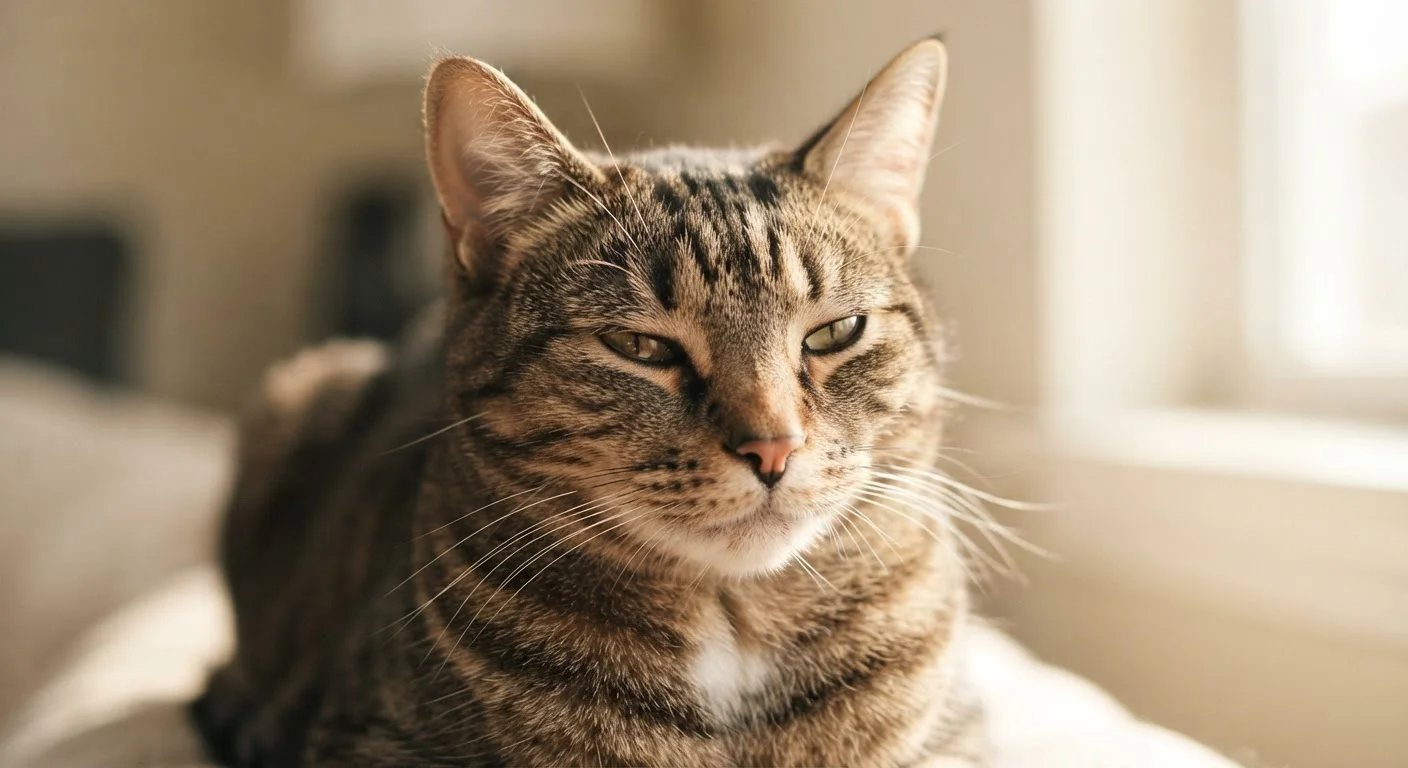
Why Cat Body Language Is Worth Decoding
Cats communicate far more through posture, movement, and facial expression than through sound. Most vocalizations - meows, chirps, trills - are actually directed at humans rather than other cats. The body, by contrast, is the primary channel cats use to signal mood, intent, and comfort level to everyone around them.
Learning to read these signals accurately helps you respond appropriately: knowing when to offer affection, when to step back, and when a change in behavior might be worth discussing with a veterinarian. Understanding body language is also a practical tool for catching early signs of distress - something covered in depth in our article on signs your cat may be in pain.
| Primary communication channel | Body posture and facial expression |
| Key body parts to observe | Ears, eyes, tail, whiskers, overall posture |
| Slow blink meaning | Trust and relaxed comfort |
| Puffed tail signals | Fear or extreme agitation |
| High tail with curled tip | Confident, friendly greeting |
| Flat, pinned ears signal | Fear or defensive aggression |
Reading the Key Body Parts
Ears
- Forward and upright: Alert, curious, engaged with something in the environment.
- Slightly rotated to the sides: Relaxed and content - the neutral resting position for a comfortable cat.
- Flattened sideways ("airplane ears"): Anxious, irritated, or overstimulated. Approach cautiously.
- Pinned flat against the skull: Fearful or highly defensive. Back off immediately.
Eyes and Pupils
- Slow blink: A well-documented signal of trust and relaxed comfort. Often called a "cat kiss" by behaviorists.
- Half-closed, soft gaze: Contentment and drowsiness.
- Dilated (wide) pupils in normal light: Excitement, fear, or overstimulation - context matters greatly here.
- Constricted (narrow slit) pupils: High arousal or focused attention; can also precede a swat or bite if the cat is tense.
- Hard, direct stare: A challenge or threat signal, especially toward another cat.
Tail
- Held high, tip slightly curled: Confident, sociable greeting posture.
- Wrapped around the body while sitting: Calm and settled.
- Puffed (piloerection): Fear or extreme agitation - the cat is trying to appear larger.
- Lashing or thumping: Growing irritation; a clear warning to stop whatever is happening.
- Low and tucked: Submission, fear, or pain.
Body Posture and Touch Behavior
- Slow biscuit-making (kneading): A comfort behavior rooted in kittenhood, signaling deep relaxation.
- Rolling onto the back: Context-dependent - may be an invitation, or simply a sign of trust; not always a request to have the belly touched.
- Arched back, sideways stance: Defensive threat display.
- Head bunting (rubbing the head against you): Affectionate scent-marking that says "you're part of my group."
Piloerection
The involuntary raising of fur along the back or tail, making the cat appear larger. It occurs in response to intense fear or aggression and is not under voluntary control.
Slow blink
A deliberate, unhurried closing and reopening of the eyes directed at a trusted individual. It is widely interpreted by feline behaviorists as a non-threatening, affiliative signal.
Head bunting
When a cat presses or rubs its forehead or cheeks against a person or object. It deposits scent from facial glands and is a sign of social bonding and ownership-marking.
Kneading
A rhythmic pushing motion made with alternating front paws, often on a soft surface. Rooted in nursing behavior from kittenhood, it typically signals deep relaxation or contentment in adult cats.
Displacement behavior
An out-of-context action - such as sudden grooming mid-interaction - that signals a cat is conflicted or mildly stressed. It is a subtle but meaningful communication cue.
Combining Signals for the Full Picture
No single signal tells the whole story. A cat with dilated pupils and a puffed tail is almost certainly frightened, whereas dilated pupils paired with a high tail and forward ears more likely reflects playful excitement. Train yourself to read clusters of signals simultaneously rather than one feature in isolation.
When to Take Signals to Your Vet
Body language shifts that persist for more than a day or two - such as hiding, changed posture, or altered grooming habits - can be behavioral, but they can also reflect physical discomfort or illness. Cats are skilled at masking pain, so sustained behavioral changes should be discussed with a veterinarian rather than interpreted purely as mood. No article can replace a professional evaluation of an individual animal.
Behavior that shifts noticeably from a cat's individual baseline - suddenly hiding, ceasing to groom, or becoming unusually vocal - can warrant a veterinary check. Cats instinctively mask discomfort, so changes in communication style are sometimes the earliest observable clue that something is off. For more on what to watch for, see what to prepare for your cat's annual vet visit.
If you have multiple pets, recognizing body language also helps manage inter-animal dynamics. Dogs, for instance, read signals quite differently - see our comparison piece reading your dog's body language to understand where the two species diverge.
Understanding your cat's communication style pairs naturally with other behavioral knowledge - including why cats knock things off shelves and how litter box changes signal problems.
The content provided on our blog site traverses numerous categories, offering readers valuable and practical information. Readers can use the editorial team’s research and data to gain more insights into their topics of interest. However, they are requested not to treat the articles as conclusive. The website team cannot be held responsible for differences in data or inaccuracies found across other platforms. Please also note that the site might also miss out on various schemes and offers available that the readers may find more beneficial than the ones we cover.