

Why Reading Your Dog Matters
Dogs evolved alongside humans for thousands of years, yet miscommunication between species remains one of the most common causes of dog bites, anxiety, and strained relationships. The gap isn't stubbornness on your dog's part - it's a language barrier. Dogs communicate almost entirely through body language, and most of those signals happen faster than we consciously notice.
Learning to read your dog accurately means you can de-escalate tension before it becomes a problem, recognize when your dog needs help, and respond in ways that build trust rather than erode it. It also makes you a safer, more effective handler in public settings where other people and dogs are involved.
Unlike cats or small animals, dogs are highly expressive across their whole body simultaneously. Reading a cat's body language involves many of the same principles, but dogs tend to broadcast their emotional state across more muscle groups at once, making their signals both richer and faster-changing.
~77%
Dog bites involving familiar dogs
The American Veterinary Medical Association notes that the majority of dog bites involve dogs known to the victim, underlining the importance of reading signals even with trusted pets.
4.5M
Dog bites reported annually in the US
The Centers for Disease Control and Prevention estimates approximately 4.5 million dog bites occur in the United States each year, many of which are preventable.
6-18 months
Age peak for socialization learning
Veterinary behaviorists identify early socialization as the critical window for dogs to learn to interpret and respond to social cues from other animals and humans.
The Four Key Signal Zones
Tail
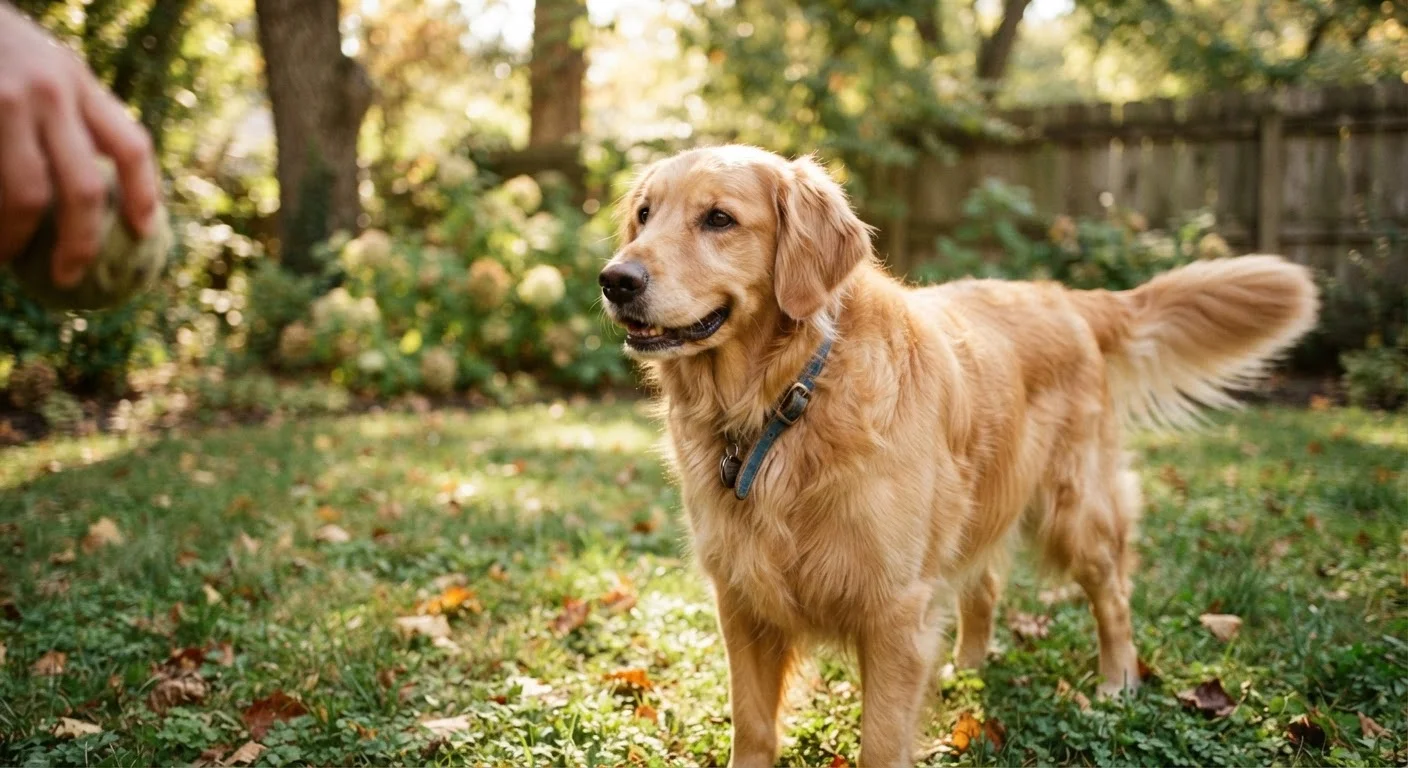
Tail position is one of the most widely watched cues - and one of the most misread. What matters is not just motion but height and quality. A tail held high and wagging in tight, fast movements signals high arousal, which may be excitement or tension. A tail tucked between the legs signals fear or submission. A relaxed, mid-height wag with a loose, sweeping motion typically reflects genuine ease. Note that tail carriage norms vary by breed - a naturally curled tail or a low-set tail requires baseline knowledge of that breed's typical posture.
Ears
Forward-pricked ears indicate alertness and interest. Ears pinned flat against the skull signal fear, submission, or appeasement. Ears rotated slightly back in an otherwise relaxed dog often communicate friendliness. As with tails, breed anatomy matters - floppy-eared dogs express the same emotions but with subtler movement at the base of the ear.
Eyes and Face
Soft, slightly squinted eyes in a relaxed face signal comfort. Hard, unblinking eyes fixed on a target - known as a 'hard stare' - signal a threat or intense focus. Whale eye (visible whites of the eye) is a clear stress indicator. Lip licking, yawning, and nose licks when no food is present are calming signals that indicate mild to moderate stress.
Posture and Weight Distribution
A dog leaning forward with weight shifted to its front legs is asserting itself or showing intense interest. A dog crouching low, curling inward, or rolling onto its side is communicating submission or appeasement. A relaxed dog carries its weight evenly with a loose, slightly wiggly body. Sudden stillness - a 'freeze' - is a serious warning sign that should never be ignored.
Practice Reading in Low-Stakes Settings
Start observing your dog's body language during calm, everyday moments - eating, resting, greeting family members. Building a clear picture of what 'relaxed' looks like for your specific dog makes it much easier to spot early stress or arousal signals before they escalate. Even five minutes of deliberate observation per day builds fluency quickly.
Stress Signals Owners Commonly Miss
Veterinary behaviorists have documented a range of subtle stress signals that owners frequently interpret as quirks or ignore entirely. Recognizing them early allows you to intervene before a dog escalates.
- Excessive yawning in non-tired contexts
- Repeated lip licking without food present
- Turning the head or body away from a person or dog
- Sniffing the ground suddenly during an interaction
- Panting in a cool environment without exercise
- Shaking off as if wet after an interaction
- Tucked tail combined with low ears
When a dog shows multiple stress signals in sequence, it is communicating discomfort clearly. Forcing the interaction - with petting, restraint, or encouragement from bystanders - typically makes the situation worse. Giving space, redirecting calmly, and removing the stressor is the appropriate response.
Stress signals can also indicate pain. If your dog's body language shifts suddenly without an obvious environmental trigger, a physical cause is worth ruling out. Our companion guide on hidden pain signals in dogs covers the overlap between discomfort and behavioral change in more detail.
Applying This Knowledge Day to Day
Body-language literacy becomes most valuable when built into routine interactions: greetings, walks, training sessions, and veterinary visits. During walks, watch your dog's posture shift as it encounters new stimuli - a stiffened body and forward lean toward another dog warrants a calm redirect rather than letting the dogs rush together. Understanding leash-pulling behavior is closely tied to reading arousal levels before they peak.
During training, frequent yawning, looking away, or slow responses often mean your dog is mentally overloaded, not disobedient. Shorter sessions with more frequent breaks typically outperform longer, forced repetitions.
Children especially benefit from being taught dog body language early. Many bites to children occur when an adult misread or overlooked clear stress signals. Teaching kids to recognize a tucked tail, stiff body, or hard stare - and to give the dog space - is a meaningful safety measure.
Finally, remember that individual dogs vary. Establish your own dog's baseline - what relaxed looks like for them - so you can more reliably notice when something is off. Sudden changes in posture or expression during otherwise routine situations can be the first clue that something physical or emotional needs attention.
Body Language Varies by Breed and Individual
Breeds with cropped ears, docked tails, or heavy facial wrinkles may express standard signals differently or with less visibility. A pug's flat face limits the range of its facial expressions; a Rottweiler's short tail carries less visual information than a Labrador's. Always calibrate your reading to your dog's anatomy and individual baseline, and consult a veterinary behaviorist if you're uncertain about what you're seeing.
This article is for general informational purposes only and does not constitute veterinary or behavioral advice. If your dog is showing signs of aggression, severe anxiety, or sudden behavioral changes, consult a licensed veterinarian or certified veterinary behaviorist.
Frequently Asked Questions
Not necessarily. Tail wagging signals emotional arousal, which can be positive or negative. A loose, wide wag paired with a relaxed body usually indicates friendliness. A stiff, high tail with small rapid movements can signal agitation or high alert. Always look at the whole body, not just the tail.
Yawning in a non-tired context is a classic calming or stress signal. Dogs often yawn to communicate mild discomfort or to de-escalate tension. If your dog yawns repeatedly during greetings or training sessions, they may be feeling overwhelmed and need a break.
Fear and aggression can look similar and often overlap. A fearful dog may cower, tuck its tail, flatten its ears, and avoid eye contact. Aggressive postures typically involve a stiffened body, raised hackles, hard stare, and forward weight shift. A dog can move from fear to defensive aggression quickly if it feels cornered, so both states deserve careful attention.
Whale eye is when you can see the whites of a dog's eyes (the sclera) in a visible crescent shape, usually because the dog is turning its head away while keeping its gaze fixed. It's a strong stress signal indicating discomfort. It often appears when a dog is guarding a resource or feels threatened.
No. Sustained direct eye contact is a threat signal in canine communication. Staring can increase a dog's stress and potentially provoke defensive behavior. Calm, soft eye contact followed by looking away is far more reassuring to your dog than a prolonged hard gaze.
If your dog suddenly changes its typical posture, becomes withdrawn, holds a limb oddly, or reacts with unusual growling when touched in a specific area, pain may be the cause. See our <a href="/pets-animals/dog-care/signs-your-dog-may-be-in-pain-and-why-they-often-hide-it">guide to pain signals in dogs</a> and contact your veterinarian promptly.
The content provided on our blog site traverses numerous categories, offering readers valuable and practical information. Readers can use the editorial team’s research and data to gain more insights into their topics of interest. However, they are requested not to treat the articles as conclusive. The website team cannot be held responsible for differences in data or inaccuracies found across other platforms. Please also note that the site might also miss out on various schemes and offers available that the readers may find more beneficial than the ones we cover.