

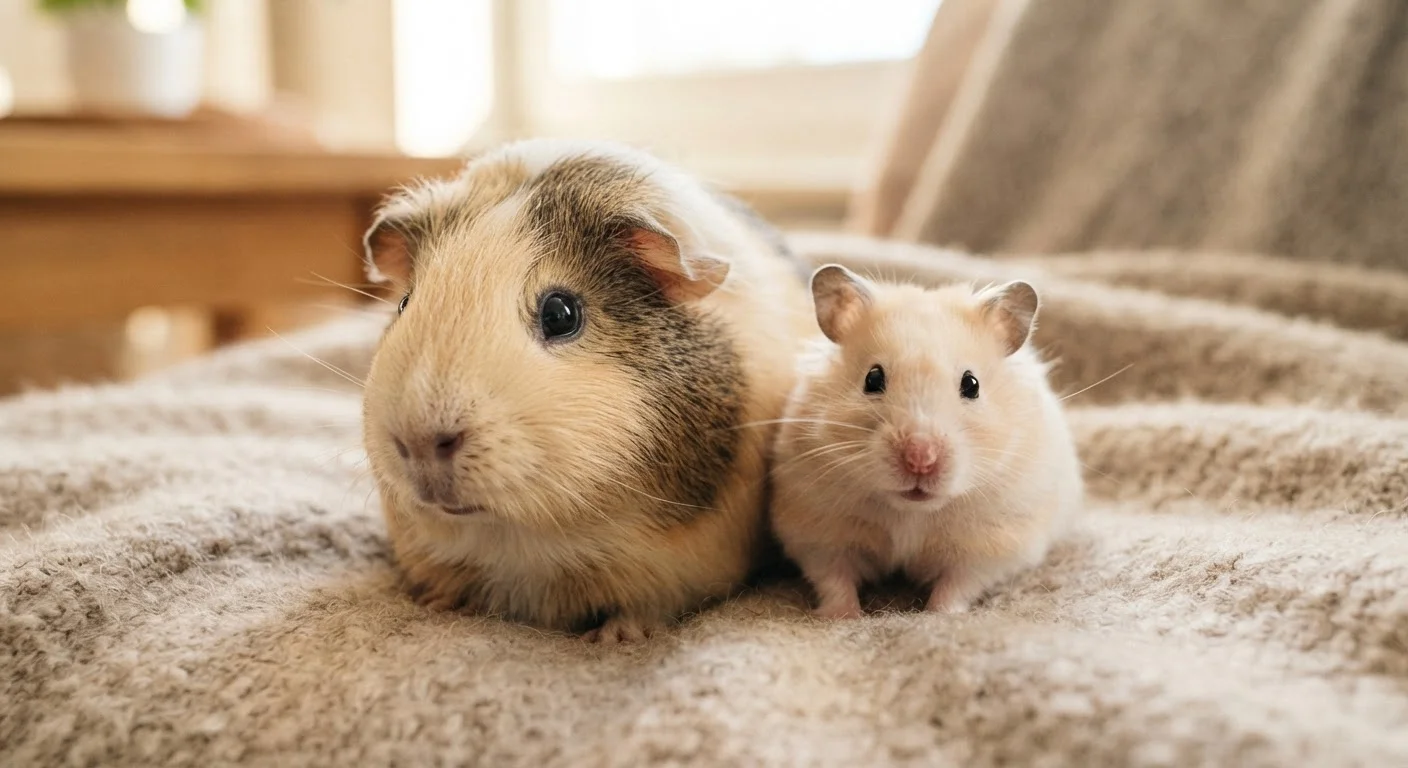
Option A
Guinea Pig
The social, interactive small pet built for daytime family life.
Best for: Families with children who want a gentle, sociable pet that's active during waking hours.
Option B
Hamster
The compact, low-maintenance companion for independent, quieter care.
Best for: Older children or adults who appreciate a self-sufficient, smaller animal with modest handling demands.
Social Needs and Handling: A Real Difference
One of the starkest contrasts between guinea pigs and hamsters is how they relate to companionship - both with their own species and with people.
Guinea pigs are highly social animals. Veterinary guidance consistently recommends keeping them in same-species pairs or small groups, as solitary guinea pigs can experience stress and exhibit signs of loneliness. This means adopting one often means adopting two. On the upside, their sociability extends to people: guinea pigs typically tolerate - and even seek - gentle handling and are less prone to biting than many small rodents. They're active during daylight hours, which aligns naturally with a family's schedule.
Hamsters operate differently. Most hamster species kept as pets, especially Syrian (golden) hamsters, are solitary and should not be housed together. They're also primarily nocturnal - meaning they sleep through much of the day and become active in the evening. Families expecting afternoon interaction may find their hamster fast asleep. That said, a hamster that has been handled regularly from a young age can become comfortable with people; it simply takes patience and consistency. For more on interpreting hamster behavior, see why hamsters sleep all day and what's actually normal.
| Criterion | Guinea Pig | Hamster |
|---|---|---|
| Typical lifespan | 5-7 years | 2-3 years |
| Social needs | Needs a companion (pair recommended) | Solitary (Syrian); some dwarf species can pair |
| Activity pattern | Diurnal (active during the day) | Nocturnal (active at night) |
| Typical adult size | 1.5-2.5 lbs | 0.5-1 oz (dwarf) to ~5 oz (Syrian) |
| Minimum enclosure size | 7.5+ sq ft (pair) | ~450 sq in floor space |
| Handling temperament | Generally calm; low bite risk | Variable; may bite if startled |
| Diet complexity | Hay, veggies, vitamin C required | Seed/pellet mix, occasional fresh food |
| Vocalization | Frequent and expressive | Minimal |
Space, Lifespan, and Daily Care Demands
Before choosing either pet, families should honestly assess the space and time they can commit over the animal's lifetime.
Guinea pigs are larger animals - typically 1.5 to 2.5 pounds - and need a proportionally larger enclosure. A pair of guinea pigs requires a minimum of 7.5 square feet of floor space, according to widely accepted small animal care guidelines, though more is always better. They also need daily fresh vegetables alongside quality hay (which should form the bulk of their diet) and vitamin C supplementation, since guinea pigs cannot synthesize this vitamin on their own.
Hamsters, by contrast, require less physical space - though their enclosures should still be larger than many pet store cages suggest. A common minimum recommendation for a Syrian hamster is around 450 square inches of unbroken floor space. Their diet is simpler: a quality hamster mix supplemented with small amounts of fresh food. Cleaning schedules for both animals are similar - spot-cleaning daily and a full enclosure clean weekly keeps things hygienic.
The lifespan difference is significant for families with children. Guinea pigs typically live 5-7 years; hamsters generally live 2-3 years. A shorter lifespan may mean facing pet loss sooner, which is an important emotional consideration for younger children. Our complete guide to guinea pig care covers their long-term needs in detail.
5-7 yrs
Average guinea pig lifespan
Guinea pigs live roughly twice as long as most hamster species, a meaningful consideration for families planning around a pet's lifetime care.
2-3 yrs
Average hamster lifespan
Syrian hamsters - the most common pet variety - typically live 2 to 3 years under good care conditions.
7.5 sq ft
Minimum space for a guinea pig pair
This floor-space minimum is widely cited by small animal welfare organizations as a baseline for two guinea pigs to move and behave naturally.
Health Monitoring and What to Watch For
Both guinea pigs and hamsters can mask illness - a survival instinct common in prey animals. This makes regular, attentive observation essential for any owner.
In guinea pigs, early warning signs include changes in eating or drinking habits, unusual lethargy, labored breathing, hair loss, or runny eyes or nose. Dental problems are common in guinea pigs and can quickly affect appetite and weight. Because they require vitamin C, signs of deficiency - such as rough coat, reluctance to move, or swollen joints - should prompt a vet visit promptly.
Hamsters can develop wet tail (a serious gastrointestinal condition), respiratory infections, and dental overgrowth. Changes in activity level, coat condition, or droppings are often the first signals that something is wrong. Both species benefit from a vet familiar with small exotic mammals, not just dogs and cats.
For a broader look at health signals across small pets, signs a small pet is unwell that owners often miss is a useful companion read. And if you're still weighing the overall commitment of small pet ownership, small pet ownership: honest advantages and real trade-offs offers a grounded, balanced overview before you decide.
Enrichment Matters for Both Species
Neither guinea pigs nor hamsters thrive in bare enclosures with nothing to explore. Guinea pigs benefit from tunnels, hiding spots, and foraging opportunities; hamsters need burrowing substrate, a wheel of appropriate size, and varied textures. Enrichment supports mental health and reduces stress-related behaviors in both animals. For ideas on creating a stimulating habitat, see building an enriching environment for a small caged pet.
This article is for general informational purposes only and is not a substitute for professional veterinary advice. Always consult a qualified veterinarian for guidance specific to your pet's health and care needs.
The content provided on our blog site traverses numerous categories, offering readers valuable and practical information. Readers can use the editorial team’s research and data to gain more insights into their topics of interest. However, they are requested not to treat the articles as conclusive. The website team cannot be held responsible for differences in data or inaccuracies found across other platforms. Please also note that the site might also miss out on various schemes and offers available that the readers may find more beneficial than the ones we cover.