

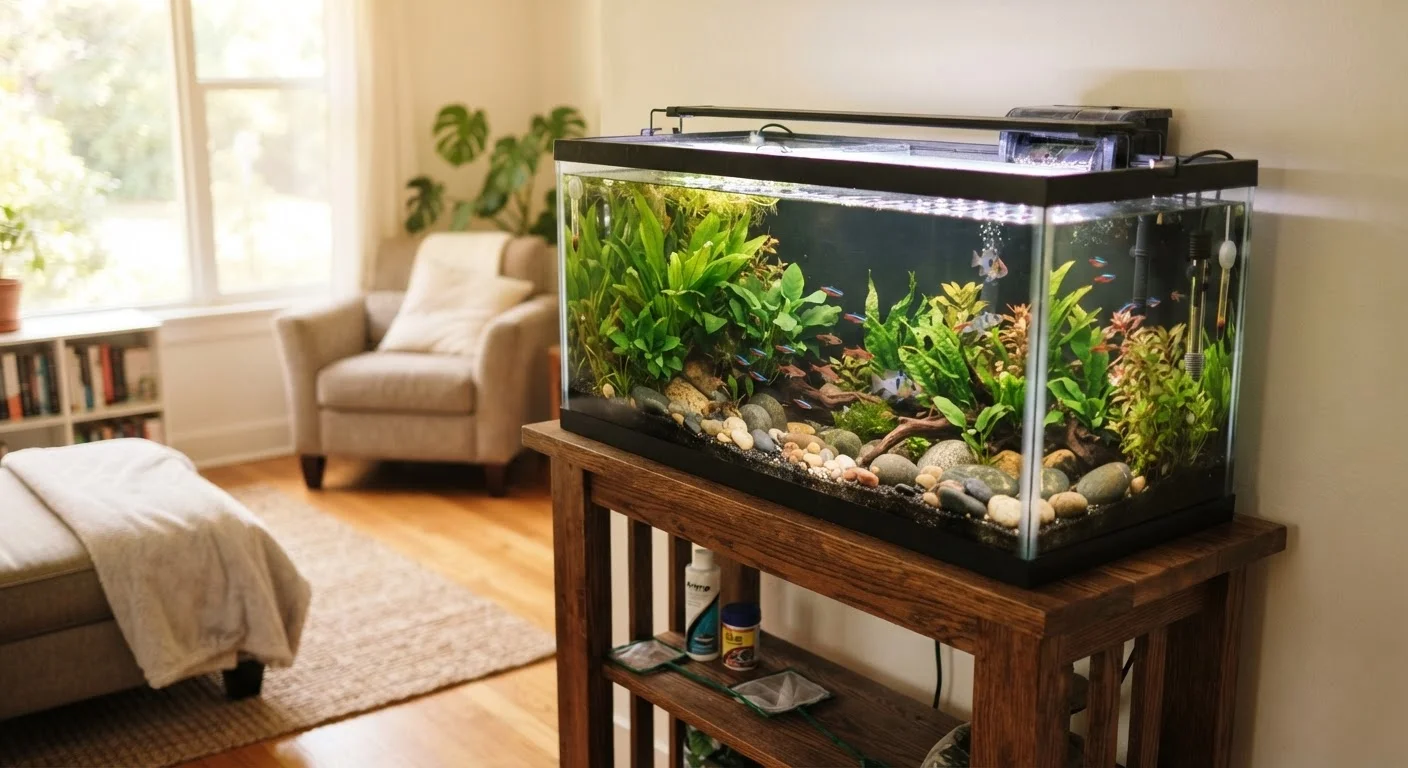
Why Most New Tanks Fail - and How to Avoid It
The most common reason new aquariums fail is not bad luck - it's skipping the biological groundwork. Fish are far more sensitive to water chemistry than most new owners realize, and an aquarium isn't just a decorative container; it's a living ecosystem that needs to be established before fish can safely live in it.
Understanding this from the start puts you in a completely different position than owners who rush to the pet store, buy fish the same day as the tank, and then wonder why everything died within a week. Before you make any livestock decisions, it's worth reading about how fish stress shows up and what usually causes it - because many early warning signs are subtle and easy to miss.
Never Skip the Nitrogen Cycle
Adding fish to an uncycled tank exposes them to lethal ammonia and nitrite spikes. The cycling process establishes beneficial bacteria that convert waste into safer compounds. Rushing this step is the leading cause of fish loss for new hobbyists. Allow at least 4-6 weeks for a full fishless cycle before introducing any livestock.
The good news: with the right setup sequence and a few weeks of patience, keeping a healthy aquarium is genuinely achievable for families with no prior experience.
What You'll Need Before You Start
Gathering the right equipment before you begin prevents the common trap of improvising mid-setup. Here's what the process requires:
What you will need
Aquarium tank (20+ gallons recommended for beginners)
Larger water volume is more forgiving of parameter swings, making it easier to maintain stable conditions.
Hang-on-back or canister filter
Removes waste and houses beneficial bacteria essential to the nitrogen cycle.
Submersible aquarium heater
Maintains stable temperature for tropical freshwater fish, typically 74-78°F.
Liquid water test kit
Measures ammonia, nitrite, nitrate, and pH to confirm the tank is safe for fish.
Aquarium-safe substrate (gravel or sand)
Provides a natural base for the tank and can anchor live or artificial plants.
Water conditioner / dechlorinator
Neutralizes chlorine and chloramines in tap water before it contacts fish or filter bacteria.
Aquarium thermometer
Monitors water temperature independently of the heater's built-in display for accuracy.
Ammonia source for fishless cycling (pure ammonia or fish food)
Feeds beneficial bacteria during the cycling process so they establish before fish are introduced.
You don't need the most expensive versions of these items, but you do need reliable ones - a failing heater or undersized filter can destabilize a tank quickly.
Test Before You Trust
Liquid test kits give more accurate readings than paper test strips and are worth the investment for new setups. Check ammonia, nitrite, nitrate, and pH at least twice a week during cycling and weekly once fish are added. Keeping a simple log helps you spot trends before they become problems.
Step-by-Step Setup Instructions
Follow these steps in order. Skipping or reordering them - especially the cycling phase - is the primary reason beginner tanks run into trouble.
Choose and position your tank
Select a tank of at least 20 gallons if possible. Smaller tanks - particularly bowls and tanks under 10 gallons - fluctuate in temperature and water quality far more rapidly, leaving little margin for error. Place the tank away from windows (to limit algae growth and temperature swings), heating vents, and high-traffic areas that create vibration stress for fish.
Rinse and add substrate, décor, and water
Rinse gravel or sand thoroughly in a bucket until the water runs clear - do not use soap. Add your substrate, any rocks, driftwood, or decorations (ensure they are aquarium-safe), and then fill the tank slowly. Pour water onto a plate placed on the substrate to avoid disturbing it. Add water conditioner per the label directions for your tank volume.
Install and start your filter and heater
Mount your filter according to the manufacturer's instructions - hang-on-back filters should draw water from near the bottom of the tank. Set your heater to the appropriate range for your planned fish species (74-78°F suits most common tropical freshwater fish) and allow 24 hours for the temperature to stabilize before measuring. Run both units continuously from this point forward.
Cycle the tank before adding any fish
The nitrogen cycle converts toxic ammonia (produced by fish waste and decaying matter) into nitrite, then into the far less harmful nitrate. For a fishless cycle, add a small daily amount of pure ammonia or a pinch of fish food to feed the developing bacterial colonies. Test water every two to three days. Cycling is complete when ammonia and nitrite both read zero and nitrate is detectable - this typically takes four to six weeks.
Research and select compatible fish
Choose fish appropriate to your tank size, water parameters, and each other's temperament. Popular beginner-friendly freshwater species include zebra danios, platies, and corydoras catfish - all of which tolerate a range of conditions and are generally peaceful. Avoid mixing fin-nippers with long-finned species, or territorial fish with timid ones. Introduce fish gradually - a few at a time over several weeks - to avoid overwhelming your filter's biological capacity.
If you're still deciding between tank types, see our guide on freshwater vs. saltwater aquariums for first-time owners before committing to a setup.
Establish a weekly maintenance routine
Change 20-30% of the tank water each week using treated tap water matched to the tank's temperature. Vacuum the substrate with a gravel siphon during water changes to remove accumulated waste. Rinse filter media in old tank water (never tap water) to preserve beneficial bacteria. Test water parameters weekly and log results so you can spot slow changes.
Tap Water Needs Treatment First
Untreated tap water contains chlorine and chloramines that are toxic to fish and will destroy the beneficial bacteria in your filter. Always use a dechlorinator or water conditioner formulated for aquariums when doing water changes or filling the tank initially. Follow the product directions for your tank volume precisely.
Keeping It Healthy After the First Fish Go In
The first few weeks after introducing fish are the most critical. Continue testing water two to three times per week and perform your regular water changes on schedule. Watch for early stress signals - clamped fins, loss of color, fish hiding more than usual, or unusual surface behavior - and investigate water parameters before assuming illness.
A healthy tank doesn't require daily intervention. It requires consistent, light maintenance. Families who build the weekly water change into their routine - the way they might schedule any other household task - tend to have far better long-term results than those who react only when something looks wrong.
Fish keeping is also a rewarding entry point into broader pet ownership for children. If your household is expanding its pet family in other ways, our guidance on introducing a new cat to a home that already has pets covers similar themes of patience and gradual acclimation.
This article is for general informational and educational purposes. Always consult a qualified aquatic veterinarian or specialist for concerns about fish health or disease.
The content provided on our blog site traverses numerous categories, offering readers valuable and practical information. Readers can use the editorial team’s research and data to gain more insights into their topics of interest. However, they are requested not to treat the articles as conclusive. The website team cannot be held responsible for differences in data or inaccuracies found across other platforms. Please also note that the site might also miss out on various schemes and offers available that the readers may find more beneficial than the ones we cover.