

Why Neighborhood Choice Shapes Your Whole Trip
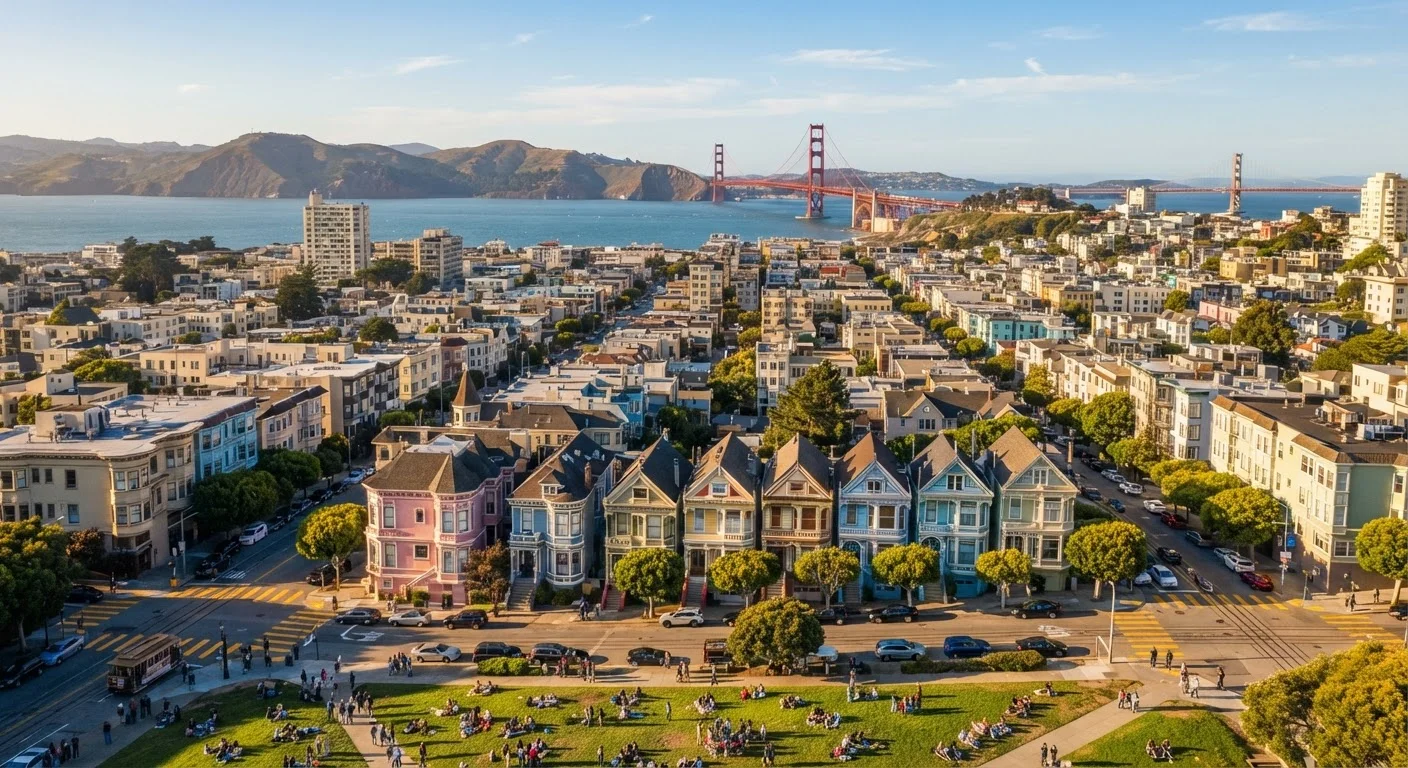
San Francisco is compact by American city standards - just 49 square miles - but its neighborhoods feel genuinely distinct in character, terrain, and what they offer kids. Families who base every outing from one hotel near Fisherman's Wharf often miss the city's real texture. Understanding a few key areas before you arrive helps you build an itinerary that balances novelty, rest, and the kind of moments kids actually remember.
If you're driving into the city as part of a longer journey, our family road trip planning guide covers the logistics of budgeting and routing before you hit the highway.
| City Size | 49 square miles |
| Best Season for Families | September-October (less fog, thinner crowds) |
| Top Kid Anchor Attraction | California Academy of Sciences, Golden Gate Park |
| Most Walkable Family Zone | The Presidio / Golden Gate Park corridor |
| Getting Around | BART, Muni, rideshare - driving not recommended |
| Weather Wildcard | Summer fog; pack layers year-round |
Neighborhood by Neighborhood: What Families Actually Find
Fisherman's Wharf & the Waterfront
This is where most families land first, and it delivers on spectacle: sea lions at Pier 39, bay views, and the ferry to Alcatraz. The crowds are real and the food is tourist-priced, but the Aquarium of the Bay and the Hyde Street Pier historic ships give kids something genuinely engaging. Plan your arrival early - the sea lion area especially rewards a morning visit before the pier fills up.
Golden Gate Park
This is arguably the most family-friendly real estate in the entire city. The California Academy of Sciences (natural history museum and planetarium under one roof) anchors the east end, while the Bison Paddock, children's carousel, and Japanese Tea Garden offer lower-key diversions nearby. The park is large enough that you can spend a full day without retracing steps. Rent a bike or a paddleboat for a different pace.
The Presidio
National Park land tucked inside the city limits - the Presidio is where families with younger kids often exhale. Lucasfilm's campus hosts the Walt Disney Family Museum, trails wind through cypress and eucalyptus, and the restored Main Post has open lawns ideal for picnics. Views of the Golden Gate from here are among the most accessible in the city.
Chinatown & North Beach
Walking from Chinatown uphill into North Beach covers a lot of cultural ground quickly. Grant Avenue's shops engage curious kids, and Coit Tower at the top of Telegraph Hill provides a panoramic payoff for families willing to climb. This stretch rewards older children and teens more than toddlers - the terrain is hilly and the crowds tight in Chinatown's core streets.
Mission District
The Mission's murals - especially along Balmy Alley and 24th Street - function as an open-air art lesson that resonates with school-age kids. Dolores Park offers flat, grassy space rare in this hilly city. The neighborhood runs casual and local in tone; it's a good place to eat inexpensively and see a less-touristed side of SF. Worth pairing with a reality-check on urban family travel if this is your first major city trip with children.
BART
Bay Area Rapid Transit - the regional rail system connecting San Francisco to Oakland, Berkeley, the airport, and surrounding cities. Families can use it to reach the city from SFO or OAK without a car.
Muni
San Francisco Municipal Railway - the city's own bus, light rail, and cable car network. It covers most neighborhoods and is generally the most practical way for families to move within SF.
The Presidio
A former U.S. Army base turned National Park that sits at the northern tip of San Francisco, adjacent to the Golden Gate Bridge. It offers trails, museums, and open lawns within the city limits.
Alcatraz
A former federal penitentiary on an island in San Francisco Bay, now managed by the National Park Service. Access requires a ferry from Pier 33; advance booking is strongly recommended, especially in summer.
Planning Smart: Logistics That Matter
San Francisco's hills are no joke with a stroller, and the famous cable cars - while memorable - aren't practical for daily family transport. BART and Muni buses connect most neighborhoods reliably, and rideshare is widely available. Budget-conscious families should note that parking in the city is expensive and often scarce; arriving via transit or staying walkable to your key destinations generally saves both money and stress.
The city's weather confounds visitors year-round: summer fog keeps afternoons cool even in July. Pack layers regardless of the forecast. For families thinking broadly about West Coast travel, the American Southwest road trip guide is a useful complement if you're extending the trip southward.
This article is intended as a general travel reference. Prices, hours, and conditions at attractions change - always verify directly with venues and check current travel advisories before your trip.
The content provided on our blog site traverses numerous categories, offering readers valuable and practical information. Readers can use the editorial team’s research and data to gain more insights into their topics of interest. However, they are requested not to treat the articles as conclusive. The website team cannot be held responsible for differences in data or inaccuracies found across other platforms. Please also note that the site might also miss out on various schemes and offers available that the readers may find more beneficial than the ones we cover.