

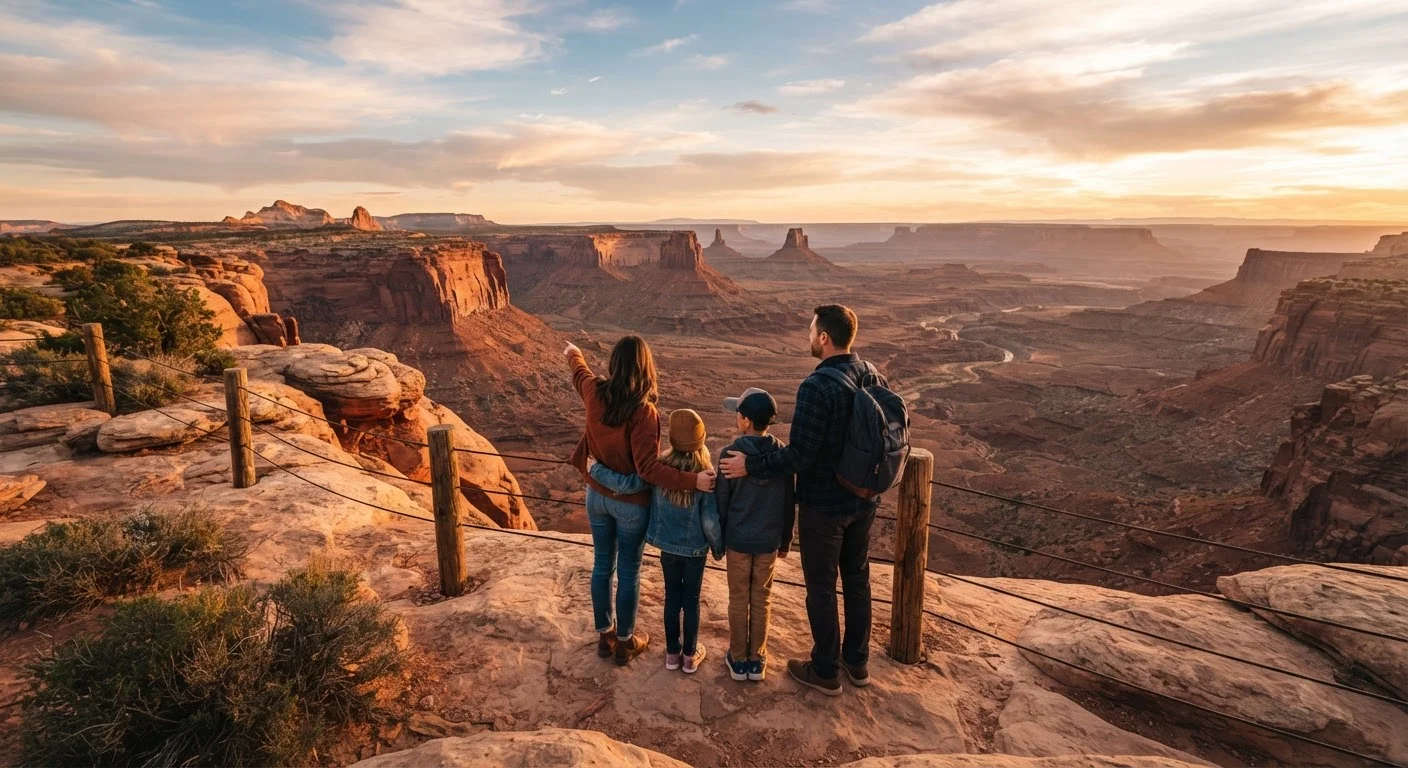
Why the Southwest Punishes the Rushed Itinerary
The American Southwest is one of the most visually dramatic regions on the planet - and one of the easiest places to have a terrible family vacation if you treat it like a checklist. The distances between Zion, Bryce Canyon, the Grand Canyon, and Monument Valley are not small. Even on well-maintained roads, families regularly underestimate how long point-to-point drives actually take once you add fuel stops, bathroom breaks, and the unavoidable moment when a six-year-old insists on watching a single cloud for ten minutes.
The families who leave the Southwest energized and already planning their return share one habit: they built breathing room into their days. Two nights at a park instead of one. A morning with no agenda. A dusty roadside trail followed for no reason other than curiosity. That's the pace that lets kids - and adults - absorb landscapes that simply cannot be processed at highway speed.
See our guide to road trip myths for a candid look at the assumptions that derail Southwest trips before they begin.
277 miles
Length of the Grand Canyon
According to the National Park Service, the Grand Canyon stretches 277 river miles - a scale that requires visitors to choose their experience deliberately rather than trying to 'see it all.'
~4 hrs
Drive time: Grand Canyon to Zion
The South Rim of the Grand Canyon to Zion National Park's main entrance is approximately four hours under typical conditions - longer with family stops, meaning many families underestimate the day.
5 parks
Utah's 'Mighty Five' national parks
Utah's five national parks - Zion, Bryce, Capitol Reef, Canyonlands, and Arches - are marketed as a single circuit, but completing all five meaningfully requires at least 10-12 days for most families.
The Stops That Genuinely Land With Kids
Not every iconic Southwest landmark translates equally well to young visitors. Here's what the experience-driven evidence actually shows:
- Grand Canyon South Rim: The scale is incomprehensible to children at first - and that's part of the magic. The Rim Trail is paved and stroller-accessible along much of its length. The Junior Ranger program here is one of the most robust in the National Park System, giving kids a booklet of activities that turns passive sightseeing into active discovery.
- Zion National Park: The canyon walls feel close and intimate in a way the Grand Canyon doesn't, which makes Zion hit differently with younger kids. The Riverside Walk is flat, paved, and ends at the start of The Narrows - even toddlers can experience that finale moment without a strenuous hike.
- Bryce Canyon: Hoodoos are genuinely weird and wonderful in the way that delights children. The rim is at elevation (around 8,000 feet), so mornings can be cool even in summer - a welcome relief. Short loop trails into the amphitheater are manageable for most school-age kids.
- Monument Valley Navajo Tribal Park: The 17-mile Valley Drive is unpaved but navigable in most passenger vehicles at low speed, and it places you inside the landscape rather than above it. Families should approach the park with cultural respect - this is sovereign Navajo Nation land, and guided tours led by Navajo guides offer context no guidebook can replicate.
Practical Realities Families Need to Plan Around
The Southwest is not forgiving of poor preparation. A few realities worth internalizing before you leave the driveway:
Book Permits and Campsites Early
Several Southwest national parks require advance reservations for entry permits, campgrounds, or shuttle access - and popular dates fill months out. Check each park's official National Park Service page well before your travel dates to understand current requirements. Last-minute arrivals without permits have been turned away at park entrances during peak season.
Heat: Temperatures in canyon bottoms can exceed what's forecast for rim or town elevations by 20°F or more. The National Park Service recommends hiking before 10 a.m. during warmer months and carrying one liter of water per person per hour of activity. These are not suggestions to debate.
Altitude: Bryce Canyon's rim sits near 8,000 feet; the North Rim of the Grand Canyon exceeds 8,000 feet as well. Kids (and adults) unaccustomed to elevation can experience headaches and fatigue. Plan lighter first days at altitude and watch for symptoms.
Cell service and fuel: Gaps in cell coverage are common, and gas stations can be genuinely sparse. A physical road atlas or downloaded offline maps are worth having. Never let your tank drop below half in remote stretches.
For a comprehensive pre-trip checklist, our family road trip packing guide covers gear, snacks, and the items most parents don't think about until mile 200.
“The canyon is not something you see in an afternoon. It's something you sit with. The families who stay longest always leave most changed.”
— A Grand Canyon National Park ranger, National Park Service interpretive ranger, speaking generally about visitor experience
Building the Trip Around Depth, Not Distance
The most effective Southwest family itineraries work backward from a simple question: what do we actually want everyone to remember? Not the number of parks checked off - but one moment, one view, one thing a child said that you'll still be telling at Thanksgiving. That kind of memory requires time, and time requires restraint in how much ground you try to cover.
A useful framework: choose three anchor destinations, allow two nights at each, and treat everything between them as bonus material rather than obligation. Side roads, roadside geology markers, small-town diners, a random pull-off with an unobstructed view - these are the Southwest's quiet gifts to unhurried travelers.
If you're still in the planning phase, the family road trip planning guide offers a practical framework for mapping routes and setting realistic budgets. And for route inspiration beyond the main corridors, scenic routes families often overlook highlights some genuinely underrated stretches of Southwest highway worth building into your loop.
The Southwest rewards exactly the travelers who resist the urge to maximize. Slow down, and it gives you more than you planned for.
Frequently Asked Questions
Most families find 10 to 14 days gives them room to visit three or four major parks without feeling rushed. Shorter trips work if you limit your geographic scope - for example, staying within Arizona or focusing only on Utah's national parks. Trying to cover both states in under a week almost always produces an exhausting experience.
Families with children as young as four to five can enjoy paved overlooks, Junior Ranger programs, and visitor center exhibits. Strenuous canyon hikes like Bright Angel Trail at the Grand Canyon are better suited to confident hikers aged 10 and up. Always assess your child's specific fitness level and consult ranger staff about trail conditions before hiking.
Summer heat in the Southwest can be genuinely dangerous, with temperatures regularly exceeding 100°F in canyon bottoms. Families should hike only in the early morning, carry ample water, and avoid midday sun exposure. Spring and fall offer more comfortable conditions for families with young children. Always check the National Park Service website for current safety advisories before your trip.
Yes - many Southwest parks now require timed entry permits or campground reservations that sell out months in advance. Zion National Park, for example, requires shuttle use during peak season, and popular campgrounds at Bryce Canyon and the Grand Canyon fill quickly. Book as early as possible and verify requirements on the official park website before you go.
Distances between key destinations are often longer than they look on a map. The drive from the Grand Canyon's South Rim to Zion National Park, for instance, is roughly four hours under ideal conditions. Factor in stops, slower speeds on canyon roads, and kids' rest needs, and a realistic driving day rarely exceeds four to five hours.
The content provided on our blog site traverses numerous categories, offering readers valuable and practical information. Readers can use the editorial team’s research and data to gain more insights into their topics of interest. However, they are requested not to treat the articles as conclusive. The website team cannot be held responsible for differences in data or inaccuracies found across other platforms. Please also note that the site might also miss out on various schemes and offers available that the readers may find more beneficial than the ones we cover.