
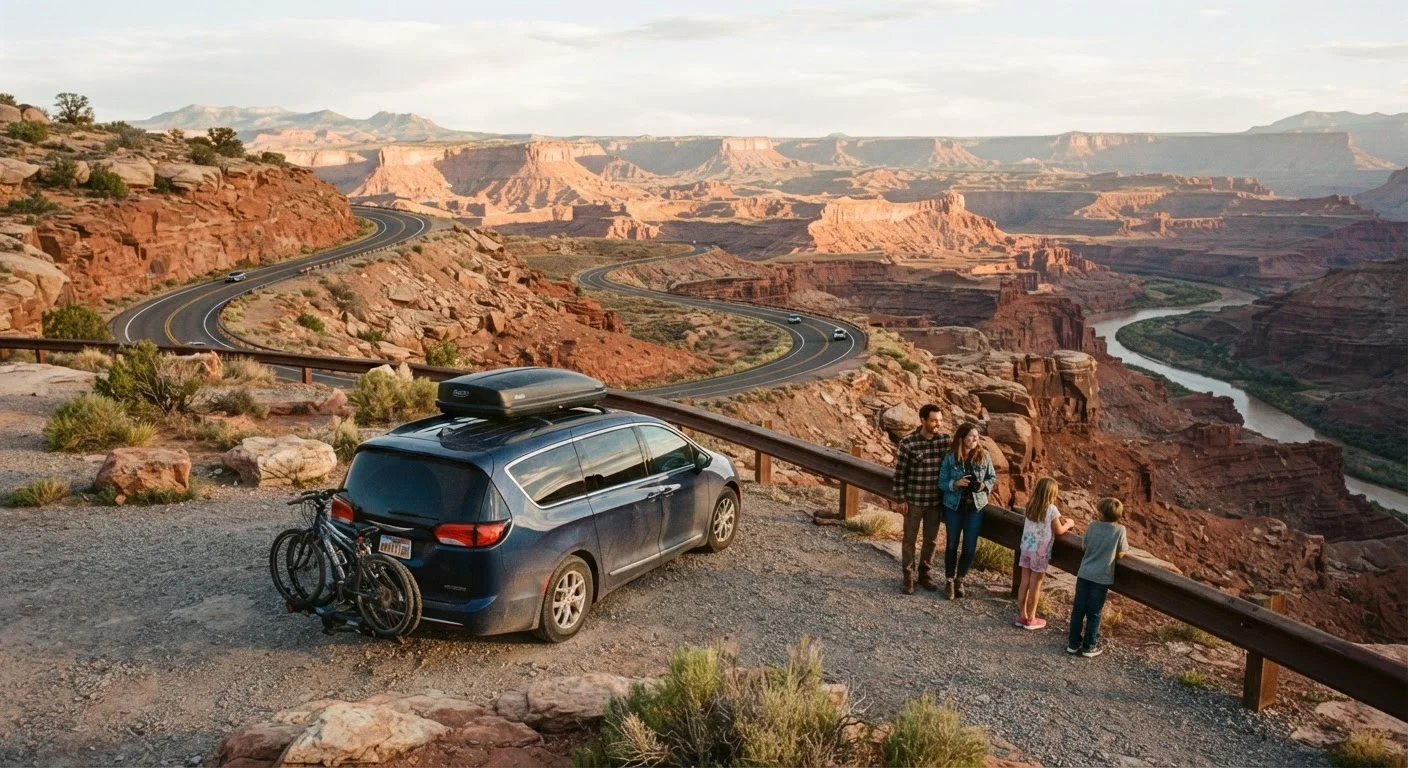
The Road Less Driven Is Worth It
Most families plotting a cross-country drive default to the interstate system - and honestly, that's understandable. I-40, I-80, I-90: they're efficient, well-signposted, and lined with familiar fuel stops. But efficiency and memory-making don't always travel together. The routes that stick with kids - the ones they describe to their friends months later - tend to be the ones where something unexpected happened on a road nobody had heard of.
The good news is that the US has an extraordinary network of byways, scenic highways, and two-lane connectors that most families simply don't know about. They're not secret, but they're easy to scroll past when you're focused on arrival time rather than the journey itself. If you're still in the early stages of planning, our guide to mapping your first family road trip can help you build a flexible framework before you start layering in routes like these.
Below are seven scenic routes that consistently get overlooked - each one offering something genuinely different from the highway experience most families default to.
US Route 89 Through Arizona and Utah
Running from Flagstaff, Arizona northward through Page, Kanab, and into southern Utah, US-89 threads through some of the most visually arresting landscape in the country. Families pass within reach of Antelope Canyon, the Vermilion Cliffs, and Grand Staircase-Escalante - without the congestion of more famous approach roads. The towns along the route are small and genuinely interesting, not just fuel stops.
Note that portions of this corridor can be affected by flash flood conditions; always check weather and road conditions through official state DOT sources before traveling.
US-89 delivers canyon country grandeur with far less traffic than the famous alternatives.
The Loneliest Road: US Route 50 Across Nevada
Life magazine famously called US-50 across Nevada "the loneliest road in America" - and the state leaned into it, creating a passport stamp program for travelers brave enough to cross. For families, the appeal is real: vast, open basin-and-range terrain, a string of small historic towns like Ely and Fallon, and a genuine sense of scale that kids often find unexpectedly awe-inspiring. The route connects I-50 in California to the Utah border and works well as part of a larger western loop.
Nevada's US-50 teaches kids what 'wide open spaces' actually means - and stamps their travel passports.
The Natchez Trace Parkway (Mississippi to Tennessee)
Administered by the National Park Service, the Natchez Trace Parkway runs roughly 444 miles from Natchez, Mississippi to Nashville, Tennessee. Commercial vehicles are prohibited, so the road is calm, green, and entirely free of billboards. Pull-offs reveal ancient Native American mounds, Civil War sites, cypress swamps, and wildflower meadows depending on the season. It's genuinely one of the most underrated family drives in the eastern US - and the junior ranger program along the route gives kids a mission.
No billboards, no trucks - the Natchez Trace Parkway is a rare stretch of quiet, purposeful driving.
Going-to-the-Sun Road, Glacier National Park (Montana)
Technically a park road rather than a public highway, Going-to-the-Sun Road in Glacier National Park is one of the most dramatic drives in North America. The 50-mile route crosses the Continental Divide at Logan Pass and offers mountain goat and bighorn sheep sightings that kids legitimately lose their minds over. Vehicle size restrictions apply, so verify current NPS guidelines before arrival. The road is typically open fully from late June through mid-October, though that window shifts year to year - always confirm with the park before planning around it.
Wildlife sightings on Going-to-the-Sun Road are the kind kids describe for years afterward.
Highway 12 Through Central Utah
Frequently cited by travel writers as one of the most scenic highways in the US, Utah's Highway 12 runs between Bryce Canyon and Capitol Reef through some of the wildest terrain on the Colorado Plateau. The road crests over a narrow ridge called the Hogsback - a white-knuckle stretch where the pavement drops steeply on both sides - and passes through Red Canyon, Escalante, and the town of Boulder. It's a slow drive by design, and that's the point. A solid road trip playbook will help you pace this kind of route so nobody arrives exhausted.
Utah's Highway 12 rewards patience - every mile adds something you genuinely didn't expect.
The Great River Road (Following the Mississippi)
The Great River Road isn't a single highway but a designated scenic byway network tracing the Mississippi River from Minnesota to the Gulf of Mexico. Families can pick up any segment - Wisconsin's stretch through river bluffs, Iowa's rural overlooks, or Louisiana's bayou country - and pair it with a larger route. State tourism offices maintain detailed maps and seasonal guides for each section. It's especially compelling for history-minded families, since the river corridor is layered with Indigenous, French, Spanish, and American stories.
The Great River Road offers American history at river pace - rich, unhurried, and endlessly varied.
US Route 2 Across the Northern Tier
Running from the Upper Peninsula of Michigan through Wisconsin, Minnesota, North Dakota, Montana, and into Idaho and Washington, US-2 is among the most overlooked long-distance routes in the country. The northern tier doesn't get much road trip press, but families who've driven it describe landscapes that feel genuinely untouched - prairie, northern forest, the Glacier region, the Cascades. It takes more time than I-90 but rewards that time with fewer crowds and more breathing room. Fuel stops can be far apart in rural stretches, so plan tank fill-ups accordingly. Smart budget travel strategies can help offset the longer mileage this route adds.
US-2 is America's overlooked northern corridor - vast, quiet, and genuinely eye-opening.
Make the Detour Count
You don't have to swap your entire route to benefit from these roads. Many of them work beautifully as one- or two-day detours from a larger interstate-based trip. The key is planning the detour before you leave, not improvising it at 4 p.m. with a car full of hungry kids. Check road conditions, confirm any seasonal closures with your state's DOT website, and verify that overnight options exist where you expect them - don't rely on assumptions.
Always Verify Seasonal Road Access
Several scenic routes - especially in mountain and desert regions - have seasonal closures or vehicle size restrictions that aren't obvious from a map app. Before committing to any lesser-known highway, check the relevant state DOT or National Park Service website for current conditions. Building flexibility into your itinerary makes unexpected closures a detour rather than a disaster.
For families drawn to the western half of the country, this deep-dive into Southwest road trip pacing explains why slowing down on routes like these pays off in a big way. And if you want to compare these overlooked routes against some of the classic drives, regional routes worth building a vacation around is a solid companion read.
The interstate will always be there when you need it. But on the roads fewer people take, your family gets the version of America that still surprises.
The content provided on our blog site traverses numerous categories, offering readers valuable and practical information. Readers can use the editorial team’s research and data to gain more insights into their topics of interest. However, they are requested not to treat the articles as conclusive. The website team cannot be held responsible for differences in data or inaccuracies found across other platforms. Please also note that the site might also miss out on various schemes and offers available that the readers may find more beneficial than the ones we cover.