
Why the Route Is the Vacation
For most families, a road trip destination is the point - but the smartest trips treat the drive itself as the main event. When you pick a route with genuine character, every mile delivers: dramatic geology, roadside diners with personality, small towns your GPS tries to skip, and landscapes that make kids put down the tablet voluntarily.
The routes below are each built around a distinct regional identity - Pacific coast, mountain south, high desert, northern lake country, and the Gulf. They vary in length, terrain, and pace, so you can match one to your family's stamina and interests. Before you commit to a route, read our planning framework to nail down budget, pacing, and logistics. And if you want to go beyond the obvious, these lesser-known US routes are worth a look too.
Pacific Coast Highway (California)
Running roughly from San Francisco to Los Angeles along Highway 1, the PCH is arguably the most visually dramatic drive in the country. Families get sea otters at Monterey Bay Aquarium, elephant seal beaches near San Simeon, and Big Sur's cathedral redwoods - all within two to three days of relaxed driving. The highway narrows in places, so allow extra time and check CalTrans for closures before you go. Plan overnight stops in Monterey or Cambria to break the route naturally and avoid rushing what deserves to be savored.
Big Sur's coastline delivers views that make kids genuinely set down their screens.
Blue Ridge Parkway (Virginia & North Carolina)
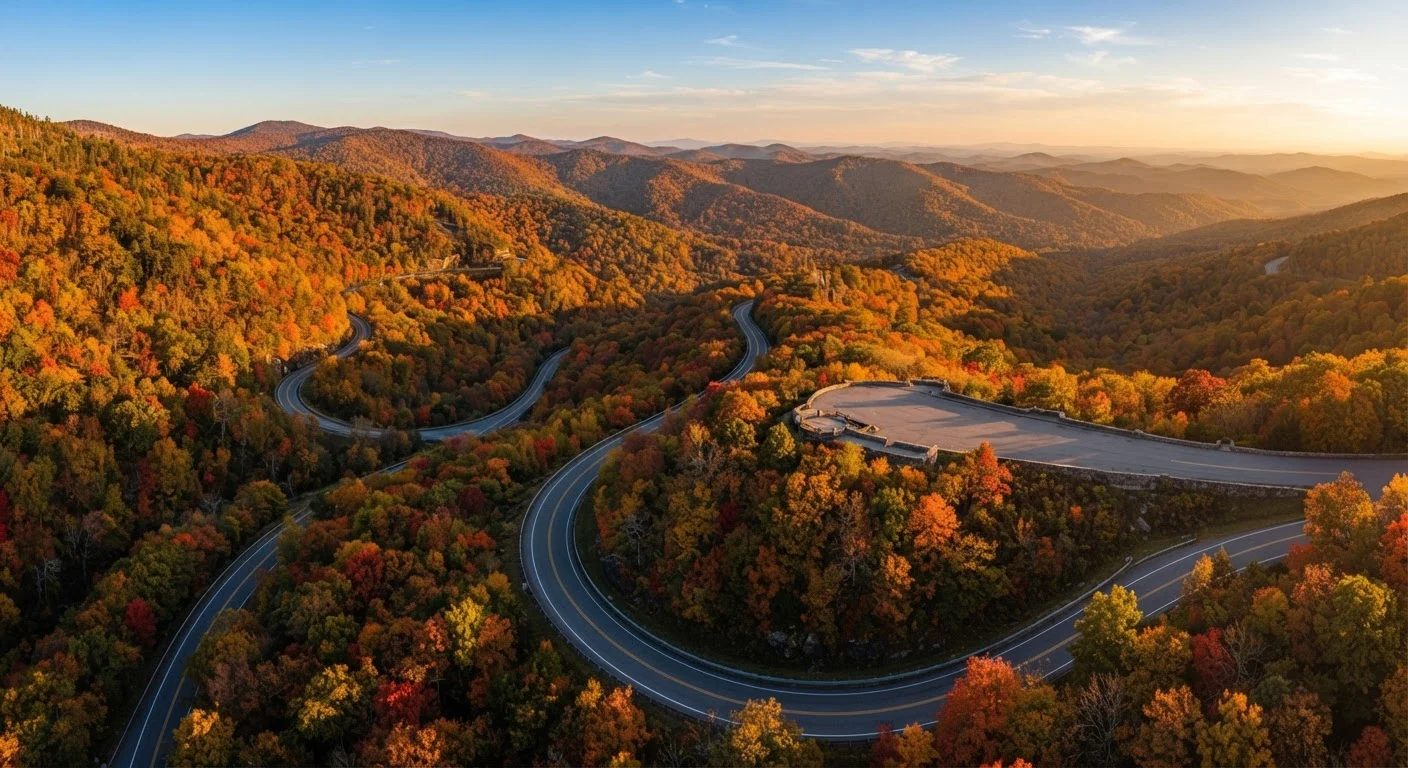
At 469 miles, the Blue Ridge Parkway connects Shenandoah National Park in Virginia to Great Smoky Mountains National Park in North Carolina, running entirely through the southern Appalachians. Speed limits max out at 45 mph by design - this is a road built for looking, not commuting. Families find kid-friendly payoffs at every turn: Linville Falls, Mabry Mill, and the Linn Cove Viaduct engineering marvel. Fall foliage typically peaks from mid-October to early November, making it one of the most spectacular autumn drives in the eastern US. Note that the Parkway has no commercial development - fuel and food must be sourced in nearby towns.
The Blue Ridge Parkway was literally designed to slow you down - and families are better for it.
Going-to-the-Sun Road (Montana)
This 50-mile road through Glacier National Park crosses the Continental Divide at Logan Pass and delivers alpine scenery that looks lifted from a nature documentary. It's short enough to drive in a day but rich enough to anchor a week-long Montana trip. Vehicle size restrictions apply on the upper road, so check the National Park Service guidelines before arriving with a large RV or trailer. The park uses a timed-entry permit system during peak summer months - verify the current system well before your travel dates. Even with logistics, families consistently rate it among the most awe-inspiring drives in North America.
Fifty miles rarely packs this much mountain drama - Glacier is a legitimate bucket-list drive.
Great River Road (Minnesota to Louisiana)
The Great River Road follows the Mississippi River from its headwaters in northern Minnesota all the way to the Gulf of Mexico - a route you can drive in full over two weeks or tackle in regional segments. Each section has a completely different character: wild forest and lake country in Minnesota, bluff towns and river culture through Iowa and Illinois, jazz history and Creole cuisine in Louisiana. Families who travel the full length get one of the most culturally layered drives in America. For a shorter experience, the stretch from La Crosse, Wisconsin through the Illinois River Valley offers bluff overlooks, wildlife refuges, and charming river towns in a manageable four-to-five day window.
The Great River Road is really ten different road trips stacked together - pick the section that fits your family.
Gulf Coast Scenic Byway (Alabama & Mississippi)
Often overlooked in favor of flashier routes, the Gulf Coast Scenic Byway runs through southern Alabama and Mississippi along the actual shoreline, passing through barrier island landscapes, state parks, and coastal towns with genuine seafood culture. Families get calm, warm Gulf water beaches, the Dauphin Island Audubon Bird Sanctuary, and the Gulf Coast Exploreum Science Center in Mobile - all at a pace well-suited to young kids. This is a strong option for families in the Southeast who want a beach-focused road trip without the traffic density of Florida's coasts. Pack beach gear and sun protection deliberately - Gulf heat and UV intensity are significant from May through September.
The Gulf Coast Byway offers warm beaches and real Southern food culture without the Florida crowd density.
Making the Most of Any Route You Choose
No matter which road you pick, a few principles separate a stressful marathon drive from a genuinely memorable vacation. Drive no more than three to four hours before a meaningful stop - not just a gas station, but a short hike, a waterfront walk, or a main street worth wandering. Build one completely unscheduled day into any trip longer than four nights; that buffer absorbs delays and often produces your best spontaneous memory.
Use America the Beautiful for National Parks
Several of these routes pass through or alongside national parks and federal recreation areas. An America the Beautiful annual pass covers entrance fees at most NPS sites for a single vehicle and is available through the National Park Service. If your route includes two or more paid park entrances, the pass typically pays for itself quickly. Verify which specific sites are covered before purchasing, as some concessionaire-operated facilities charge separately.
Families traveling the Southwest should read why slowing down pays off in the Southwest before planning mileage. For the full planning toolkit - packing, navigation, and keeping everyone sane - the Family Road Trip Playbook covers it all. And if you want to travel smarter on any of these routes, budget travel tips offers practical strategies for stretching the family travel budget further.
The content provided on our blog site traverses numerous categories, offering readers valuable and practical information. Readers can use the editorial team’s research and data to gain more insights into their topics of interest. However, they are requested not to treat the articles as conclusive. The website team cannot be held responsible for differences in data or inaccuracies found across other platforms. Please also note that the site might also miss out on various schemes and offers available that the readers may find more beneficial than the ones we cover.