

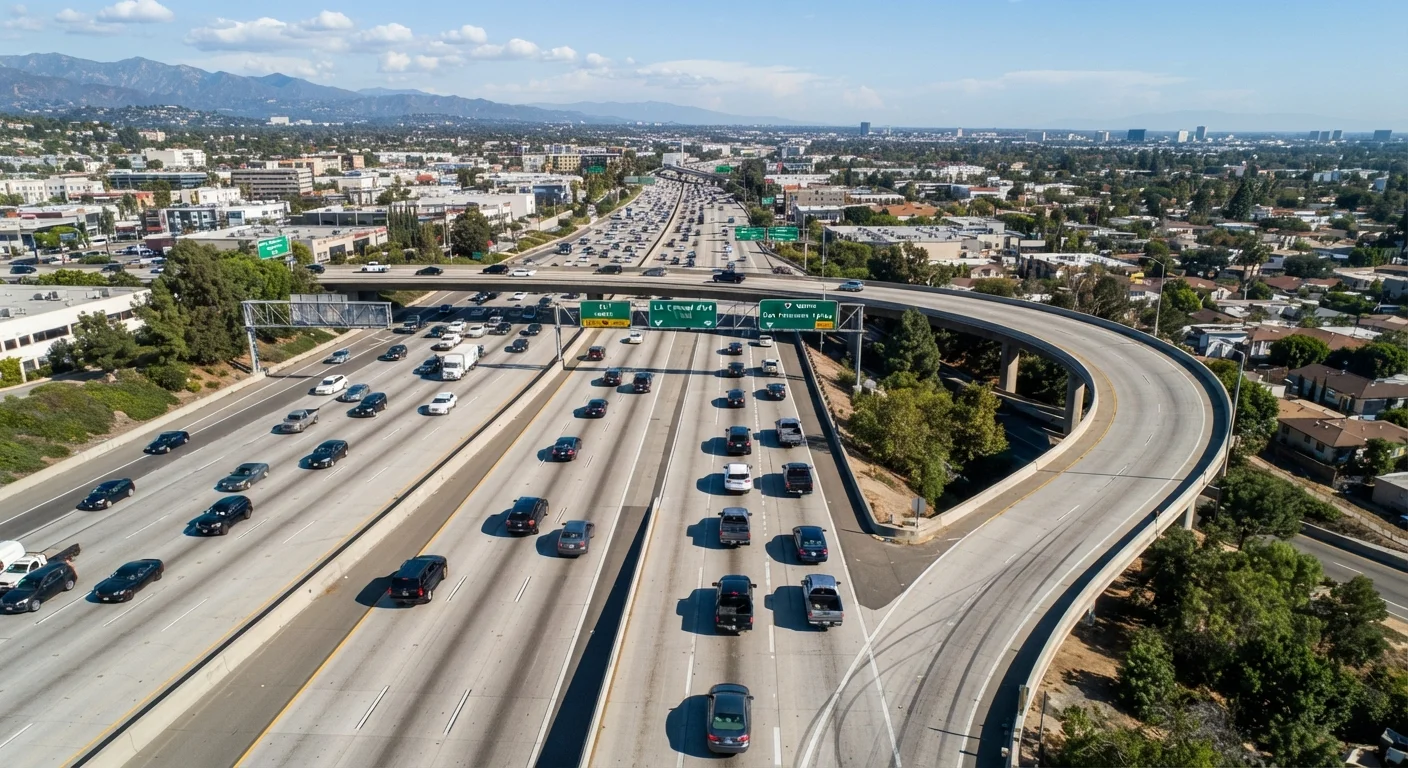
Why Merging and Lane Changes Cause So Many Collisions
Highway merging and lane changes account for a disproportionate share of freeway crashes. The core reason is simple: these maneuvers require drivers to operate at speed while simultaneously gathering information, making a judgment call, and executing a physical action - all in a matter of seconds. When any part of that chain breaks down, the consequences can be serious.
Common failure points include entering too slowly, neglecting to check blind spots, signaling too late (or not at all), and merging without first identifying a safe gap. Distraction is also a major factor - taking your eyes off traffic for even two seconds at 65 mph means traveling nearly 200 feet without full awareness of your surroundings.
These mistakes are not limited to new or inexperienced drivers. Overconfidence is its own risk factor; seasoned drivers sometimes skip procedural checks because the maneuver feels routine. If you're helping a teenager develop highway skills, the graduated licensing guide covers how to build these habits systematically from the start.
What you will need
Proper mirror adjustment is the foundation of safe lane changes. If your side mirrors are angled to show the side of your own car, they are set too far inward - adjust them outward until you can just barely see your vehicle's edge. This significantly expands your lateral field of view and reduces the size of the blind spot that requires a physical shoulder check.
Blind Spots Can Hide Entire Vehicles
Modern vehicles have blind spots large enough to conceal a full-size car or SUV that your mirrors simply won't show. A quick physical shoulder check - turning your head toward the target lane - is not optional. Relying on mirrors alone before a lane change is one of the most common errors drivers make on the highway.
Step-by-Step: How to Merge and Change Lanes Correctly
The following steps cover both on-ramp merging and mid-highway lane changes. The core technique is the same; the primary difference is that on-ramp merging also requires matching highway speed before entering the travel lane.
Correctly Adjusted Side Mirrors
Minimizes blind spots so you can see adjacent lanes as completely as possible before moving.
Working Turn Signals
Communicates your intended movement to other drivers, giving them time to create space.
Blind-Spot Monitoring System (if equipped)
Provides an additional electronic alert when a vehicle is detected in your blind spot - supplements but does not replace the shoulder check.
Assess traffic as you enter the on-ramp
As soon as you turn onto the on-ramp, begin observing highway traffic through your driver's side mirror. Identify a gap that is large enough for your vehicle - a gap of at least four seconds of space is a reliable target. Note the speed of vehicles in the right lane so you can time your acceleration accordingly. Do this assessment early; the ramp gives you only a short window to prepare.
Accelerate to match highway speed
Use the full length of the acceleration lane to bring your speed as close as possible to the flow of highway traffic - typically 55-70 mph depending on the posted limit. You should be at or near highway speed before you reach the merge point, not after. Entering traffic at 40 mph when everyone else is doing 65 mph creates a sudden speed differential that significantly raises collision risk.
Signal your intention early
Activate your left turn signal at least three seconds before you begin the lane change or merge. This alerts drivers already on the highway that you intend to enter the lane and gives them time to either create space or hold their position. Signaling is not a request - it is a communication that helps everyone around you anticipate your movement.
Check mirrors and blind spots in sequence
Follow a consistent check sequence: rearview mirror → driver's side mirror → physical shoulder check toward the target lane. Do not skip the shoulder check. Mirrors have a fixed field of view and leave a blind-spot zone roughly alongside and slightly behind your vehicle. A vehicle sitting in that zone can be entirely invisible in your mirrors. The shoulder check - a brief head turn of about 45 degrees - closes that gap.
Merge smoothly into the identified gap
Once you've confirmed the gap is clear, steer gradually and firmly into the lane. Avoid jerky or overly hesitant movements - both can surprise nearby drivers. Aim to enter the center of the lane, not the edge. Maintain your speed through the merge; abrupt deceleration immediately after entering the lane can cause the vehicle behind you to close in too quickly.
Re-establish a safe following distance
Immediately after merging, focus on establishing a safe gap between you and the vehicle ahead. Use the two-second rule as your baseline: pick a fixed road marker and confirm two full seconds of space. This gives you adequate reaction time if the car ahead brakes suddenly and stabilizes your position in the flow of traffic.
Use the Two-Second Rule After Merging
Once you've merged or changed lanes, re-establish a two-second following distance from the vehicle ahead. Pick a fixed object - a sign or overpass - and count two full seconds between when the car ahead passes it and when you do. In adverse weather conditions, double that gap to four seconds.
Stopping on a Ramp Is Extremely Dangerous
Coming to a full stop at the end of an on-ramp forces vehicles behind you to stop as well and makes it nearly impossible to safely enter fast-moving traffic. Unless traffic ahead is completely stopped, keep rolling and work to match the speed of highway vehicles. If you must stop due to a true emergency, activate your hazard lights immediately.
These habits are also worth reinforcing in lower-visibility conditions. If you drive at night or in weather, the same checking sequence applies - but reaction times become even more critical. See our guide to night driving risks and our article on driving in rain, snow, and fog for condition-specific guidance.
Building the Habit Beyond This Checklist
Reading the correct steps is straightforward; applying them consistently under real highway conditions takes deliberate practice. The challenge is that good technique can degrade over time as drivers rely on habit and intuition rather than procedure. Research in driver behavior consistently shows that explicit, repeated reinforcement - not just awareness - is what makes safe habits durable.
One practical approach: after each highway trip, briefly self-assess one maneuver. Did you signal before checking mirrors? Did you complete a shoulder check? Did you match speed before merging? This kind of low-effort reflection helps turn procedural knowledge into automatic behavior. For a broader framework on making safe driving habits stick, see our guide on building safer driving habits.
Finally, remember that even perfect technique on your part cannot control other drivers. Maintaining awareness of vehicles around you - not just directly ahead - gives you the reaction time to respond when others merge unpredictably or change lanes without signaling.
The content provided on our blog site traverses numerous categories, offering readers valuable and practical information. Readers can use the editorial team’s research and data to gain more insights into their topics of interest. However, they are requested not to treat the articles as conclusive. The website team cannot be held responsible for differences in data or inaccuracies found across other platforms. Please also note that the site might also miss out on various schemes and offers available that the readers may find more beneficial than the ones we cover.