

Our Verdict
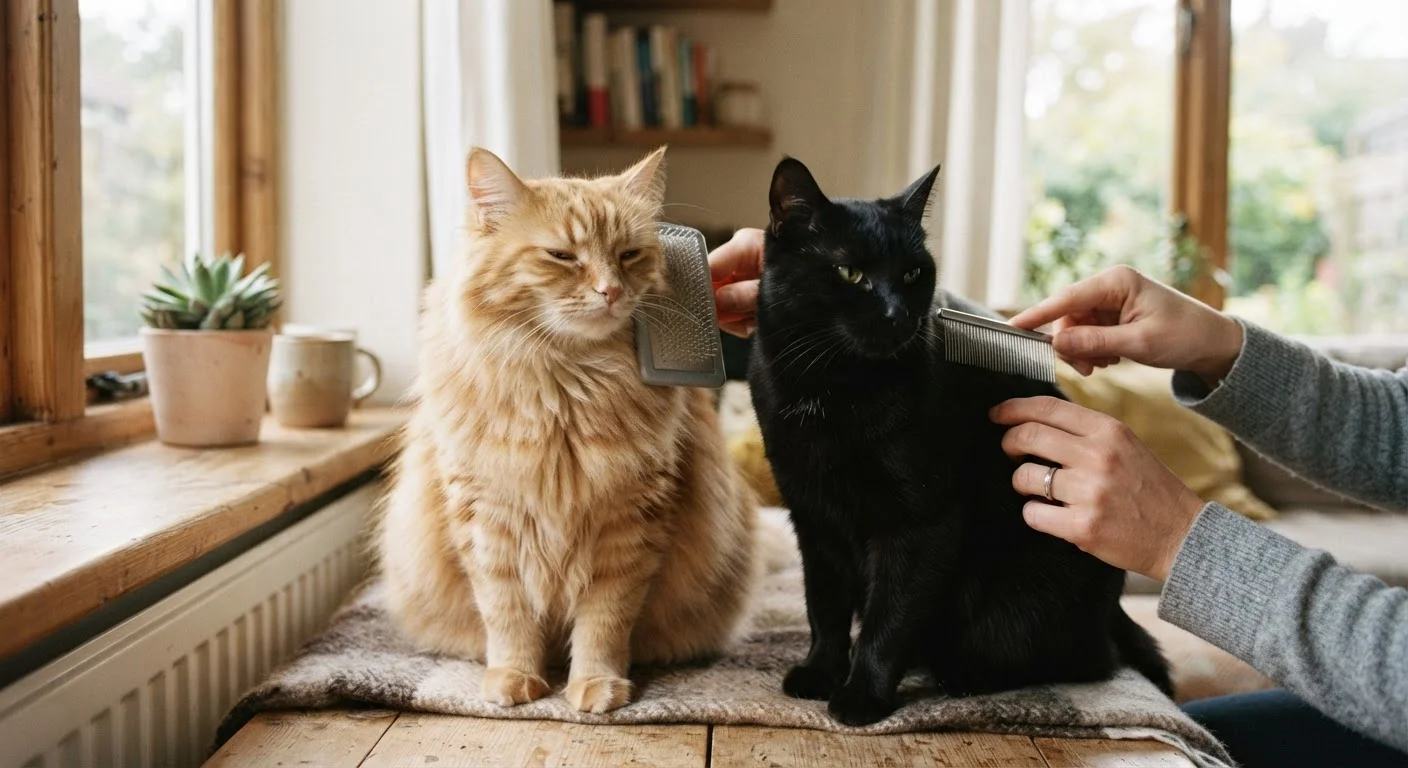
Neither coat type is objectively easier to own - they simply demand different time investments and tool kits. Long-haired cats require a consistent daily grooming commitment to stay mat-free and comfortable, while short-haired cats need far less intervention but shouldn't be ignored entirely. Matching your lifestyle to your cat's coat needs before adopting is the smartest first step.
| Best for | Recommended |
|---|---|
| Owners with limited time for daily grooming | Short-haired cats |
| Owners who enjoy a hands-on daily bonding ritual | Long-haired cats |
| Households concerned about heavy seasonal shedding | Short-haired cats |
| Experienced cat owners comfortable with mat prevention techniques | Long-haired cats |
Why Coat Type Is the Starting Point for Every Grooming Decision
When it comes to feline grooming, coat length is the single most influential variable. It determines how often you need to brush, which tools actually work, how quickly problems like mats develop, and how much hair ends up on your furniture. Understanding what each coat type genuinely demands - rather than assuming cats are fully self-cleaning - helps owners stay ahead of discomfort and preventable health issues.
Cats do groom themselves instinctively, but self-grooming has real limits. Long coats tangle faster than a cat's tongue can manage, and short-haired cats still ingest loose fur that can accumulate into hairballs. Owner-assisted grooming complements what cats do naturally and allows you to catch skin issues, parasites, lumps, or coat changes early. It's also worth noting that grooming habits connect to overall wellness - a cat whose coat is dull or unkempt may be signaling a health or nutritional shift. For context on how diet influences coat condition, see how a cat's nutritional needs change across life stages.
Long-Haired Cats: What Daily Grooming Actually Involves
Breeds like Maine Coons, Persians, Ragdolls, and Siberians carry coats that can reach several inches in length, often with a dense undercoat beneath the silkier outer layer. This combination is beautiful - and demanding.
Frequency and Tools
Veterinary grooming guidance consistently recommends daily brushing for long-haired cats. Even a short 5-10 minute session prevents the loose fur and debris that accumulate quickly in a long coat. Recommended tools include a wide-toothed comb for initial detangling, a slicker brush for the outer coat, and an undercoat rake or de-shedding tool for removing the dense underlayer during seasonal blows.
Mat Prevention Is Non-Negotiable
Mats - dense, knotted clumps of fur - are the central grooming challenge for long-haired cats. They form fastest in high-friction areas: behind the ears, under the armpits, at the base of the tail, and between the back legs. Left unaddressed, mats tighten against the skin, trap moisture, restrict movement, and can cause skin irritation or even infection. Severe matting typically requires professional grooming or veterinary attention to remove safely - scissors near tight mats risk cutting the skin.
Never Cut Out Mats With Scissors Alone
A matted long-haired coat is deceptive - the skin beneath can be pulled tightly into the mat and is far closer to the surface than it appears. Attempting to cut through a mat with standard scissors carries a real risk of cutting the skin. If a mat is too tight or close to the skin to work out with a comb, consult a professional groomer or your veterinarian rather than attempting removal at home.
Bathing and Drying
Long-haired cats occasionally benefit from bathing, particularly those with oily coats or after outdoor adventures. Because a thick coat retains water, thorough towel drying followed by low-heat blow drying (held at a safe distance) helps prevent skin issues. Many cats tolerate this better when introduced gradually from kittenhood.
Short-Haired Cats: Lower Maintenance, but Not No Maintenance
Domestic shorthairs, Siamese, Abyssinians, and British Shorthairs have coats that lie close to the body and resist tangling. They don't develop mats under normal conditions, and their self-grooming is generally more effective at keeping the coat in order.
Frequency and Tools
Weekly brushing is typically sufficient for most short-haired cats, though those with dense double coats - like the British Shorthair - may benefit from twice-weekly sessions during peak shedding periods. A rubber grooming mitt or bristle brush works well for most short coats, lifting loose fur without irritating the skin. A fine-toothed flea comb doubles as a grooming tool and parasite check.
Make Grooming a Routine From Day One
Cats of any coat type accept grooming most readily when it starts early and stays consistent. Even if your short-haired cat doesn't strictly need daily brushing, brief handling sessions build tolerance and make longer grooming tasks - like nail trims or baths - far less stressful for both of you. Keep sessions short, positive, and paired with calm praise.
Shedding and Hairballs
Short-haired cats still shed, sometimes heavily. Regular brushing removes loose fur before it ends up on upholstery and reduces the volume of hair your cat ingests while self-grooming. Hairballs are a common result of excessive ingested fur - if your cat is producing them frequently, increasing brushing sessions and discussing dietary fiber options with your veterinarian is a reasonable starting point.
For owners weighing how lifestyle factors affect overall cat health, the indoor vs. outdoor cat comparison is worth reading, as outdoor access can affect coat condition and parasite exposure.
Side-by-Side Comparison: Long-Haired vs. Short-Haired Grooming Demands
The differences between the two coat types become clearest when viewed together across specific grooming criteria.
| Long-Haired Cats | Short-Haired Cats | |
|---|---|---|
| Brushing frequency | Daily (5-10 min minimum) | Weekly (or twice-weekly for dense coats) |
| Mat risk | High - especially in friction areas | Very low under normal conditions |
| Primary tools needed | Wide comb, slicker brush, undercoat rake | Rubber mitt or bristle brush, fine comb |
| Bathing need | Occasional - oily or soiled coats | Rarely needed |
| Shedding management | Heavy - daily brushing essential | Moderate - weekly brushing sufficient |
| Professional grooming | Often recommended every 6-8 weeks | Rarely needed; situational |
| Time commitment per week | 45-70+ minutes | 10-20 minutes |
Both coat types benefit from nail trimming every two to three weeks, ear checks for wax buildup, and periodic dental attention - grooming sessions are a natural time to fold in these checks. For a broader look at commonly missed feline health routines, see what cat dental health owners often overlook.
When Professional Grooming Makes Sense
For long-haired cats, periodic professional grooming - every six to eight weeks for many owners - helps manage coat length, clear out undercoat buildup, and deal with any mats that have developed. Groomers experienced with cats use restraint techniques and equipment that minimize stress. If your cat has severe matting, a vet visit before grooming is sometimes warranted to assess skin health underneath.
Short-haired cats rarely need professional grooming unless there are specific issues - a bath after a messy encounter, or grooming assistance for elderly cats who can no longer self-groom effectively due to mobility issues or weight.
Dog owners curious about the parallel decisions involved in at-home versus professional grooming will find the at-home dog grooming guide a useful comparison for how the principles differ across species.
This article is for general informational purposes only and does not constitute veterinary advice. Consult a licensed veterinarian for guidance specific to your cat's health and grooming needs.
The content provided on our blog site traverses numerous categories, offering readers valuable and practical information. Readers can use the editorial team’s research and data to gain more insights into their topics of interest. However, they are requested not to treat the articles as conclusive. The website team cannot be held responsible for differences in data or inaccuracies found across other platforms. Please also note that the site might also miss out on various schemes and offers available that the readers may find more beneficial than the ones we cover.