

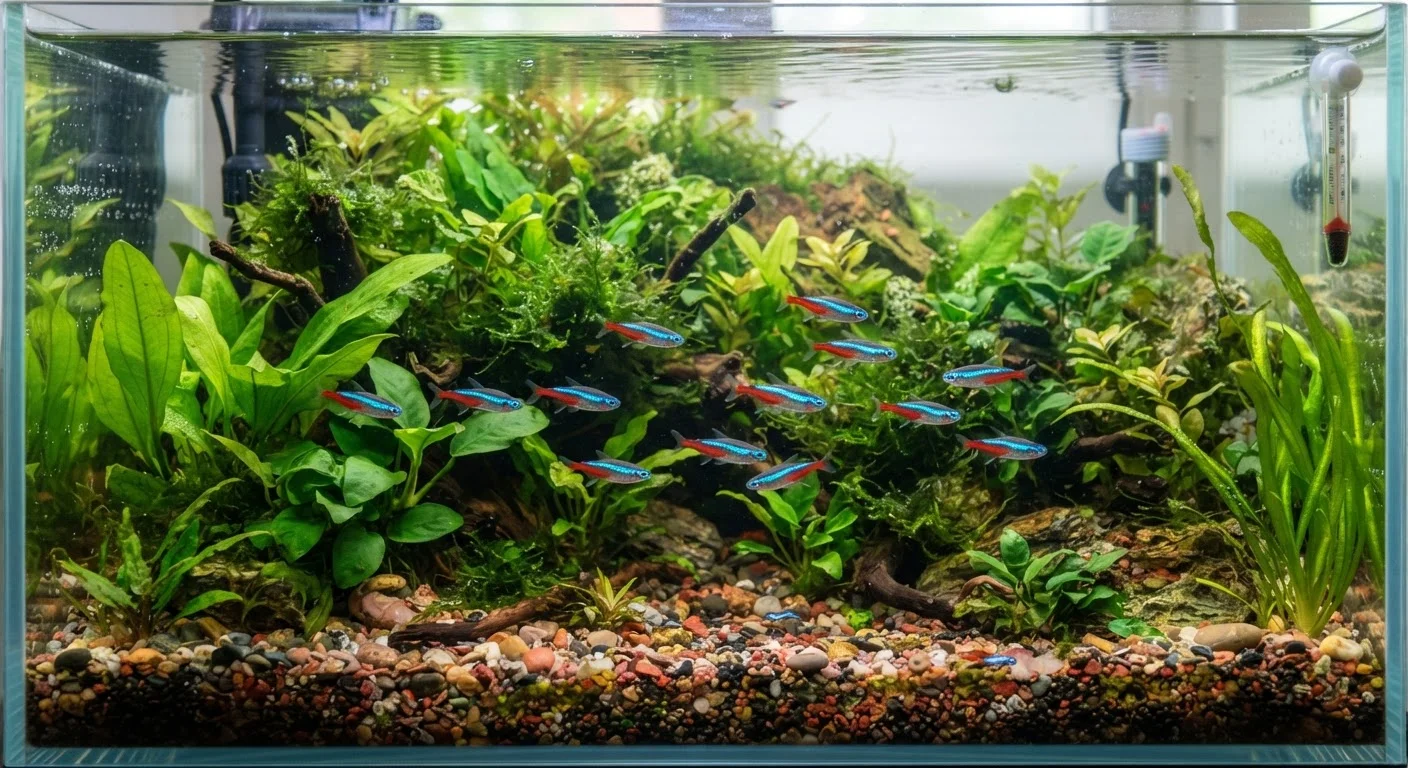
Why the Nitrogen Cycle Matters More Than Any Filter
New fish owners often focus on equipment - pumps, heaters, decorations - while overlooking the invisible biology that actually keeps fish alive. The nitrogen cycle is that biology. Without it, waste compounds build up to lethal levels no matter how powerful your filter is, because mechanical filtration only removes particles; it does not neutralize dissolved toxins.
Fish continuously excrete ammonia through their gills and waste. In a natural river or lake, this dilutes harmlessly across vast volumes of water. In a closed aquarium of 10 or 20 gallons, it accumulates rapidly. The nitrogen cycle - driven by colonies of beneficial bacteria living on filter media, gravel, and tank surfaces - is the only sustainable solution.
Understanding this process helps explain why setting up a tank correctly from the start is so important before a single fish is introduced.
4-8 weeks
Typical time to fully cycle a new aquarium
Fishless cycling with a consistent ammonia source and stable water temperature generally falls within this range, though conditions vary.
0 ppm
Safe ammonia and nitrite level in a healthy tank
Both compounds should be undetectable in a properly cycled aquarium; any reading above zero warrants prompt action.
Under 40 ppm
Generally accepted nitrate ceiling for freshwater fish
Many aquarium care resources cite 40 ppm as an upper threshold for most freshwater species, with lower levels preferable for sensitive fish.
The Three Stages: Ammonia, Nitrite, and Nitrate
The cycle moves through three distinct chemical stages, each with its own risks:
- Ammonia (NH₃): Produced by fish waste, decaying food, and dead plant matter. Even trace amounts - above 0.25 ppm - cause gill damage, immune suppression, and rapid fish death. This is Stage 1.
- Nitrite (NO₂⁻): As ammonia rises, Nitrosomonas bacteria colonize and begin converting it to nitrite. Nitrite is also highly toxic; it interferes with oxygen transport in fish blood, producing a condition sometimes called "brown blood disease." This is Stage 2.
- Nitrate (NO₃⁻): A second bacterial group converts nitrite to nitrate. Nitrate is relatively harmless at low to moderate levels (under 40 ppm for most freshwater species), and is removed through regular partial water changes. A fully cycled tank reads 0 ppm ammonia, 0 ppm nitrite, and a manageable nitrate level. This is Stage 3.
The process typically takes four to eight weeks in a new tank. Monitoring each stage with an aquarium test kit - not test strips, which are less reliable - is the only way to know where you stand.
Use a Liquid Test Kit, Not Strips
Liquid reagent test kits provide significantly more accurate readings for ammonia, nitrite, nitrate, and pH than paper test strips. Accurate data is the only reliable guide during cycling and ongoing maintenance - guesswork during this phase can cost fish their lives.
How to Cycle a New Tank Safely
The most fish-safe approach is a fishless cycle: establishing the bacterial colony before any animals are present. This involves adding an ammonia source - pure ammonia solution or a small pinch of fish food daily - to feed the developing bacteria. As ammonia rises and then falls to zero, followed by a nitrite spike that also falls to zero, the cycle is complete.
Adding a small amount of gravel or filter media from an established, healthy tank can introduce beneficial bacteria and significantly shorten cycling time. Commercially available bottled bacterial cultures marketed for this purpose can also help, though results vary and water testing remains essential.
Once the cycle is confirmed complete, introduce fish gradually - a few at a time - to avoid overwhelming the bacterial colony with a sudden surge in ammonia load. The size and stability of that colony is proportional to the waste load it has been processing; adding too many fish too quickly can trigger a secondary ammonia spike even in an established tank.
Both freshwater and saltwater aquariums rely on the same nitrogen cycle, though saltwater systems are generally less forgiving of water quality swings and require particular attention during setup.
Protecting Your Cycle - and Recognizing When It's Failing
An established nitrogen cycle is not permanent. Certain common mistakes can crash beneficial bacteria populations and send ammonia spiking again:
- Rinsing filter media under chlorinated tap water kills the bacterial colony - always use dechlorinated or tank water.
- Replacing all filter media at once removes the majority of beneficial bacteria; change only a portion at a time.
- Antibiotic medications treat the entire tank indiscriminately and can wipe out beneficial bacteria alongside pathogens.
- Overfeeding leads to excess decaying matter and an ammonia load the bacteria cannot keep pace with.
If your fish are showing signs of stress such as clamped fins, labored breathing, or erratic swimming, poor water quality - especially ammonia or nitrite - is among the most common culprits. Test the water before reaching for any medication.
A reliable routine of weekly partial water changes (10-25% of tank volume), regular testing, and thoughtful feeding goes a long way toward keeping the nitrogen cycle stable and your fish healthy for years.
Cycling Applies to All Aquarium Types
Whether you're running a simple freshwater community tank or a more complex planted or reef setup, the nitrogen cycle is the same underlying biological process. The tolerance thresholds and margin for error may differ between species and setups, but no aquarium bypasses the need for beneficial bacterial filtration.
This article is for general informational purposes only and does not substitute for advice from a qualified aquatic veterinarian or fish health professional.
Frequently Asked Questions
A fishless cycle typically takes four to eight weeks, depending on water temperature, pH, and the bacterial seed source used. Adding bottled beneficial bacteria can shorten this window, but water testing is the only reliable way to confirm completion.
Both ammonia and nitrite should read 0 ppm (parts per million) in a fully cycled, healthy tank. Any detectable level of either compound is stressful or harmful to fish and signals a water quality problem that needs immediate attention.
It is strongly advised against. Fish introduced to an uncycled tank are exposed to rising ammonia and nitrite spikes, commonly called "new tank syndrome," which causes rapid stress, immune suppression, and death. If fish must be added early, very small numbers and frequent partial water changes can reduce harm.
Regular partial water changes - typically replacing 10-25% of tank volume weekly - are the most effective method. Live aquatic plants also consume nitrate as a nutrient, which can help keep levels lower between changes.
Beneficial bacteria can be disrupted by using tap water with chlorine or chloramine directly in the tank, cleaning all filter media at once, treating the tank with antibiotics, or allowing the filter to run dry. Replacing only part of the filter media at a time and using a dechlorinator helps protect the bacterial colony.
The content provided on our blog site traverses numerous categories, offering readers valuable and practical information. Readers can use the editorial team’s research and data to gain more insights into their topics of interest. However, they are requested not to treat the articles as conclusive. The website team cannot be held responsible for differences in data or inaccuracies found across other platforms. Please also note that the site might also miss out on various schemes and offers available that the readers may find more beneficial than the ones we cover.