

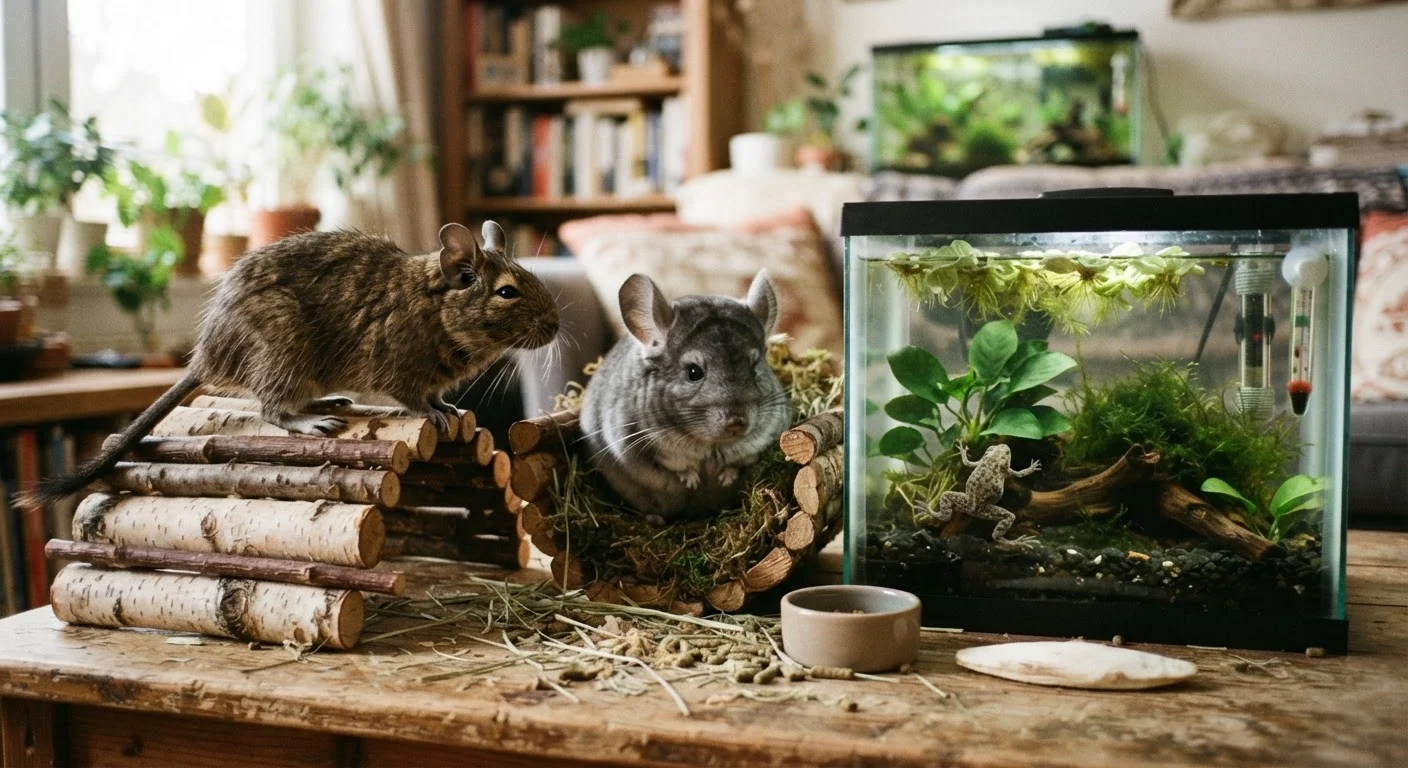
Thinking Beyond the Usual Suspects
Hamsters, guinea pigs, and rabbits dominate pet store shelves - and for good reason. But families with a bit more experience, curiosity, or space sometimes find themselves drawn to creatures that don't get nearly as much attention. The small pets on this list aren't rare exotics requiring specialist licenses; they're relatively accessible animals that are simply overlooked. Each one has a distinct personality, a particular care profile, and something genuinely interesting to offer the right household.
Before exploring any of these species, it's worth reading our honest look at small pet ownership to understand the real commitments involved. And if you're still weighing more familiar choices, our guinea pig vs. hamster comparison is a useful starting point.
Legality and Sourcing Matter
Some uncommon small pets are restricted or prohibited in certain US states or municipalities - sugar gliders, axolotls, and some gecko species are examples where rules vary by location. Always verify local regulations before acquiring any animal. Where possible, source from reputable breeders or rescue organizations rather than wild-caught or poorly documented supply chains, which can affect both animal welfare and health.
Eight Uncommon Small Pets Worth Your Attention
Degu
Native to Chile, degus are highly social rodents that look a little like a cross between a rat and a squirrel. They're diurnal - active during the day - which makes them unusually interactive compared to many nocturnal small pets. Degus are intelligent, curious, and strongly prefer living in pairs or small groups. Keeping a lone degu is generally considered a welfare concern by exotic animal vets.
They require a spacious cage with multiple levels, dust baths similar to chinchillas, and a diet low in sugar (degus are prone to diabetes). They're not well suited to very young children due to their quick movements and need for gentle, consistent handling, but they can become quite tame with time.
Degus are diurnal and genuinely social - a lone degu is a welfare concern, not just a preference.
Chinchilla
Chinchillas are best known for their extraordinarily soft fur and their long lifespan - typically 10 to 15 years, sometimes longer. That longevity alone makes them a more serious commitment than most small pets. They're crepuscular (most active at dawn and dusk), sensitive to heat, and require large, well-ventilated enclosures and regular dust baths to maintain their dense coat.
Chinchillas can be shy and don't always enjoy being held, though patient handling from a young age helps. They're better suited to older children and adults who appreciate an observational relationship as much as a hands-on one. Their diet should consist primarily of high-quality hay.
A chinchilla can live 15 years or more - a commitment comparable to some dogs.
African Dwarf Frog
Fully aquatic and small enough to live in a compact tank, African dwarf frogs are a genuinely low-footprint pet. Unlike African clawed frogs (a common mix-up), African dwarf frogs stay small - usually under two inches - and remain underwater their entire lives, surfacing briefly to breathe air. They're peaceful, can coexist with compatible fish, and are fascinating to observe.
They do best in groups of two or more and need a filtered, heated tank kept around 75-80°F. They're not handling pets - their skin is delicate and they move quickly - but they offer an engaging, low-allergen alternative for families who want something living and active without the demands of a mammal.
African dwarf frogs are fully aquatic, peaceful, and thrive in small, well-maintained tanks.
Sugar Glider
Sugar gliders are small marsupials native to Australia and Indonesia that have attracted a devoted following in the US. They bond closely with their owners and - when properly socialized - can be carried in a bonding pouch during the day. They're nocturnal, highly social, and should be kept in pairs at minimum; a lone sugar glider can develop stress-related behavioral problems.
They require a tall cage for gliding practice, a carefully balanced diet (commercial glider diets exist, but nutrition remains a topic of ongoing discussion among exotic vets), and regular interaction. Importantly, sugar gliders are not legal in all US states - check your local regulations before considering one.
Sugar gliders are social marsupials that bond with owners, but their legality varies by US state.
Dubia Roach Colony (Feeder Breeding)
This entry is slightly different: some households maintain dubia roaches not as companions themselves, but as a live feeder colony for reptiles or amphibians. Dubia roaches are docile, nearly odorless compared to other feeder insects, and don't chirp. They're also illegal in Florida due to invasive species concerns, so location matters.
For families already keeping a bearded dragon, leopard gecko, or tree frog, a small self-sustaining dubia colony can reduce ongoing costs and provide on-demand, nutritionally consistent live food. They require minimal space, warmth, and a basic diet of fruits and vegetables. They're not pets in the traditional sense, but they're a practical and often overlooked element of exotic pet husbandry.
A dubia roach colony offers a practical, low-maintenance live food source for reptile and amphibian owners.
Axolotl
The axolotl - a permanently aquatic salamander native to Mexico - has gained significant popularity in recent years, and for understandable reasons. It retains its larval features throughout its life (a trait called neoteny), giving it a distinctive, almost whimsical appearance with feathery external gills. Axolotls are hardy compared to many aquatic pets and can live 10 years or more with proper care.
They require cold, clean water (ideally 60-68°F), a cycled aquarium, and a protein-rich diet of earthworms, bloodworms, or specialist pellets. They should be kept alone or with other axolotls of similar size - they will attempt to eat anything that fits in their mouth, including tank mates. Axolotls are also critically endangered in the wild, making responsible captive sourcing important.
Axolotls can live over a decade and need cold, carefully maintained water to thrive in captivity.
Rat
Domestic rats are arguably the most underrated small pet available. They're highly intelligent, trainable, and genuinely affectionate - many owners describe them as dog-like in their social responsiveness. Rats recognize their owners, can learn names and simple commands, and thrive on daily interaction. They're also naturally clean animals that spend considerable time grooming.
Rats are social and should be kept in same-sex pairs or groups. They need a large, multi-level cage, daily out-of-cage time, and mental stimulation. Their lifespan is relatively short - typically two to three years - which is a real emotional consideration for families with children. Regular vet checkups matter; rats are prone to respiratory illness and tumors, particularly in females.
Rats are trainable, social, and far more affectionate than their reputation suggests.
Leopard Gecko
For families open to reptiles, the leopard gecko is one of the most beginner-accessible options available. They're nocturnal, slow-moving, and generally tolerant of calm handling - more so than many other lizard species. They don't require UV lighting in the same intensive way bearded dragons do, though recent research increasingly suggests some UV exposure benefits their health.
Leopard geckos need a warm enclosure with a proper thermal gradient, live insect prey (crickets or mealworms dusted with calcium), and hiding spots. They're solitary and should generally be housed alone. With attentive care, they can live 15 to 20 years, making them a longer commitment than their modest size might suggest.
Leopard geckos are one of the most beginner-friendly reptiles, but can live up to 20 years.
Always Find an Exotic Vet First
Before bringing home any uncommon small pet, locate a local veterinarian with experience treating that specific species. Many general practice vets don't see degus, sugar gliders, or axolotls regularly. Knowing who to call before a health issue arises can make a significant difference. Ask the vet about routine care requirements during your first visit - it's a good opportunity to confirm your setup is appropriate.
Finding the Right Fit for Your Household
Each of these animals rewards patient, informed owners. The key is matching the pet's actual needs - not just its appeal - to your household's realistic lifestyle. An animal that's active at night won't suit a family hoping for afternoon interaction. A species that needs a companion means budgeting and planning for two. Before any small pet comes home, review our pre-arrival checklist and learn how to build an enriching habitat that supports natural behaviors. Once settled, knowing the signs that a small pet is unwell can make a genuine difference to long-term health outcomes.
This article is for general informational purposes only. Always consult a qualified exotic animal veterinarian for guidance specific to your pet's species and individual health needs.
The content provided on our blog site traverses numerous categories, offering readers valuable and practical information. Readers can use the editorial team’s research and data to gain more insights into their topics of interest. However, they are requested not to treat the articles as conclusive. The website team cannot be held responsible for differences in data or inaccuracies found across other platforms. Please also note that the site might also miss out on various schemes and offers available that the readers may find more beneficial than the ones we cover.