

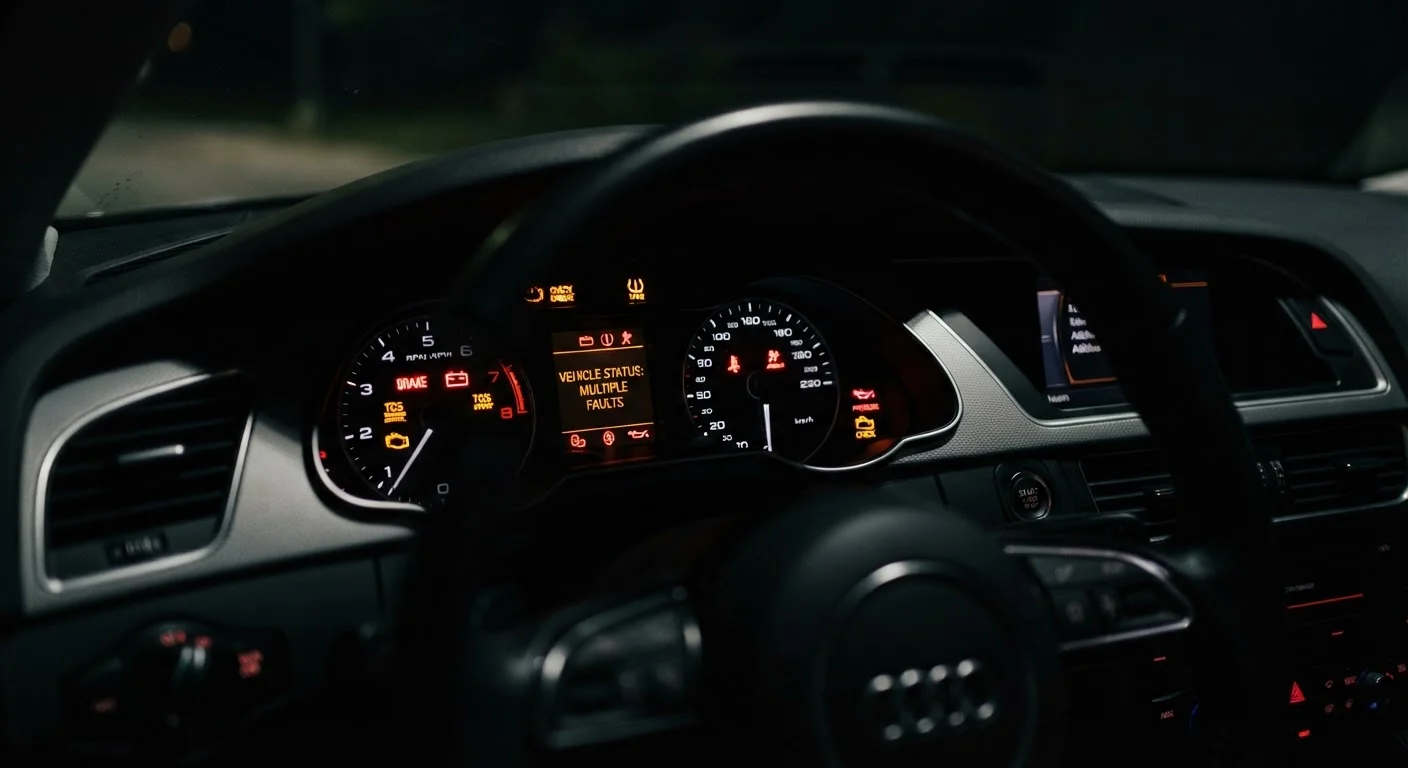
How Dashboard Warning Lights Work
Modern vehicles use an onboard diagnostics system (OBD-II) that continuously monitors dozens of sensors throughout the car. When a sensor detects a reading outside its normal range, it triggers a corresponding warning light on your instrument cluster. Colors follow a general traffic-light logic: red signals stop or act immediately, amber/yellow means caution and attention soon, and green or blue are usually informational - a headlight is on, cruise control is active, and so on.
Not all lights carry the same urgency, and confusing a low-priority amber light with a critical red one - or vice versa - can lead to either unnecessary panic or expensive engine damage. This reference covers the most common lights found across mainstream US vehicles. Because symbol designs vary by manufacturer, always cross-reference with your owner's manual for your specific model.
| Warning light colors | Red = act now; Amber = caution; Green/Blue = informational |
| OBD-II standard applies to | All vehicles sold in the US from 1996 onward (US Environmental Protection Agency) |
| TPMS trigger threshold | 25% or more below recommended tire pressure (NHTSA TPMS Final Rule) |
| Flashing check engine light | Indicates active engine misfire - seek service same day |
| Oil pressure light action | Pull over and shut off engine immediately |
The Warning Lights You Need to Know
Red Lights - Stop and Act
- Oil Pressure (oil can icon): Engine oil pressure has dropped dangerously low. Pull over safely and shut off the engine immediately. Driving even a short distance can destroy internal engine components. Check the oil level; if it's full, the pump or sensor may be failing - call a mechanic.
- Engine Temperature (thermometer in water): The engine is overheating. Pull over, turn off the engine, and let it cool completely before checking coolant levels. Checking your coolant level is something most drivers can do safely in the driveway once the engine is cold.
- Battery / Charging System (battery icon): The charging system isn't maintaining voltage - typically a failing alternator or battery. The car may continue running briefly on reserve power, but you risk stalling unexpectedly. Head to a shop promptly. For more detail, see our guide on car battery lifespan and warning signs.
- Brake System (exclamation mark in circle, or BRAKE): Could indicate low brake fluid, a hydraulic system failure, or simply that the parking brake is engaged. Release the parking brake first. If the light remains on, do not drive - brake failure is a serious safety risk.
Amber Lights - Attend Soon
- Check Engine (engine outline): One of the most misunderstood lights. It can range from a loose gas cap to a misfiring engine. A steady light usually means schedule a diagnostic appointment within a few days. A flashing check engine light signals an active misfire that can damage the catalytic converter - reduce speed and seek service that day.
- Tire Pressure (TPMS - flat tire with exclamation mark): One or more tires are 25% or more below recommended pressure. Check pressures at a gas station and inflate accordingly. Your owner's manual lists the correct PSI for your vehicle.
- Traction Control / Stability (car with skid lines): If it flashes briefly, the system is actively working - normal in slippery conditions. If it stays on, the system may be disabled or faulty, reducing stability on wet or icy roads.
- Low Fuel (fuel pump icon): Reserve fuel only. Consistently running on near-empty can stress the fuel pump over time. Refuel soon.
When In Doubt, Get a Code Read
Most auto parts retailers offer free OBD-II code scans that can tell you exactly which sensor triggered the check engine light. While a code alone doesn't replace a mechanic's diagnosis, it gives you useful information before you walk into a shop - helping you ask informed questions and avoid unnecessary upsells.
If you're new to vehicle ownership, our article on things first-time car owners wish someone had told them covers other ownership realities that catch drivers off guard. And for knowing when to handle an issue yourself versus visiting a shop, see our guide on DIY car maintenance vs. taking it to a shop.
Building a Routine That Prevents Most Warnings
Many warning lights are avoidable with consistent maintenance. Staying current with your vehicle's service schedule - oil changes, fluid top-ups, tire rotations, and filter replacements - addresses the root causes before sensors trip. See our family car maintenance schedule guide for a breakdown of recommended service intervals.
If a light does come on, note the conditions: Was the engine cold or hot? Was there a noise? Did it appear suddenly or gradually? That context helps a technician diagnose the issue faster - and reduces the likelihood of unnecessary repairs. For broader safe driving habits, visit our Safe Driving hub.
OBD-II
On-Board Diagnostics, second generation - a standardized system used in vehicles sold in the US after 1996 that monitors engine and emissions components and stores diagnostic trouble codes when faults are detected.
Catalytic Converter
An emissions control device in the exhaust system that converts harmful combustion byproducts into less toxic gases. Engine misfires can overheat and permanently damage it.
TPMS
Tire Pressure Monitoring System - a sensor-based system that alerts the driver when one or more tires drops significantly below the recommended inflation pressure.
Alternator
A generator driven by the engine that recharges the battery and powers the car's electrical systems while the engine is running. A failing alternator causes the battery warning light to illuminate.
Instrument Cluster
The panel behind the steering wheel that displays gauges, indicators, and warning lights, giving the driver real-time information about the vehicle's operating status.
This article provides general vehicle information for educational purposes. Always consult a qualified mechanic for diagnosis and repairs specific to your vehicle.
The content provided on our blog site traverses numerous categories, offering readers valuable and practical information. Readers can use the editorial team’s research and data to gain more insights into their topics of interest. However, they are requested not to treat the articles as conclusive. The website team cannot be held responsible for differences in data or inaccuracies found across other platforms. Please also note that the site might also miss out on various schemes and offers available that the readers may find more beneficial than the ones we cover.